
Lieferung heute & morgen

Qualitätsgarantie

Willkommens-Angebote freischalten: KOSTENLOSE Lieferung | Bis zu 80 % RABATT | Kostenlose 30-Tage-JoyPlus-Testphase
App herunterladen
The selection of cat food is vast, and choosing the right product can be a challenge. Especially with the popular salmon flavour, there are significant differences in composition, quality, and price. This article serves as a guide, presenting various options for wet cat food with salmon to help you make an informed purchasing decision. We'll highlight what matters most when choosing and which products are best suited for specific needs.
Before making a decision, it's helpful to understand some fundamental aspects of feline nutrition. The following points can help you better interpret product labels.
The declaration on the packaging provides information about the ingredients. A high proportion of meat and fish is crucial for the diet of cats, who are carnivores. Look for the most precise ingredient specifications possible. Phrases like "salmon" or "chicken meat" are more specific than general terms like "fish and fish derivatives." A high-meat cat food is characterised by a transparent and detailed list of its animal components.
Many cat owners prefer grain-free salmon cat food. Cats naturally have a low requirement for carbohydrates, and grains can lead to intolerances in sensitive animals. Likewise, cat food without sugar is a common requirement. In some foods, sugar serves as a flavour enhancer or for cosmetic purposes (e.g., browning), but it offers no nutritional benefit to the cat.
The choice between cans and salmon cat food pouches is often a matter of convenience and feeding quantity. Pouches are practical for single meals and ensure freshness, while larger cans can be more economical for multi-cat households or those with high food demands. A cat food multipack often offers a price advantage and ensures you always have a supply on hand.
Here you'll find a selection of products that cater to different priorities of cat owners—from high meat content to sustainably sourced ingredients.
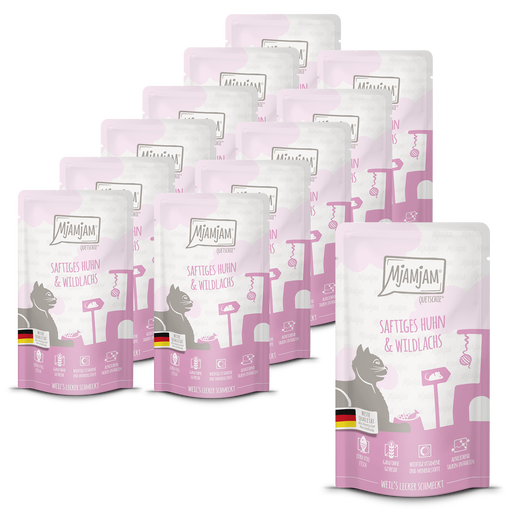
What sets it apart: This food from MjAMjAM Salmon is distinguished by its open declaration and a very high meat and fish content. The formula is consistently grain-free and contains no added sugar, preservatives, or flavourings.
Benefits:
Who it's for: This product is aimed at cat owners who place the highest value on a species-appropriate diet with a very high, clearly declared meat content and who want to consciously avoid grains and sugar.
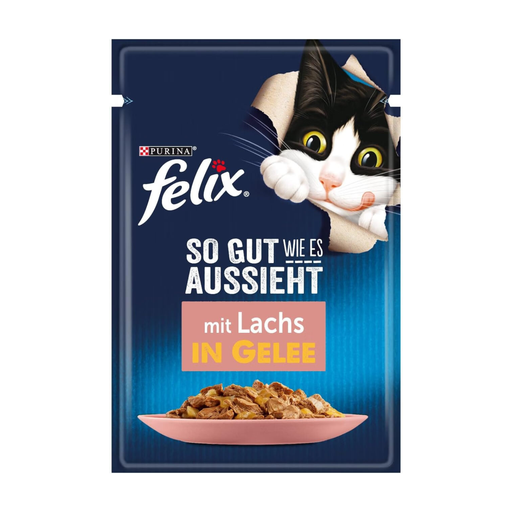
What sets it apart:Felix Salmon Cat Food is a well-known brand, offered here in a large cat food multipack with 26 pouches. The food promises 100% complete and balanced nutrition for adult cats and is enriched with vitamins and omega-6 fatty acids.
Benefits:
Who it's for: Ideal for cat owners who prefer an established brand and are looking for a practical, cost-effective solution for the daily feeding of their adult cat.
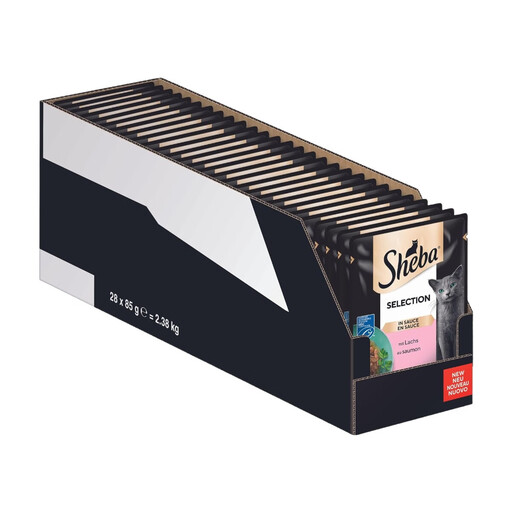
What sets it apart: The Sheba Salmon Cat Food in the Sauce Collection uses MSC-certified salmon. The MSC label stands for fish from sustainable fisheries. According to the manufacturer, the food was developed in collaboration with veterinarians and nutritionists.
Benefits:
Who it's for: This food is a great choice for cat owners who value sustainably sourced ingredients and whose cats prefer a fine p?té in sauce.
The products featured already cover a broad spectrum. However, if you haven't found the perfect match for your cat, or if you'd like to compare other brands, textures, or pack sizes, you can find a wider selection in our category.
? Discover our entire range of salmon cat food here
You can recognise high-quality cat food with salmon by a transparent declaration with a high proportion of meat and fish listed first in the ingredients. Specific terms like "salmon" are preferable to general ones like "fish and fish derivatives." The absence of sugar, grains, and artificial additives can also be a mark of quality. Additionally, the food should be declared as a "complete food" to ensure it provides all necessary nutrients, such as vitamins and taurine.
Salmon is an excellent source of protein and is rich in omega-3 fatty acids, which is beneficial for most cats. However, just as with other protein sources, individual cats can develop an intolerance or allergy to fish. When introducing a new food, it is advisable to do so gradually and observe your cat's reaction. For pets with known health issues or allergies, the choice of food should be discussed with a veterinarian.
Opened wet food should be covered immediately and stored in the refrigerator. Most manufacturers recommend consuming the contents within 24 to 48 hours. To increase acceptance, the food should be warmed to room temperature before the next meal, as cats often refuse food that is too cold.