
Lieferung heute & morgen

Qualitätsgarantie

Willkommens-Angebote freischalten: KOSTENLOSE Lieferung | Bis zu 80 % RABATT | Kostenlose 30-Tage-JoyPlus-Testphase
App herunterladen
A wet-erase pen might seem like a simple tool, but choosing the wrong one can lead to frustrating results: unsightly smears on presentation transparencies, tips that dry out after just a short time, or marks that can no longer be removed. As a Joybuy Product Recommendation Officer, I'll help you identify the key features and navigate the common pitfalls of purchasing, ensuring you find a product that meets your needs in the office, the lecture hall, or for organising at home.
Many users invest in pens that don't live up to their promises. Look out for these three common problems to make an informed decision.
To avoid these problems, you should check three core parameters before buying. These define the functionality and reliability of a wet-erase transparency pen.
The crucial characteristic is the ink's composition. For temporary writing on smooth, non-porous surfaces, you need a pen with water-soluble ink. These pens are often called non-permanent markers or OHP pens. The markings can be removed without a trace using a damp cloth. Permanent pens, on the other hand, use waterproof ink intended for lasting inscriptions, which can only be removed with special solvents like alcohol.
The line width determines how precisely you can work. Manufacturers often use abbreviations that correspond to standardised widths:
A high-quality universal wet-erase pen is distinguished by its construction. According to manufacturers, models with a barrel and cap made of polypropylene (PP) offer high resistance to ink evaporation, ensuring a longer lifespan. Some pens, like the Staedtler Lumocolor, also feature an "airplane-safe" function, where automatic pressure equalisation prevents the pen from leaking on an aircraft—an important detail for business travellers.
Based on these criteria, we have identified a few products that are well-suited for specific use cases.
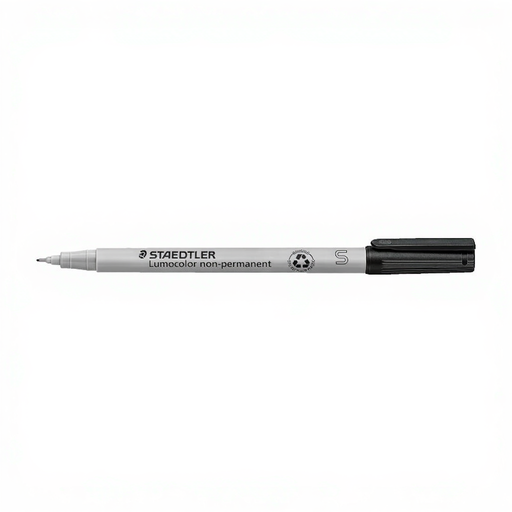
Why This Fits Their Persona: Perfect for users who need to label laminated calendars, small tags, or technical drawings with the utmost accuracy. The superfine tip allows for detailed entries in the smallest of spaces.
The ink is explicitly declared as water-soluble and optimised for transparencies, which minimises the risk of "ghosting" on suitable surfaces. The PP barrel protects against rapid drying.
Line width of just 0.4 mm for maximum precision. Refillable with the 487 15 refill station, which increases sustainability.
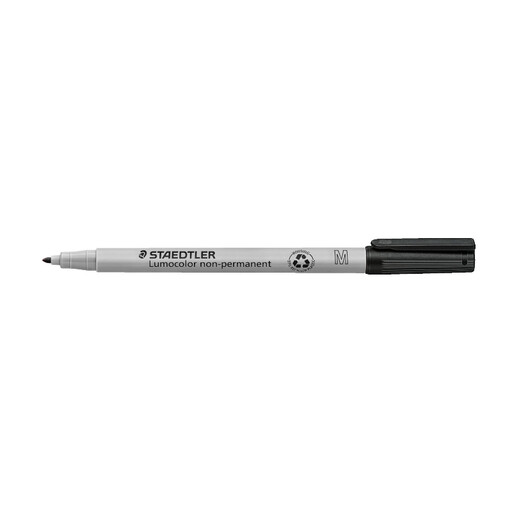
Why This Fits Their Persona: Ideal for teachers, lecturers, and trainers who need a reliable pen for OHP transparencies and other smooth surfaces. The medium tip ensures good readability from a distance.
The ink is fast-drying and smudge-proof, which prevents smearing. The "airplane-safe" technology prevents leaks during air travel, a common problem with lower-quality pens.
Universally applicable on almost all smooth surfaces. The 1.0 mm line width offers a great balance between visibility and writing comfort.
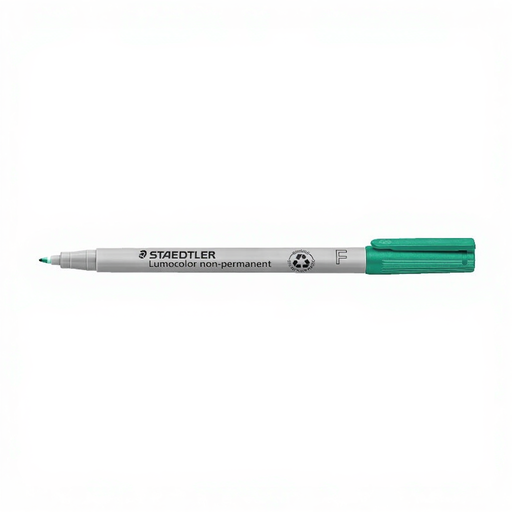
Why This Fits Their Persona: For anyone who colour-codes mind maps, project plans, or flashcards. The fine tip and high colour brilliance make it the ideal tool for visual organisation.
The ink is specially formulated for high colour brilliance without compromising its erasability. This prevents coloured pens from being paler or adhering less effectively than black ones.
The 0.6 mm line width is an excellent compromise for both writing and colour-coding. It is also refillable and equipped with "airplane-safe" technology.
We've compiled a complete, up-to-date list of products that fully meet these strict selection criteria.
1. Can you use a wet-erase transparency pen on a whiteboard? Yes, it's possible, but there's an important difference compared to traditional whiteboard markers. Transparency pens with water-soluble ink are wet-erase, not dry-erase. You will need a damp cloth or sponge to remove the ink. A dry eraser will not work and may smear the ink. However, this can be an advantage for markings that you don't want to be accidentally wiped away.
2. How should you store transparency pens correctly to prevent them from drying out? The general recommendation is to store pens horizontally. This keeps the ink evenly distributed in the feed system and ensures the tip remains moist. Also, make sure to replace the cap firmly after each use until you hear it click into place. Models with a polypropylene (PP) barrel offer additional protection against drying out.
3. What is the difference between "non-permanent" and "permanent"? The difference lies in the ink base. Non-permanent means the ink is water-soluble and can be removed from smooth, non-porous surfaces (like transparencies, glass, plastic) with a damp cloth. Permanent means the ink is waterproof and smudge-proof. It is intended for lasting inscriptions and can usually only be removed with solvents like alcohol. For temporary notes, a non-permanent pen is the right choice.