
Lieferung heute & morgen

Qualitätsgarantie

Willkommens-Angebote freischalten: KOSTENLOSE Lieferung | Bis zu 80 % RABATT | Kostenlose 30-Tage-JoyPlus-Testphase
App herunterladen
Bright sunshine often reveals an unpleasant truth: streaks, fingerprints, and water spots on your windows. Manual window cleaning is not only time-consuming but also involves risks on hard-to-reach glass surfaces, such as in conservatories or on tall windows. An automatic window cleaner promises a solution. However, the market is flooded with devices making bold advertising claims that often fail to deliver in practice.
As your Joybuy Product Recommendation Officer, I'll help you separate the wheat from the chaff. We will highlight the most common pitfalls when buying and show you which technical features truly matter, so you can make an informed decision.
Many devices look convincing at first glance, but a closer look often reveals weaknesses that severely limit their everyday usefulness. Pay special attention to these three points to avoid a bad purchase:
window cleaning robot with a spray function is missing, the cleaning pad must be manually moistened, leading to uneven cleaning and more effort.To avoid these traps, you should carefully examine three core aspects before buying. These define the actual performance and safety of a window cleaning robot.
Adhesion to the window is the fundamental requirement for safe operation. The suction power, measured in Pascals (Pa), should be at least 2,500 Pa for standard windows. For very large or high window surfaces, values from 5,000 Pa are recommended to ensure stable adhesion.
Even more important, however, is the multi-stage safety system. These are absolute must-haves:
A good window cleaning robot doesn't just clean; it navigates intelligently. Modern systems like WIN-SLAM enable systematic and efficient route planning that ensures the entire surface is covered.
Look for devices with precise edge detection sensors. These allow the robot to travel safely along both framed and frameless glass surfaces (e.g., glass showers or balustrades) without falling or bumping into the frame. Good edge detection is the key to truly edge-to-edge cleaning.
The actual cleaning performance heavily depends on the interplay between wetting and the cleaning pad.
Based on these criteria, we have identified several models that represent a considered choice for different user profiles and requirements.
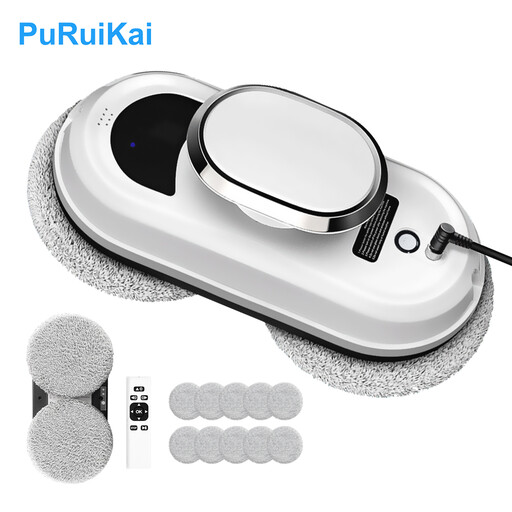
Why This Fits Their Persona: Ideal for users who want to try out the technology without a major investment. The device is well-suited for standard windows in apartments and houses and is easily controlled via remote.
The model focuses on core functions: solid dual suction power of 2800 Pa ensures reliable adhesion on smooth surfaces, and automatic edge detection prevents collisions. It doesn't overpromise with unnecessary extras.
Features intelligent path planning and essential safety features like a backup battery and safety tether. The remote control operation is straightforward and requires no app installation.
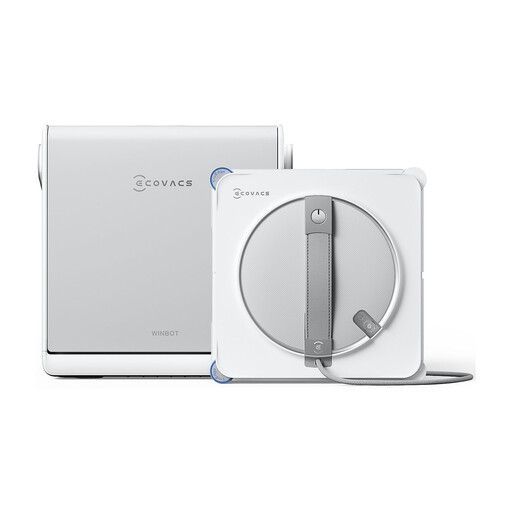
Why This Fits Their Persona: Designed for demanding tasks like conservatories, floor-to-ceiling windows, or glass facades. Its high suction power and comprehensive safety system provide the reliability needed for a `window cleaning robot for high windows`.
Directly addresses the poor edge cleaning trap with its TruEdge technology, which the manufacturer claims is designed for precise cleaning up to 1.1 cm from the edge. The high suction power of 8,000 Pa ensures a secure hold.
The multifunctional station serves as a control center, charging station, and storage solution. The 12-stage safety system and WIN-SLAM 4.0 navigation offer a high degree of control and efficiency.
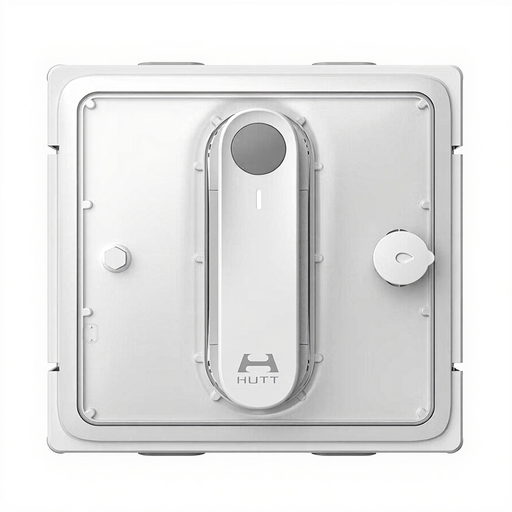
Why This Fits Their Persona: For users who value fully automated and efficient cleaning. The innovative spray system and intelligent obstacle detection make the cleaning process exceptionally convenient and thorough.
It bypasses the inefficient wetting trap with a large 150 ml panoramic tank that sprays liquid evenly. Its intelligent route planning ensures gap-free coverage, avoiding the pitfall of simplistic navigation.
The device detects edges and obstacles, cleans controllably to the very edge, and returns to its starting point upon completion. It can be operated either directly on the unit or via remote control.
We've compiled a complete, up-to-date list of products that fully meet these strict selection criteria and safety regulations.
1. How safe is a window cleaning robot, really? Safety is a key aspect in the design of these devices. Reputable models feature a multi-stage system: strong suction power provides the primary adhesion, an integrated backup battery (UPS) prevents an immediate fall during a power outage, and a sturdy safety tether, attached indoors, offers the final safeguard. When used correctly according to the manufacturer's instructions, operation is very safe.
2. Do window cleaning robots also work on frameless windows or tiles? Yes, many modern window cleaning robots are designed for this. The crucial feature here is the edge detection sensors. These allow the device to recognize the end of the glass surface and change direction without falling. Therefore, they are suitable not only for windows but also for other smooth, vertical surfaces like glass shower cabins, mirrors, or large-format tiled walls.
3. What is the maintenance effort for an automatic window cleaner? The effort is minimal. After each use, the microfiber pads should be cleaned—most are machine-washable. For models with a spray function, the tank needs to be refilled with water or a suitable cleaning solution as needed. It is also recommended to regularly check the sensors and drive tracks for dirt and clean them with a soft cloth to ensure flawless operation.