
Lieferung heute & morgen

Qualitätsgarantie

Willkommens-Angebote freischalten: KOSTENLOSE Lieferung | Bis zu 80 % RABATT | Kostenlose 30-Tage-JoyPlus-Testphase
App herunterladen
A high-quality wok pan is the cornerstone of Asian cooking, allowing you to create dishes with the signature 'wok hei' aroma. However, the market is flooded with models whose marketing promises often fall flat in practice. Many home cooks invest in a pan that quickly warps, has a coating that fails under high heat, or simply doesn't perform correctly on their specific stovetop.
As your Joybuy Product Recommendation Officer, I'm here to help you identify these pitfalls. Instead of falling for overhyped marketing claims, we'll focus on the critical characteristics that separate a great Asian pan from a poor one.
The 2 Most Common Traps When Buying a Wok:
To avoid a bad purchase, you should check three technical aspects before making a decision. These determine the performance, durability, and compatibility with your kitchen.
The material significantly impacts heat distribution, responsiveness, and maintenance.
Compatibility with your cooktop is non-negotiable.
The choice of surface is a decision between convenience and longevity.
Here are a few models tailored to specific user profiles that successfully navigate the pitfalls mentioned.
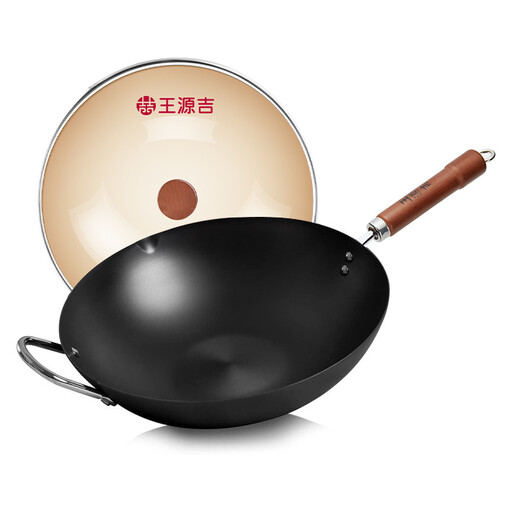
Why This Fits Their Persona: Ideal for users seeking that authentic 'wok hei' aroma and who are willing to season and maintain a carbon steel wok. The flat bottom makes it compatible with modern stovetops.
Through seasoning, it builds a natural, chemical-free non-stick patina that withstands extremely high temperatures—unlike delicate chemical coatings.
Excellent heat conduction for fast, high-heat searing. The surface is a wok without coating that develops an ever-improving non-stick property over time.
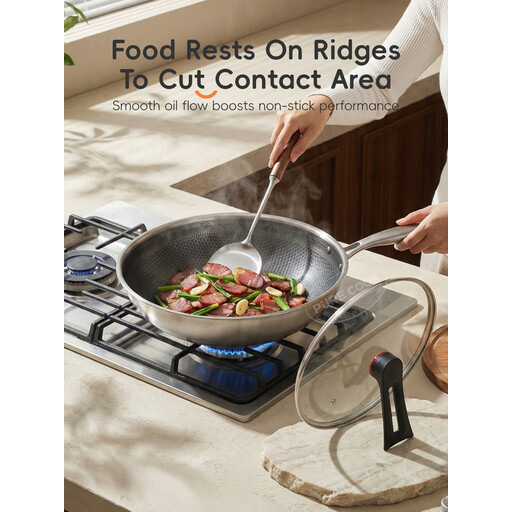
Why This Fits Their Persona: Perfect for home cooks who value the durability of stainless steel and want a low-maintenance solution without the need for seasoning. The included wok with lid adds versatility.
The physical non-stick texture (honeycomb pattern) is scratch-resistant and more durable than thin chemical coatings. The thick, flat bottom ensures stable performance as a wok for induction.
Robust tri-ply stainless steel wok construction for even heat distribution; scratch-resistant enough for metal utensils and dishwasher-safe.
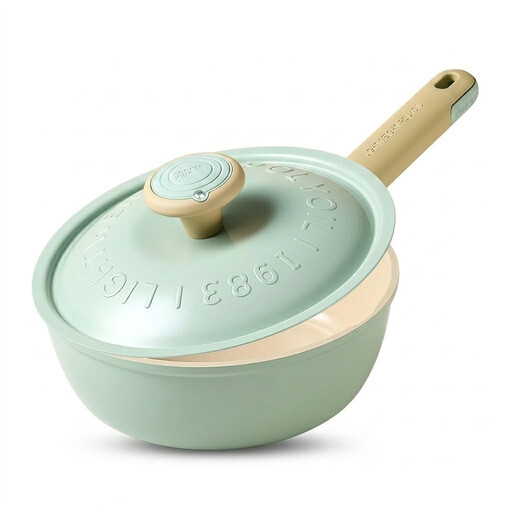
Why This Fits Their Persona: A straightforward choice for those who prioritize health safety and want an out-of-the-box non-stick solution for their induction or gas stove.
This PFAS-free wok bypasses concerns about potentially harmful chemicals in traditional coatings, offering peace of mind while cooking.
Offers the convenience of a non-stick pan without PFAS. The design is universal for both gas and induction stoves, making it highly versatile.
We've compiled a complete, up-to-date list of products that meet these strict selection criteria and current safety regulations.
Yes, if you choose a carbon steel wok or a cast iron one. Seasoning is a critical process where a thin layer of oil is polymerized at high temperature to form a natural, protective non-stick layer (patina). This process protects the wok from rust and is the foundation of its excellent cooking properties. It is not necessary for coated woks.
Clean the wok immediately after use while it's still warm. Use hot water and a soft brush or a bamboo wok brush. Avoid dish soap, as it can strip away the valuable patina. For stubborn residue, you can use coarse salt as a gentle abrasive. After cleaning, dry the wok immediately and thoroughly (e.g., by briefly placing it on the hot stove) and rub it with a thin layer of cooking oil to prevent rust.
Yes, absolutely. While traditional round-bottom woks are optimized for the open flame of a gas stove, a high-quality flat-bottom wok can achieve excellent results on modern cooktops. The key is that the wok must have good heat conductivity and retention to reach the high, consistent heat required for stir-frying. A thick base made of carbon steel or a multi-ply stainless steel material can generate 'wok hei' even on an induction or ceramic hob.
Sincerely,
Your Joybuy Product Recommendation Officer