
Lieferung heute & morgen

Qualitätsgarantie

Willkommens-Angebote freischalten: KOSTENLOSE Lieferung | Bis zu 80 % RABATT | Kostenlose 30-Tage-JoyPlus-Testphase
App herunterladen
A good pair of women's performance trousers is the foundation for great outdoor adventures. Whether on a long hike, travelling, or gardening, the wrong clothing can quickly ruin the experience. Trousers that chafe, get soaked in a brief shower, or restrict movement usually end up at the back of the wardrobe.
This article serves as a guide. We'll explain which features are important when choosing women's outdoor trousers and present a selection of different models, each suited for various activities due to their specific properties.
The choice of model depends on your planned activities and personal preferences. Three key criteria will help you find the right pair.
The material is a key determinant of comfort and functionality. Synthetic fabrics like polyester or polyamide (nylon) are common in performance apparel because they are durable and easy to care for.
A pair of women's hiking trousers should move with you without feeling restrictive. Stretchy materials (often with an elastane blend) and thoughtful tailoring are crucial here. Pre-shaped knees (articulated knees) offer additional flexibility, which is particularly advantageous on steep ascents or climbing sections. Some models are available in different leg lengths (short, regular, and tall) to ensure an optimal fit for various body types.
Functional details enhance the usability of trousers for daily wear and on the trail. Zipped pockets are an important feature for securely storing valuables like keys, a smartphone, or money. An elastic waistband with an additional drawstring ensures a secure and adjustable fit. For maximum versatility, there are also zip-off trousers that can be converted into women's hiking shorts in just a few simple steps.
Here, we present three models that are well-suited for different applications due to their specific features.
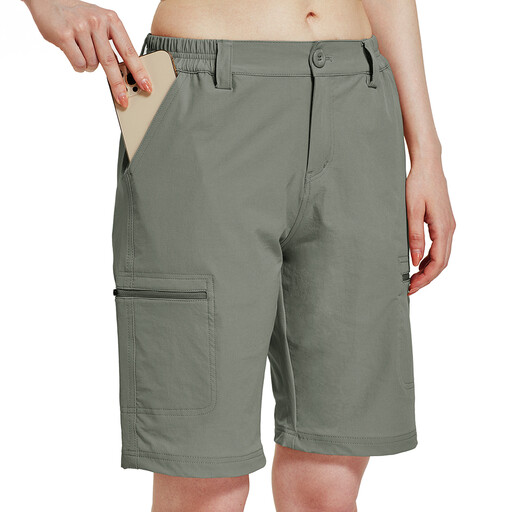
Why they stand out: These shorts combine the functionality of hiking trousers with a summer-friendly cut. The 10-inch inseam (approx. 25 cm) offers protection and freedom of movement without causing overheating in warm temperatures.
Advantages:
Who they're for: Ideal for women looking for an airy yet functional alternative to long trousers for summer hikes, cycling, or travelling.

Why they stand out: These women's trekking trousers are distinguished by their thoughtful protective features. According to the manufacturer, the fabric offers UPF 50+ UV protection and is also water-resistant. The availability in different leg lengths (Petite, Regular, Tall) allows for a precise fit.
Advantages:
Who they're for: A great choice for hikers and travellers who need versatile, lightweight trousers with reliable weather protection for changeable conditions and extended periods outdoors.

Why they stand out: This model combines the comfort of joggers with the functional properties of outdoor trousers. A special feature is the side mesh panels, which provide improved ventilation during more intense activities.
Advantages:
Who they're for: Perfect for women seeking extremely comfortable and versatile trousers for travel, light sports activities like jogging or yoga, and casual daily wear.
The selection presented here covers various applications. But the world of performance apparel is diverse. If you are looking for other models with specific features or simply want to browse, you may find the right product in our broader collection.
Discover our entire range of quick-drying clothing for your next tour.
1. What does "water-resistant" mean for performance trousers? A water-resistant finish (often called DWR) causes water to bead up on the fabric's surface. This provides protection against light drizzle or splashes. Unlike "waterproof," however, water-resistant trousers cannot withstand heavy or prolonged rain. In return, they are usually significantly more breathable.
2. How important is UV protection in women's hiking trousers? UV protection integrated into the fabric (UPF) is particularly important during long periods in the sun, such as at high altitudes or in southern countries. It protects the skin from harmful UVA and UVB radiation more effectively than many conventional fabrics. A UPF of 50+ means that less than 1/50th of UV radiation penetrates the fabric.