
Lieferung heute & morgen

Qualitätsgarantie

Willkommens-Angebote freischalten: KOSTENLOSE Lieferung | Bis zu 80 % RABATT | Kostenlose 30-Tage-JoyPlus-Testphase
App herunterladen
Finding the first puzzle for a child is a special milestone. A well-chosen wooden puzzle for children aged 1+ not only provides entertainment but also actively supports the development of fine motor skills and logical reasoning. However, the market can be overwhelming, and not every product advertised as educational lives up to its promise. Many parents invest in toys that quickly prove to be unsuitable or even unsafe. This guide will help you navigate the common pitfalls and make an informed decision.
Before you make a purchase, it's helpful to understand the most common issues that can compromise a toy's play value and safety.
To avoid making the wrong choice, you should focus your attention on three key product features. These define the quality, safety, and educational benefit of a puzzle for toddlers.
The material is the foundation of a safe toy. Look specifically for products made from FSC-certified wood. The FSC (Forest Stewardship Council) seal ensures that the wood comes from responsibly managed forests. This is a key indicator of sustainable wooden toys.
The surface treatment is equally important. The paints and varnishes must be explicitly declared as saliva-resistant and non-toxic, ideally tested according to the European toy safety standard EN 71. This standard sets strict limits for chemical substances and is a reliable benchmark for safety.
For a baby's first puzzle, how easy it is to grasp is crucial. A wooden peg puzzle or knob puzzle with large, sturdy knobs is ideal for training hand-eye coordination and fine motor skills. The fingers and hands of one-year-olds are still developing strength and precision. A well-designed knob allows the child to securely pick up the puzzle piece, turn it, and place it into the matching slot.
The number of pieces should be low (typically 4 to 8), and the shapes should be clear and distinct. Animal motifs or simple geometric shapes are well-suited for this.
A high-quality wooden motor skills toy is distinguished by its meticulous craftsmanship. All edges and corners must be cleanly rounded to prevent injuries. The surface should be sanded smooth, so there is no risk of splinters. A robust design ensures that the toy for 12-month-olds can withstand intensive use without pieces breaking or coming loose.
Based on the quality criteria mentioned, we have identified several products that are suitable for different requirements.
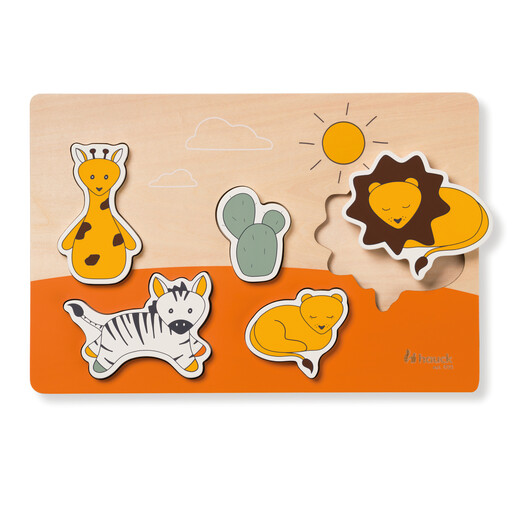
Why This Fits Their Persona: Ideal for beginners. The classic design with a few, clearly distinct pieces and large knobs is perfectly tailored to the motor skills of one-year-olds, ensuring quick success.
The large, sturdy knobs are easy for little hands to grasp, minimising frustration. The manageable number of pieces prevents the child from feeling overwhelmed.
Made from FSC-certified wood; promotes animal recognition and naming alongside motor skills.
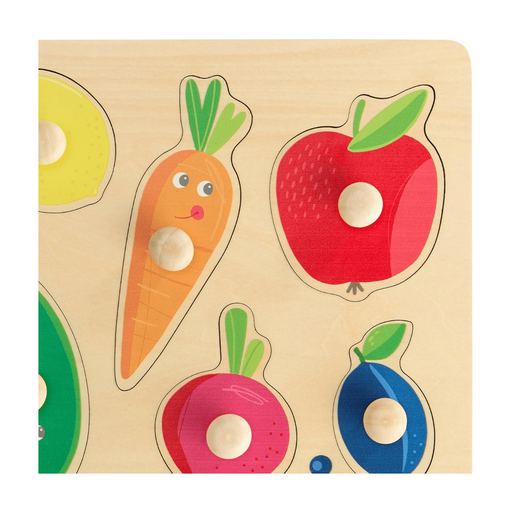
Why This Fits Their Persona: For parents who prioritise the highest material quality and an enhanced educational aspect. Haba is an established brand known for durable and thoughtfully designed wooden toys.
The puzzle is made from solid wood and printed with a durable, non-toxic foil, eliminating concerns about material safety. The design is explicitly conceived for children aged 12 months and up.
Combines motor skill practice with the playful learning of colours and fruits; very high-quality and robust construction.
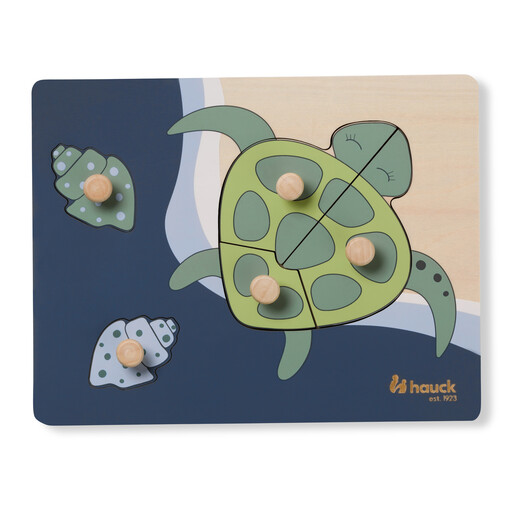
Why This Fits Their Persona: Suitable for children who have already mastered simple peg puzzles. This requires multiple pieces to be assembled into a single animal, presenting a greater cognitive challenge.
By presenting a more complex task, this puzzle prevents boredom and extends its lifespan. The construction from FSC wood with rounded edges ensures safety.
Promotes understanding relationships between parts and assembling shapes into a whole image; a great next step after simple peg puzzles.
We have compiled a complete, real-time list of products that fully satisfy these strict selection criteria and UK safety regulations.
Generally, wooden puzzles are suitable from around 12 months of age. At this stage, children begin to train their fine motor skills and hand-eye coordination more purposefully. Look for products explicitly labelled "1 year+" or "12M+" that feature large, easy-to-grasp pieces.
To clean the puzzle, it is usually sufficient to wipe the surface with a slightly damp cloth. Avoid immersing the wooden toy in water or using aggressive chemical cleaners, as this can damage the material and the finish. Always follow the manufacturer's care instructions.
Reliable indicators of safe wooden toys are recognised certifications. The FSC seal stands for sustainable forestry. Compliance with the European toy safety standard EN 71 ensures that the product has been tested for harmful substances and mechanical safety. Additionally, you should look for high-quality craftsmanship with rounded edges and a splinter-free surface.