
Lieferung heute & morgen

Qualitätsgarantie

Willkommens-Angebote freischalten: KOSTENLOSE Lieferung | Bis zu 80 % RABATT | Kostenlose 30-Tage-JoyPlus-Testphase
App herunterladen
At first glance, a yoga mat seems like a simple product. But anyone who has tried to hold a balance pose on a slippery or overly thin mat knows the truth: the right surface is crucial for a safe and effective practice. Many buyers are swayed by marketing promises or price, only to find out after a few weeks that their mat is unsuitable for their needs. Before you make a decision, you should know the three most common pitfalls that lead to a bad purchase.
To make an informed decision, you should focus on objective criteria. These three parameters are crucial for the functionality and longevity of your future yoga mat.
The material is the foundation of any exercise mat. Each has specific advantages and disadvantages:
The right thickness depends on your workout and your body's needs.
The standard size of a yoga mat is approximately 183 x 61 cm. For most people, this is sufficient. However, if you are taller or practice exercises with wide lunges, a large yoga mat (e.g., 190 x 80 cm or even 190 x 100 cm) offers significantly more freedom of movement and comfort, preventing your hands or feet from constantly landing on the floor.
Based on the criteria mentioned, we have selected a few products for different user profiles.

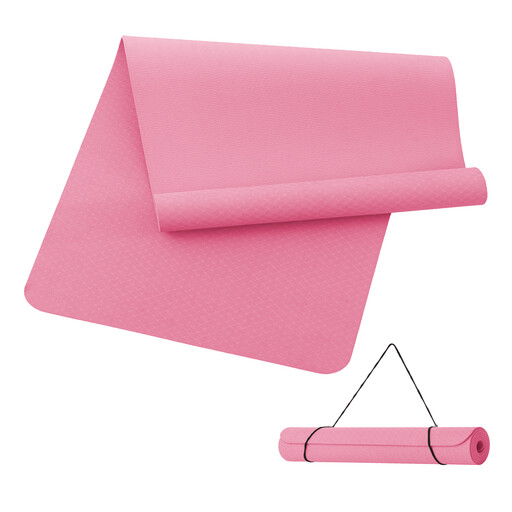
Why This Fits Their Persona: Ideal for beginners and occasional users looking for a functional mat for yoga, Pilates, and general fitness without a large investment.
The 6 mm thickness offers a great balance of cushioning and stability, avoiding the instability of overly thick mats. The TPE material with a dual-sided texture ensures reliable slip resistance, which is superior to smooth PVC mats.
Excellent value for money; includes a carrying strap for easy transport; lightweight and suitable for various types of exercise.
Why This Fits Their Persona: Perfect for tall individuals or for those who want maximum freedom of movement during dynamic workouts, Pilates, or expansive yoga poses.
This mat solves the standard-size problem. The XXL dimensions of 190 x 100 cm provide a huge practice area. The dual-sided anti-slip texture (leaf and wave patterns) ensures a secure grip even on a large surface.
Enormous freedom of movement; TPE material for good cushioning and grip; versatile for yoga, Pilates, and general fitness exercises.

Why This Fits Their Persona: For yogis who prioritise maximum grip during hot yoga or intense workouts and prefer a natural material.
This mat solves the problem of slipping when you sweat. The cork surface absorbs moisture, which actually increases its grip. It bypasses the trap of misleading eco-labels by using a renewable raw material.
Excellent slip resistance when wet; natural, antimicrobial surface; TPE base provides necessary cushioning and stability.
We've compiled a complete, up-to-date list of products that fully meet these strict selection criteria and relevant safety standards.
1. How do I properly clean and care for my yoga mat? Care instructions depend on the material. Mats made of TPE or PVC can be wiped down after your practice with a damp cloth and, if necessary, a mild soap solution. Mats with a cork surface should only be cleaned with a damp cloth without soap to avoid damaging the natural material. Always let the mat air dry completely after cleaning before rolling it up. Machine washing is not recommended for any of these mats.
2. What thickness is suitable for a yoga mat if I have knee problems? For sensitive knees, a thickness of 5 to 6 mm is a good starting point, as it offers a solid compromise between cushioning and stability. If you primarily do floor exercises without balance requirements, a gymnastics mat made of NBR with a thickness of 10 to 12 mm can also be a great choice, as it provides maximum comfort. However, for a mixed practice, the 6 mm version is usually the better all-around solution.
3. When should I replace my yoga mat? A yoga mat should be replaced when it shows clear signs of wear and tear. Look for these indicators: the surface becomes noticeably slipperier, cracks form, the material begins to crumble, or the cushioning has significantly diminished in high-use areas (e.g., under hands and feet). The lifespan heavily depends on the frequency of use, the intensity of your workouts, and proper care.