
Lieferung heute & morgen

Qualitätsgarantie

Willkommens-Angebote freischalten: KOSTENLOSE Lieferung | Bis zu 80 % RABATT | Kostenlose 30-Tage-JoyPlus-Testphase
App herunterladen
If you’re looking for 3-piece bedding, 200x200 cm for a double bed, you’ll usually expect a straightforward set: one 200x200 cm duvet cover and two 80x80 cm pillowcases. However, sets can vary considerably in their material, fastening, internal ties and care requirements. Checking the details carefully helps prevent the cover from shrinking after a few washes, the duvet from shifting around or the set arriving incomplete.
The “200x200 cm” measurement often refers only to the duvet cover. Check whether the set also includes two 80x80 cm pillowcases. Some listings are for a single cover or a fitted sheet only, so it’s essential to check the “What’s included” details and product photos.
Terms such as “cotton-like”, “Soft Touch” or “plush” describe the feel or appearance, but don’t necessarily tell you what the fabric is made from. Cotton bedding can be breathable with a pleasingly textured feel, while microfibre bedding often dries quickly and resists creasing. For an informed choice, check the exact material composition and care instructions.
Bedding with a zip is quick to put on. However, without internal ties, your duvet may shift around inside the cover. Four or eight corner ties can be a useful addition, especially if you wash your bedding frequently or use a large double duvet. It’s also worth checking how the zip is finished: a concealed fastening helps prevent direct contact with your skin and gives the bedding a discreet look.
For a standard 200x200 cm duvet, you’ll need a cover in the same size. The two pillowcases should each measure 80x80 cm, provided this German standard size fits your pillows. If your duvet is particularly thick or voluminous, check the internal measurements and whether corner ties are included.
Cotton is a popular choice for many households if you prefer a natural fibre, a textured weave and good breathability. Depending on the finish, washed cotton may have a slightly irregular, linen-like appearance and may not need ironing.
Polyester microfibre is usually lightweight, easy to care for and comparatively quick to dry. The surface may be smooth, brushed or textured. Lightweight versions are well suited to warmer months, while plush, flannel or velour finishes are also options for winter bedding. If you have sensitive skin, check the material details and washing temperature, and consider how well you tolerate the fabric. The material alone is no basis for claiming therapeutic or medical benefits.
When considering OEKO-TEX bedding, check the specific product information. Standard 100 tests textiles and their components for certain harmful substances. It doesn’t guarantee a particular quality of sleep, and it doesn’t replace checking the size, material or care label. The recommendations below mention certification only where it is stated in the relevant product description.
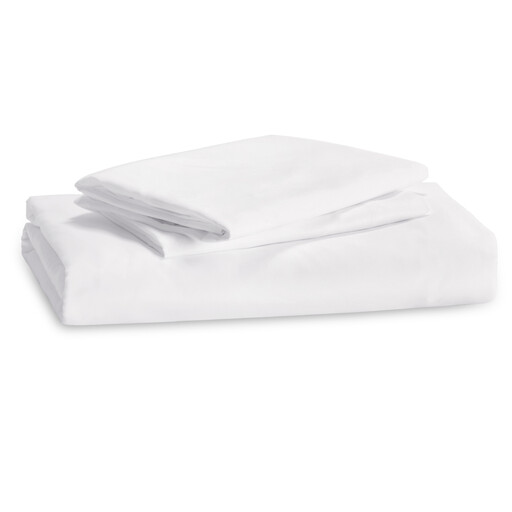
Why it suits this profile: This simple white set includes a 200x200 cm duvet cover and two 80x80 cm pillowcases. The 90% polyester microfibre has zips and, according to the product details, is certified to OEKO-TEX Standard 100.
The clearly stated contents help reduce the risk of receiving an incomplete set. The zip makes it easier to put the bedding on.
A neutral plain colour, machine-washable microfibre and zips on the duvet cover and pillowcases.
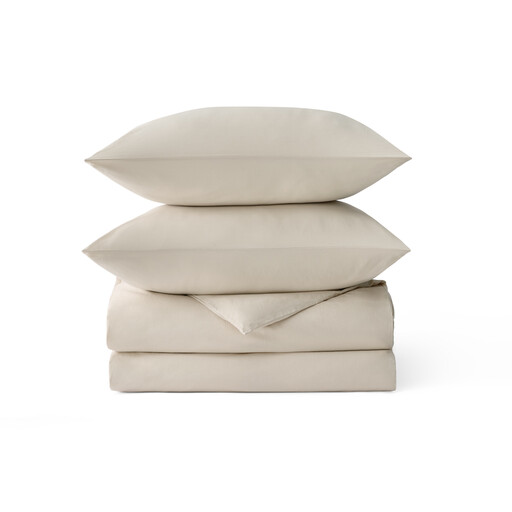
Why it suits this profile: This set combines 90% cotton with a washed, linen-like finish. The product description lists eight corner ties, a concealed zip and OEKO-TEX Standard 100 certification, number 24.HCN.19195.
The eight corner ties help prevent the duvet from shifting around, a common issue. The exact material composition also avoids any ambiguity around terms such as “cotton feel”.
90% cotton, two pillowcases and eight corner ties. The product details also recommend machine washing and tumble drying at low temperatures.
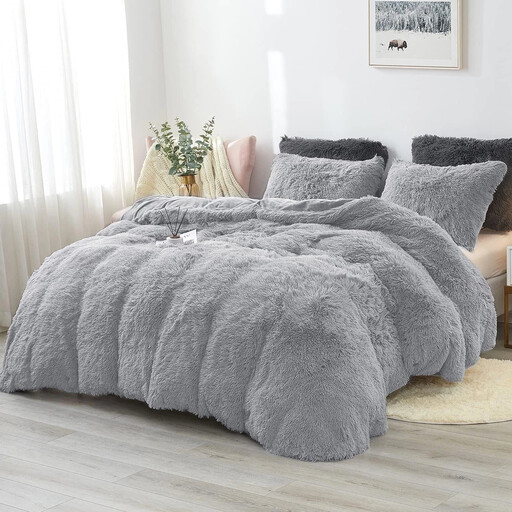
Why it suits this profile: The combination of microfibre plush and flannel velour is designed to feel warmer against the skin. The set includes a 200x200 cm duvet cover, two 80x80 cm pillowcases, a concealed zip and four internal ties.
The material combination makes the set’s seasonal purpose clear. Four internal ties help keep the duvet in position inside the cover.
A cosy plush surface, concealed zip and four internal ties. The product description recommends a gentle wash cycle.
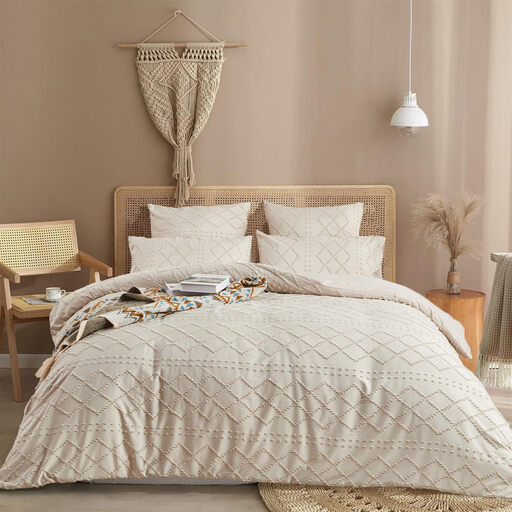
Why it suits this profile: The textured geometric pattern and embroidery suit boho or shabby-chic interiors. The set includes a 200x200 cm duvet cover and two 80x80 cm pillowcases.
Alongside its decorative design, the set has eight corner ties and a concealed zip. That means it’s practical as well as stylish.
Textured microfibre, eight internal ties and a concealed zip. The product details recommend machine washing on a gentle cycle.
Washable bedding should be cared for according to its care label. Fasten zips before washing, and avoid heavy friction and bleach unless the care instructions specifically allow them. Cotton may shrink depending on its finish, so it’s important to follow the recommended temperature. Microfibre and plush covers often need to be washed at a low temperature and tumble dried on a low heat. Having a spare set reduces wear on each cover and makes it easier to keep your bedding fresh.
We’ve put together a complete, regularly updated list of products that meet these strict selection criteria and fully comply with the safety regulations in force in the EU.
A set usually includes a 200x200 cm duvet cover and two 80x80 cm pillowcases. Retailers also sell single covers and sets with different pillowcase sizes, so check what’s included before you buy.
It depends on what matters most to you. Cotton has a natural fibre structure and can feel breathable. Microfibre is often lightweight, easy to care for and quick to dry. For winter bedding, the pile, fabric thickness and how warm it feels are also important.
There’s no reliable way to give a fixed lifespan. It depends on the quality of the fibres, the construction, washing temperature, drying method and how often you change the bedding. Zips, seams and how well the bedding retains its shape after several washes are useful things to consider when choosing a set.