
Lieferung heute & morgen

Qualitätsgarantie

Willkommens-Angebote freischalten: KOSTENLOSE Lieferung | Bis zu 80 % RABATT | Kostenlose 30-Tage-JoyPlus-Testphase
App herunterladen
When neck tension, back pain, or the symptoms of an oncoming cold disrupt daily life, many people look for a supportive at-home treatment. An infrared lamp like the Beurer IL 50 is often a top consideration. However, the market for heat lamps is crowded, and not every device delivers on its promises. Before you make a decision, it's important to understand the common pitfalls that can lead to a bad purchase.
Many buyers invest in models that later prove to be inadequate or impractical. The most common problems include:
An informed approach protects you from these disappointments. It's about understanding the technical features that are crucial for a safe and effective application.
To make an informed choice, you should examine three core parameters. These features separate functional devices from less suitable models and are decisive for at-home infrared therapy.
The power, specified in watts, is a key indicator of the heat radiation's intensity. Models with low power (e.g., under 150 watts) are often only suitable for very small areas. A 300W heat emitter, like the one in the Beurer IL 50 infrared lamp, can cover a larger area and generate more intense, deeper heat. This is particularly relevant for treating widespread tension in the back or shoulder area. Also, pay attention to the quality of the bulb. High-quality ceramic glass plates, common in brand-name products, filter out unwanted radiation and ensure even heat distribution.
Safety is non-negotiable when it comes to heat application. A therapy lamp with a timer is an essential feature. It allows you to set the treatment duration precisely—usually between 1 and 15 minutes. The device automatically switches off when the time is up, preventing excessive exposure. Additional overheat protection, often implemented through active ventilation, ensures the device doesn't overheat during extended use and delivers consistent performance.
Muscle tension occurs in various parts of the body. A good heat lamp for tension must therefore be flexible. Check if the lamp head's tilt angle is adjustable. A continuously or multi-position adjustable head allows you to direct the heat specifically to the neck, shoulder, back, or joints without having to adopt an uncomfortable posture. The size of the treatment area (e.g., 30 x 40 cm) indicates how large the covered area is. For the back, a larger surface is more advantageous than for a single joint.
Based on these objective criteria, we have identified several models that are suitable for different needs and use cases.

Why this model is a good fit: Ideal for individuals who need intensive heat treatment for larger body areas like the entire back or shoulder region and who value maximum control and safety.
With 300 watts of power, an adjustable timer (1-15 min.), and a tilting head, this device bypasses the typical weaknesses of cheaper models, such as insufficient heat and a lack of safety features.
Large treatment area (approx. 30x40 cm) and active ventilation to protect against overheating.
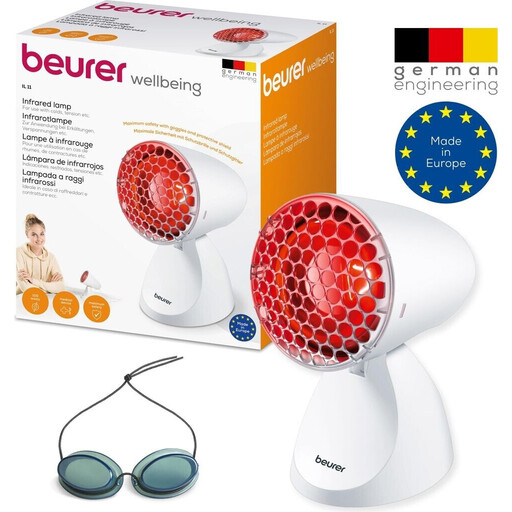
Why this model is a good fit: A great choice for users new to infrared therapy or those looking for a compact solution for the targeted treatment of smaller areas like the neck, elbows, or knee joints.
Although it has less power at 100 watts, it is classified as a medical device and features a 5-position adjustable head, which allows for precise and safe application.
Compact, lightweight design and simple operation without complex settings.
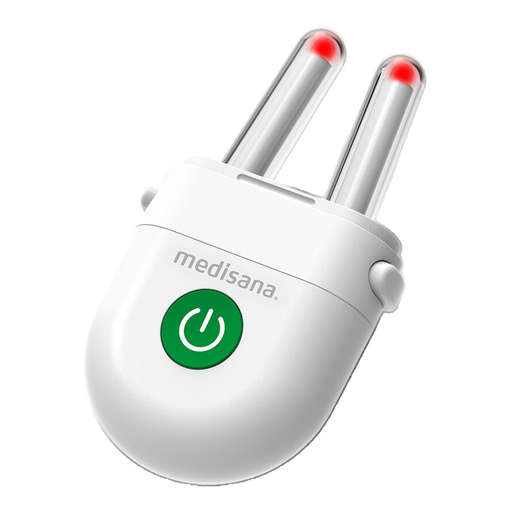
Why this model is a good fit: This device is specifically designed for use in the nasal area to relieve symptoms of hay fever or allergic rhinitis through light therapy.
It is not a general heat emitter but a specialised light therapy device. It avoids the mistake of using an unsuitable, large heat lamp for a sensitive area.
Compact, cordless design for personal use with short, preset application times (approx. 3 minutes).
We have compiled a complete, up-to-date list of products that fully meet these strict selection criteria and German safety regulations.
How long and how often should you use an infrared lamp? The recommended duration of use is typically 10 to 15 minutes per session, once or twice daily. It is important to follow the manufacturer's specific instructions in the user manual, as the duration can vary depending on the device's power.
What is a safe distance from the skin for a heat lamp? A safe distance is typically between 30 and 50 centimetres. The heat should feel pleasant and relaxing, never hot or burning. If your skin feels too hot, increase the distance immediately or end the session.
Can a red light lamp help with a cold? The heat generated by a red light lamp can promote blood circulation in the mucous membranes. This can be perceived as soothing and may help alleviate symptoms like a stuffy nose. It is a supportive measure to enhance well-being, not a cure for the cold itself.