
Lieferung heute & morgen

Qualitätsgarantie

Willkommens-Angebote freischalten: KOSTENLOSE Lieferung | Bis zu 80 % RABATT | Kostenlose 30-Tage-JoyPlus-Testphase
App herunterladen
A Bialetti espresso maker is more than just a kitchen appliance; it's a piece of Italian coffee culture for your home. Since 1933, the octagonal Moka pot has symbolised the ritual of preparing a strong, aromatic coffee on the stovetop. However, selecting the right model comes with a few pitfalls that often lead to disappointment and a bad purchase.
As your Joybuy Product Recommendation Officer, I'm here to help you navigate the jungle of sizes, materials, and model variations. We'll focus on the facts so you can make an informed decision and find the perfect Italian espresso maker that suits you and your kitchen.
The 3 most common mistakes when buying a Moka pot:
To avoid these mistakes, you should check three key aspects before buying. These determine not only the functionality but also the quality of your coffee.
The material of your stovetop pot is directly linked to its compatibility with your hob type.
The size specification on a caffettiera is the key to perfect coffee. The unit of measurement is always the espresso cup.
Assess your needs realistically. To brew good coffee, the funnel filter should always be completely filled with coffee grounds. Therefore, don't buy a 6-cup pot if you usually only drink a single espresso.
A genuine Bialetti espresso maker is an investment for years to come. Look for the following features to ensure quality:
Here are some recommendations tailored to different needs and kitchen setups.
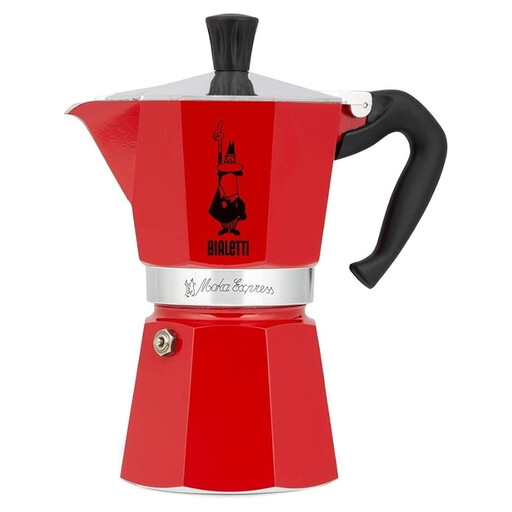
Why This Fits Their Persona: Ideal for lovers of the authentic Italian coffee ritual who value the iconic design and the proven preparation method on a gas or electric hob. The 3-cup size is a versatile classic.
This is the Original Bialetti, which eliminates the risk of a low-quality knock-off. The clear size definition prevents the mistake of buying an incorrectly sized pot.
Classic aluminium construction for authentic flavour development. Patented safety valve and durable build quality.
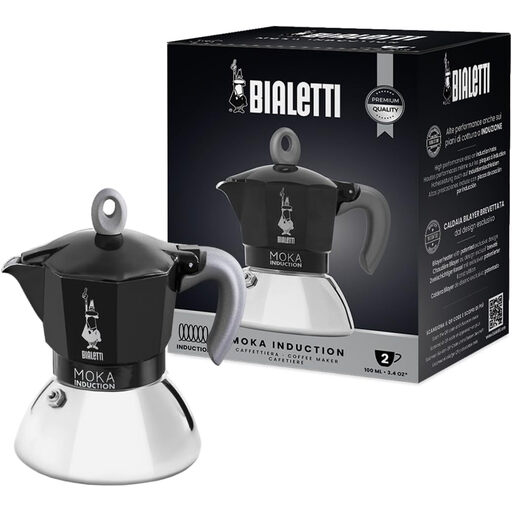
Why This Fits Their Persona: Perfect for users with a modern induction hob who don't want to miss out on the Moka experience. The design combines classic aesthetics with modern functionality.
This model is explicitly designated as Induction Stovetop Compatible, directly solving the incompatibility problem without needing an extra adapter.
Bi-layer technology with a stainless steel boiler for induction and an aluminium upper chamber for traditional flavour. Suitable for all hob types.
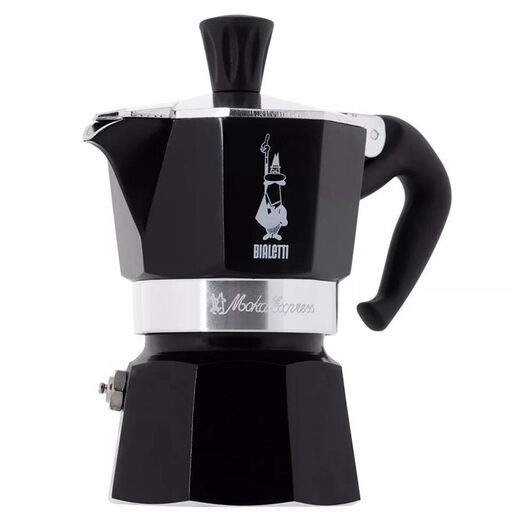
Why This Fits Their Persona: The solution for a quick, strong espresso in the morning without any waste. Its compact size is ideal for small kitchens, the office, or as a travel companion.
Prevents buying an oversized pot for single use. It ensures the coffee is strong and aromatic because the coffee funnel is filled appropriately for the amount of water.
Produces exactly one serving (approx. 60 ml) of strong coffee. Minimal material and space requirements. Quick to prepare and easy to clean.
We have compiled a complete, up-to-date list of products that fully meet these strict selection criteria and safety regulations.
Cleaning is straightforward, but one key point is often done wrong. After it has cooled, rinse all parts of the pot exclusively with warm water and dry them thoroughly. Use no dish soap and never put the pot in the dishwasher. Especially with aluminium models, detergents attack the surface and destroy the patina, which negatively affects the coffee's taste.
No. Only models explicitly marked as suitable for induction (e.g., the "Moka Induction" series) or those with a stainless steel boiler will work directly on an induction hob. For classic aluminium models like the Moka Express, you will need a separate Bialetti induction adapter plate, which is placed on the hob as a heat-conducting layer.
A stovetop espresso maker, also called a Moka pot, generates pressure of about 1.5 to 2 bars by heating water. This pressure forces the water through the coffee grounds. The result is a very strong, concentrated coffee. In contrast, a professional portafilter espresso machine works with much higher pressure (typically 9 bars) generated by a pump. This high pressure is necessary to create the dense crema characteristic of a true espresso.