
Lieferung heute & morgen

Qualitätsgarantie

Willkommens-Angebote freischalten: KOSTENLOSE Lieferung | Bis zu 80 % RABATT | Kostenlose 30-Tage-JoyPlus-Testphase
App herunterladen
A Bialetti espresso maker is synonymous with manually preparing rich moka coffee on the hob. However, coffee lovers should check more than just colour and shape before buying. The key considerations are hob compatibility, cup size and material. Overlooking these points can quickly lead to buying a moka pot that does not work on your hob or is the wrong size for your daily needs.
A classic Bialetti Moka Express made from aluminium is normally designed for gas, electric, ceramic or glass-ceramic hobs. Aluminium alone is not detected directly by an induction hob. Some product descriptions list several hob types, but also state that an induction adapter plate is required.
If you are looking for an espresso maker for induction, make sure that induction compatibility is explicitly stated. The lower chamber of the Bialetti Moka Induction is made from stainless steel and is designed for induction hobs.
With a moka pot, “3 cups” does not mean three large mugs of coffee. Manufacturers measure capacity using Italian espresso cups. Depending on the version, a 3-cup Bialetti Moka Express produces approximately 130 to 150 ml. A 6-cup model can prepare around 270 to 300 ml.
Choose the pot size to suit your actual needs. The filter is designed for the relevant size and should not be only partially filled. If you regularly drink just one portion, an espresso maker for 1 cup or 2 cups is therefore more practical than a 6-cup pot.
Many Bialetti models are not dishwasher-safe. Aluminium can be affected by aggressive cleaning products or the dishwasher cycle. For everyday care, rinsing the cooled individual parts with clean water is generally sufficient. They should then be left to dry completely before the pot is reassembled.
Before buying, check whether you have a gas, electric, ceramic or induction hob:
An Italian espresso maker is not an automatic pressure coffee machine. It works manually using heated water and ground coffee. Do not fill above the safety valve, and do not block it during use.
An aluminium espresso maker is typical of the classic Moka Express. The material contributes to its low weight and traditional design. Aluminium versions should be cleaned by hand with water.
A stainless steel espresso maker, or a model with a stainless steel lower chamber, is particularly relevant for induction hobs. The Bialetti Moka Induction combines a stainless steel lower chamber with an aluminium upper section. Before buying, check the exact material specification, as not every model is made entirely from stainless steel.
The model size determines the quantity produced per brewing cycle:
Specifications may vary from one model to another. For this reason, product details such as capacity in millilitres and hob type should always be considered together.
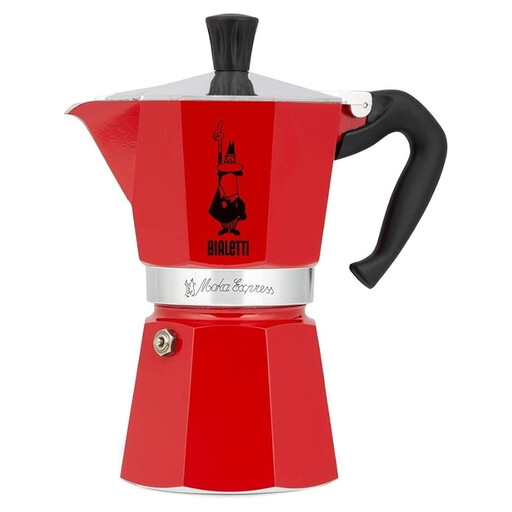
Why this product suits this profile: The 3-cup size is suitable for individuals or small households looking to prepare a manageable quantity manually.
The product details list gas, electric and ceramic hobs, and explicitly state that it is not designed for direct use on induction.
Aluminium body, manual operation and a stated capacity of approximately 130 ml.
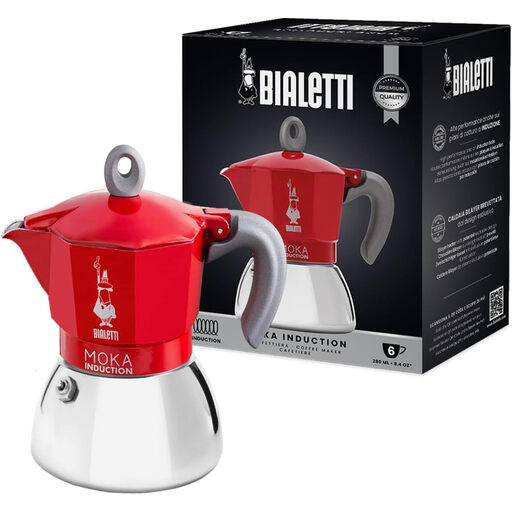
Why this product suits this profile: This model combines classic moka brewing with a stainless steel lower chamber for induction, gas and electric hobs.
Induction compatibility is listed as a product feature, so with a suitable hob there is no need to look for an adapter plate.
Aluminium upper section, stainless steel lower chamber, reusable filter and a capacity of around 280 ml.
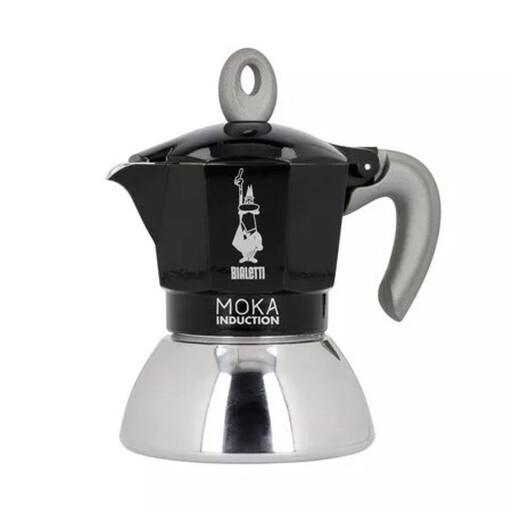
Why this product suits this profile: With a 6-cup capacity of around 300 ml, it is suitable for preparing several small portions in one brewing cycle.
Gas, electric and induction hobs are listed in the product details. The pot is also marked as not dishwasher-safe.
A combination of stainless steel and aluminium, manual brewing and a reusable filter.
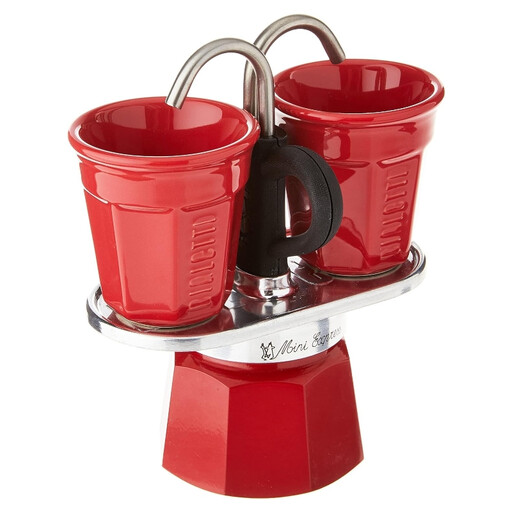
Why this product suits this profile: The mini version serves coffee directly into the matching cups and is designed for two portions.
Its compact design prevents individual coffee drinkers from buying a pot that is significantly larger than necessary.
Coffee is dispensed directly into the included cups, and the product details state that it is made in Italy.
We have put together a complete, regularly updated list of products that fully meet these strict selection criteria and the safety regulations applicable in the EU.
To use a Bialetti Moka Pot, fill the lower chamber with water up to just below the safety valve. Place the ground coffee loosely in the filter without pressing it down firmly. Then screw the components together securely and place the pot on the hob over a low to medium heat.
As soon as the characteristic bubbling begins and the upper chamber is full, remove the pot from the hob. The handle should not extend over the flame. Allow the appliance to cool before cleaning. Check the sealing ring, filter screen and safety valve regularly for wear or residue.
A Made-in-Italy coffee maker from this selection is designed for repeated manual use. Its actual service life depends on proper cleaning, heat exposure and the condition of the wear parts. It is not possible to provide a reliable general lifespan.
A classic aluminium Moka Express is not automatically suitable for induction. For an induction hob, you will need either a model explicitly designed for this purpose, such as the Bialetti Moka Induction, or a suitable adapter plate, if approved by the manufacturer.
Base your choice on the quantity you want to brew at a time. For one person, consider a 1- or 2-cup model; for two or three small portions, choose a 3-cup model. A 6-cup pot is suitable for several people. The cup measurements refer to small espresso cups, not large coffee mugs.
Once the pot has cooled, take the individual parts apart and rinse them with clean water. Only use cleaning products if the relevant manufacturer’s instructions allow this. The models mentioned here are generally not designed for use in the dishwasher.