
Lieferung heute & morgen

Qualitätsgarantie

Willkommens-Angebote freischalten: KOSTENLOSE Lieferung | Bis zu 80 % RABATT | Kostenlose 30-Tage-JoyPlus-Testphase
App herunterladen
A Bialetti espresso maker is a manual way to prepare coffee on the hob. The principle is simple: water is heated in the lower chamber, rises through the ground coffee and collects in the upper section. The result is richly flavoured moka coffee – technically not espresso from a portafilter machine, however, as the pressure and brewing method are different.
Mistakes that could easily be avoided are often made before purchase. The most important points are actual hob compatibility, the specified cup size and the cleaning requirements. By checking these criteria, you can choose a model that suits your existing hob at home, when camping or in the office.
A classic Bialetti Moka Express made from aluminium is generally intended for gas, electric and some ceramic hobs. Pure aluminium does not work directly on an induction hob, however, because it is not magnetically conductive.
Some product details therefore specify that it can be used on induction only with a separate Bialetti adaptor plate. If you want to use it without an additional accessory, you need a range such as the Bialetti Moka Induction. It combines an aluminium upper body with a stainless steel base, making it suitable for induction hobs.
With an Italian espresso maker, “1 cup”, “3 cups” or “6 cups” refers to small espresso portions. A Bialetti Moka Express 3 cups can prepare approximately 130 to 150 ml, depending on the version. According to the relevant product details, a 6-cup version holds around 250 to 270 ml.
The pot is designed for its specified capacity. The filter basket should be filled completely with suitable, loosely added ground coffee. If you regularly need just one portion, an espresso maker for 1 cup or a small 2-cup model is a better choice than a pot that is too large.
For the Bialetti models listed, cleaning with clear water followed by thorough drying is recommended. Washing-up liquid, harsh cleaners and the dishwasher can damage aluminium, seals and surfaces. Residue can also alter the taste of the coffee.
Before each use, check the seal, filter and safety valve for residue or damage. The valve must not be blocked. The handle should not be positioned over the hot hob while the coffee maker is being heated.
First, check your hob type:
The manufacturer’s information is decisive. Translations or technical specifications may differ between individual listings. You should therefore check the compatibility of the specific model once more in the product description before buying.
The classic Moka Express is made predominantly from aluminium. This material is lightweight and traditionally used in an Italian espresso maker. Induction models often feature a stainless steel lower boiler, while the upper coffee chamber is made from aluminium.
Important components include:
“Made in Italy” should be understood as a specific statement about the origin of the particular listing. Not every model within a product family necessarily has the same manufacturing information. The labelling in the product details is what matters.
The size should match your actual requirements. As a rough guide based on the available product details:
A 1-cup model is usually sufficient for one person. Two or three people can use a 3-cup pot. For several coffee drinkers or serving coffee after a meal, an espresso maker for 6 cups or espresso maker for 9 cups is a good option. The cup count is not an adjustable tank capacity: a 6-cup pot cannot automatically be used like a 1-cup pot.
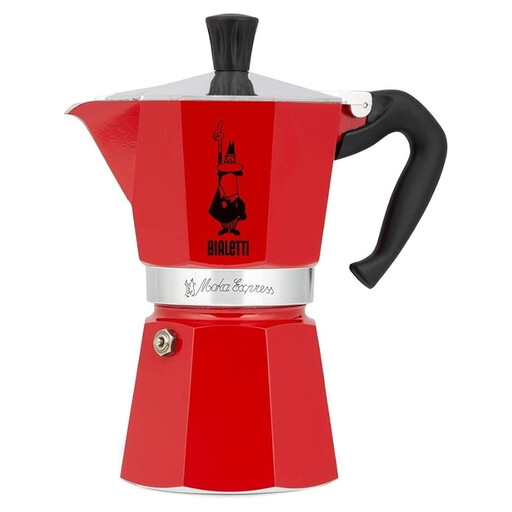
Why this product suits this profile: This manually operated aluminium pot prepares three small portions and, according to the product details, is suitable for gas and electric hobs but not for induction.
The hob limitation is clearly stated. Buyers with an induction hob can see in advance that an adaptor plate would be required or that they should choose a different model.
Aluminium body, 3-cup capacity and reusable filter for manual coffee preparation.
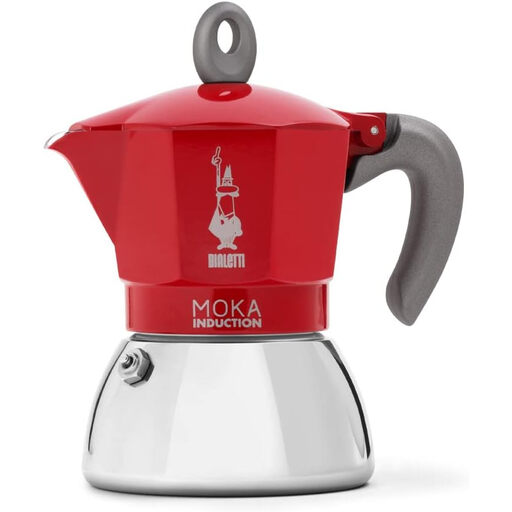
Why this product suits this profile: The stainless steel boiler is designed for induction hobs, while the aluminium upper body retains the construction of a classic moka pot.
Induction compatibility is built into the design and does not depend on an additional adaptor plate.
Suitable for gas, electric and induction hobs; manual operation and reusable filter.
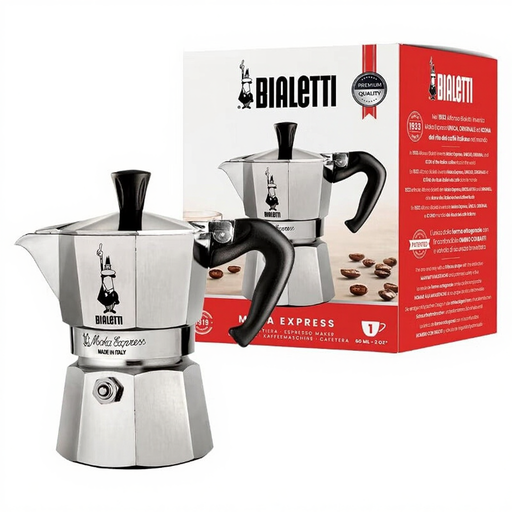
Why this product suits this profile: The stated capacity of approximately 270 ml is suitable for several small portions, whether at home, in a campervan with a gas hob or when serving guests.
The product details explicitly list gas, ceramic and electric hobs, and rule out induction without an adaptor. This makes it easier to match your choice to your existing hob.
Aluminium body, 6-cup format and detachable construction for manual preparation without a power connection.
We have put together a complete, regularly updated list of products that fully meet these strict selection criteria and the safety regulations applicable in the EU.
Do not use the Bialetti espresso maker without water and never leave it unattended while it is heating. The pot becomes hot, so a secure grip is required when opening and removing it. The seal and filter are wearing parts and should be replaced when visibly worn.
A classic aluminium Moka Express is not normally suitable for induction directly. It can be used with a suitable adaptor plate. The Bialetti Moka Induction range, on the other hand, has a stainless steel base and is designed for induction hobs. The specific model description remains decisive.
Its lifespan depends on how frequently it is used, how it is cleaned, the condition of the seal and how the material is handled. Regular rinsing with water, thorough drying and checking the safety valve can help support reliable everyday use. It is not possible to give a reliable general lifespan for every model.
With a stovetop coffee maker, electricity or gas is generally used only during the short heating phase. Ongoing costs mainly consist of water, ground coffee and, where necessary, replacement parts such as the seal or filter. With an induction model, you should also take the power consumption of your existing hob into account.