
Lieferung heute & morgen

Qualitätsgarantie

Willkommens-Angebote freischalten: KOSTENLOSE Lieferung | Bis zu 80 % RABATT | Kostenlose 30-Tage-JoyPlus-Testphase
App herunterladen
A Bialetti espresso maker, often called a moka pot or stovetop pot, is for many the epitome of authentic Italian coffee enjoyment. Its octagonal shape is a design classic, promising a strong, aromatic coffee. However, a few pitfalls await during purchase that can quickly lead to disappointment. Before you decide, it's crucial to understand the most common mistakes to ensure your new Italian coffee maker is a perfect match for your needs and your kitchen.
The three most common misconceptions when buying are:
This guide will help you understand these points and make an informed decision.
To find the right Bialetti espresso maker, you should check three core aspects: the size, the material in relation to your stovetop, and the specific model type.
The capacity of a Caffettiera is traditionally indicated in espresso cups. To choose the right size, base your decision on your actual coffee consumption.
Important note: A moka pot should always be operated with the intended amount of water and coffee to achieve an optimal result. It is not recommended to use a 6-cup pot for just one cup.
The material determines not only the appearance but, more importantly, on which type of stovetop the pot can be used.
Although they look similar, the two most famous models deliver different results.
Here are some recommendations tailored to different needs and usage scenarios.
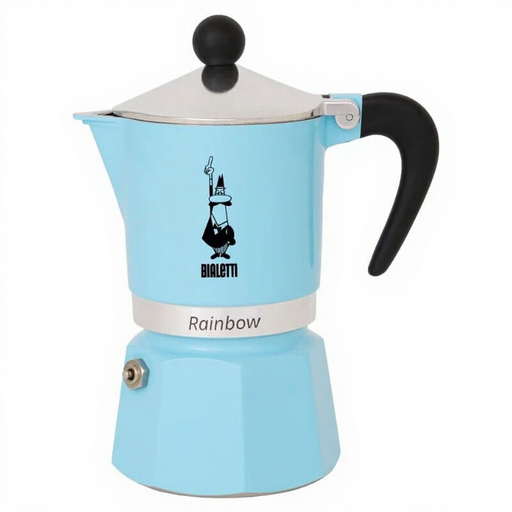
Why This Fits Their Persona: Perfect for that single, authentic espresso in the morning. The compact size ensures the coffee is extracted with the right pressure, and the colourful design adds a pop of style to the kitchen.
The clear "1 Cup" (approx. 60 ml) specification prevents the common mistake of buying a pot that's too large. The product description explicitly notes its suitability for gas/electric stoves.
Classic aluminium for traditional flavour; compact size for optimal extraction of single servings.
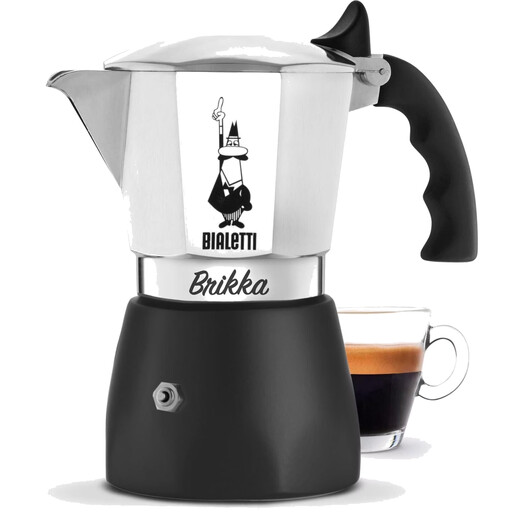
Why This Fits Their Persona: For anyone who wants a coffee with a rich layer of foam without investing in an expensive portafilter machine. The Brikka is the answer to the desire for "crema from a stovetop pot."
This model resolves the false expectation that every moka pot produces crema. It is specifically designed for this purpose and is clearly described as such.
Patented pressure valve system for crema production; 4-cup size (approx. 150 ml) is versatile for 1-2 people.
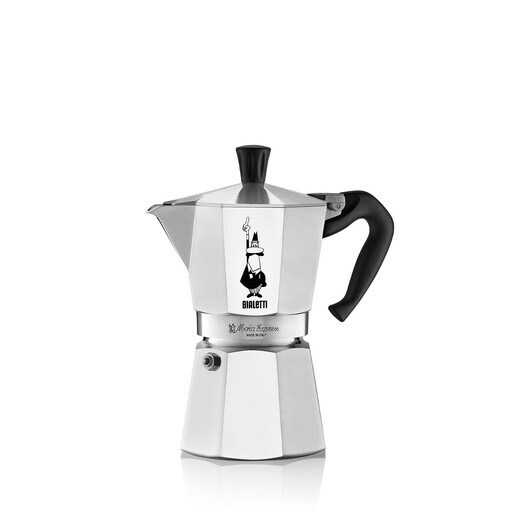
Why This Fits Their Persona: With a capacity of 420 ml, this pot is the ideal solution for quickly and easily making coffee for several people during a family breakfast or when guests are over.
The explicit "9 Cup" specification prevents buying a model that is too small for the needs of a larger group. The description also mentions the optional induction adapter.
Large capacity for serving guests; classic, time-tested design of the Moka Express.
We've compiled a complete, up-to-date list of products that fully meet these strict selection criteria and German safety regulations.
1. How do I properly clean an aluminium Bialetti espresso maker? An aluminium stovetop pot should never be put in the dishwasher or cleaned with detergent. This can damage the material and affect the coffee's taste. After use, let the pot cool completely, unscrew it, and rinse all parts thoroughly with warm water. Dry all components carefully before reassembling to prevent oxidation.
2. Why doesn't my Bialetti espresso maker work on my induction hob? Classic models like the Bialetti Moka Express are made of aluminium. Induction hobs generate heat through a magnetic field, and aluminium is not magnetic. Therefore, the pot is not detected and will not heat up. If you have an induction hob, you need either a special Bialetti Induction model made of stainless steel or a Bialetti adapter plate, which serves as a magnetic intermediate layer.
3. What does the cup specification on a Bialetti mean (e.g., 3-cup)? This specification is one of the biggest sources of confusion when buying a moka pot. A "cup" in the Bialetti context corresponds to a small Italian espresso cup with a volume of about 40–50 ml. A Bialetti 3-cup model, therefore, produces a total of about 120–150 ml of finished coffee. This is enough for three small espressos or one larger cup of coffee. Measure your favourite mug to determine the right size for you.