
Lieferung heute & morgen

Qualitätsgarantie

Willkommens-Angebote freischalten: KOSTENLOSE Lieferung | Bis zu 80 % RABATT | Kostenlose 30-Tage-JoyPlus-Testphase
App herunterladen
A Bialetti Moka pot, often called an espresso maker, is more than just a kitchen appliance—it's a piece of Italian coffee culture. Since 1933, its octagonal design has been synonymous with authentic coffee enjoyment. However, the buying process has pitfalls that can lead to disappointment and unnecessary expense. Many buyers choose the wrong size, overlook compatibility with their stovetop, or damage the pot through improper care.
This guide will help you navigate these mistakes. As your Joybuy Product Recommendation Officer, I'll show you the objective criteria that matter so you can find the perfect Italian coffee maker for your needs.
Before you buy a Bialetti Moka pot, you should familiarise yourself with three typical issues that often lead to frustration:
To find the right Bialetti Moka pot, focus on three essential parameters: size, stovetop compatibility, and material.
The capacity of a Bialetti pot is traditionally indicated in cups. It's crucial to know that one "cup" corresponds to an Italian espresso cup with a volume of about 40–60 ml.
Before buying, measure how much coffee you typically prepare to determine the right size and avoid the disappointment of a Moka pot that's too small.
The choice of model depends directly on your stovetop. There is a clear distinction here:
An alternative for owners of a classic aluminium pot is a separate adapter plate for induction hobs, which serves as an intermediary.
Here are some recommendations tailored to different needs and kitchen setups.
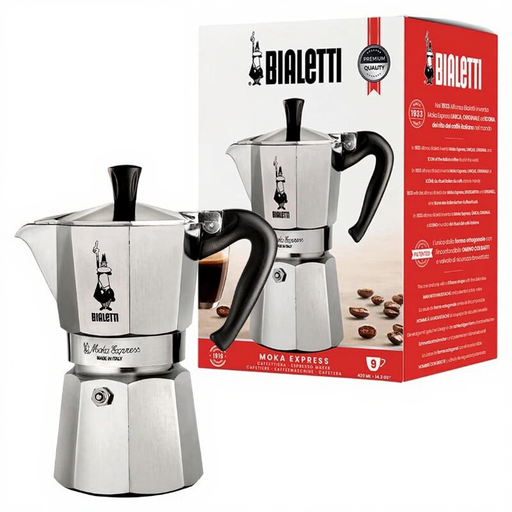
Why This Fits Their Persona: This model is the embodiment of the 1933 original. It is ideal for coffee lovers who celebrate the authentic brewing process on a gas or electric stove. The 3-cup size is a versatile classic for daily use.
By deliberately choosing this model for a classic stovetop, the induction incompatibility trap is avoided from the outset. The clear size specification helps in choosing the right amount for 1-2 people.
Made of polished aluminium for even heat distribution. The patented safety valve is easy to inspect and clean.
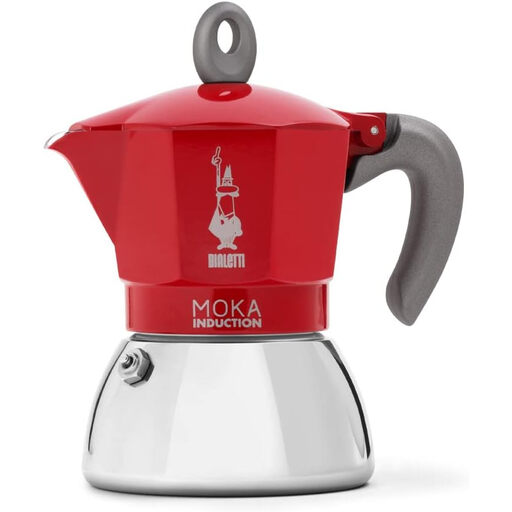
Why This Fits Their Persona: This model was designed specifically for modern kitchens. It combines the classic octagonal top with a stainless steel boiler, making it perfect for anyone who owns an induction hob and doesn't want to miss out on the Moka experience.
Directly solves the incompatibility problem. The bimetal boiler is designed for all stovetops, including induction, so there's no risk of a bad purchase.
Combines an aluminium top with a stainless steel boiler for optimal heat conduction and induction compatibility. It retains the iconic design.
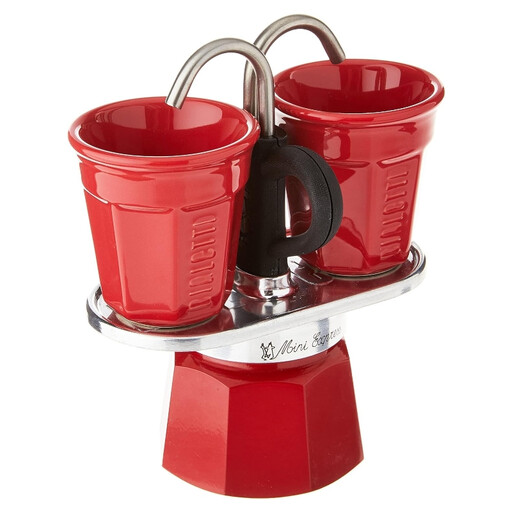
Why This Fits Their Persona: Perfect for singles or couples who want fresh espresso served directly into the cup. The innovative design is space-saving and a real eye-catcher. The coffee is brewed onto a warming plate and directly into the included cups.
The "wrong size" trap is elegantly bypassed here, as the set is explicitly designed for two cups and even includes them. There is no ambiguity regarding capacity.
Unique brewing system that directs coffee straight into the cups. The aluminium support plate keeps the cups warm during preparation.
There is a growing selection, especially for induction stovetops. We have compiled a list of products that meet our selection criteria.
Aluminium models like the Moka Express should only be cleaned by hand with warm water. Do not use dish soap and never put the pot in the dishwasher. Dry all parts thoroughly after cleaning. Over time, a thin patina will form inside, which enhances the coffee's flavour. Induction models with a stainless steel boiler are often easier to care for, but hand washing is also recommended here to ensure longevity.
If you own a classic model like the Bialetti Moka Express, it is made of aluminium. Aluminium is not ferromagnetic and is therefore not recognised by an induction hob. To use a Moka pot on an induction stove, you need a model labelled "Induction," whose boiler is made of stainless steel or another magnetic material.
The "3-Cup" specification refers to three small Italian espresso cups, each with a capacity of about 50 ml. A 3-cup pot thus produces a total of about 130–150 ml of coffee. This is roughly equivalent to one standard coffee mug. Keep this conversion in mind to find the right size for your needs.