
Lieferung heute & morgen

Qualitätsgarantie

Willkommens-Angebote freischalten: KOSTENLOSE Lieferung | Bis zu 80 % RABATT | Kostenlose 30-Tage-JoyPlus-Testphase
App herunterladen
A Bialetti moka pot is more than just a coffee maker—it's a piece of Italian coffee culture for your home. However, selecting the right model comes with a few pitfalls that often only become apparent after purchase. Incorrect size specifications or incompatibility with your stovetop can quickly lead to disappointment. This guide will help you understand the key features and make an informed decision, ensuring you enjoy your Italian coffee pot for years to come.
Before you buy a Bialetti, you should be aware of the typical problems that can arise during selection. This will help you avoid making the wrong purchase.
To find the right Bialetti moka pot, you should carefully check three technical parameters. These will determine its functionality and your daily satisfaction.
The most important criterion is its suitability for your kitchen setup.
The size specification in cups is often misleading. Instead, focus on the total volume.
Bialetti offers various lines tailored to different needs.
Here you will find specific recommendations tailored to typical use cases.
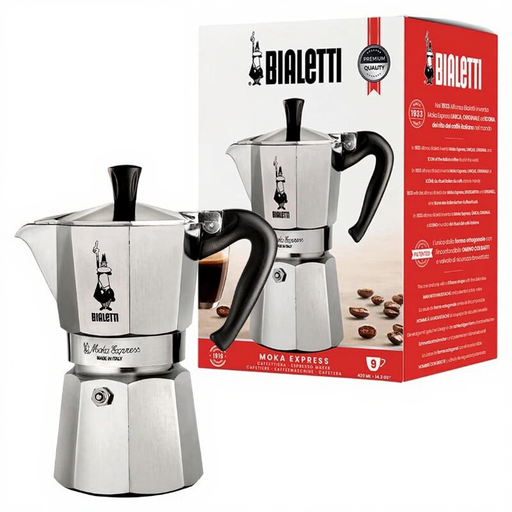
Why this model is a great fit: For lovers of the authentic Italian coffee ritual. This model embodies the original 1933 design and is intended for gas and electric hobs. The aluminium body allows the flavour-enhancing patina to form.
This model is explicitly designed for classic hob types, thus avoiding the compatibility issue with induction. The clear size specification helps to set the right expectation for the coffee volume.
Made from durable, food-safe aluminium. Equipped with the patented Bialetti safety valve.
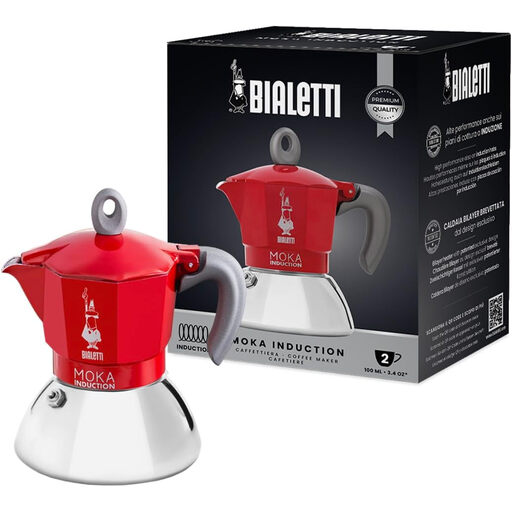
Why this model is a great fit: The ideal solution for owners of induction hobs. It combines the classic octagonal design of the upper chamber with a modern, induction-compatible stainless steel boiler.
Directly solves the core incompatibility problem. The bi-material construction (aluminium upper chamber, stainless steel boiler) is specifically designed for use on all hob types, including induction.
Universal hob compatibility. Efficient heat distribution thanks to the material mix. Retains the iconic shape of the original.
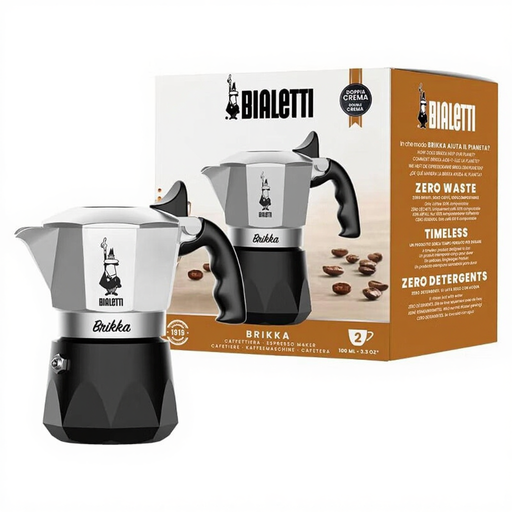
Why this model is a great fit: For users who want to prepare a café-style espresso with a rich, stable crema. The Brikka is the only stovetop pot from Bialetti with a system for producing crema.
This model fulfils the specific desire for crema that standard moka pots cannot. It prevents the disappointment that occurs when the result from a regular pot doesn't meet espresso expectations.
Patented pressure valve with a silicone membrane for crema production. Includes a measuring cup for the correct amount of water.
We have compiled a complete, up-to-date list of products that fully meet these strict selection criteria and quality standards.
1. How do you clean a Bialetti moka pot correctly? A Bialetti moka pot, especially aluminium models, should only be rinsed with warm water and left to air dry. Never use washing-up liquid or a dishwasher. The harsh salt and detergents will attack the aluminium and destroy the patina, which is important for protecting the material and developing the coffee's aroma.
2. Why doesn't my Bialetti moka pot work on an induction hob? Standard moka pots like the Bialetti Moka Express are made of aluminium, which is not ferromagnetic. Induction hobs generate heat via a magnetic field and therefore require magnetisable cookware. For an induction hob, you need a special model like the Bialetti Moka Induction with a stainless steel base, or a separate adapter plate.
3. What coffee grind is suitable for a Bialetti moka pot? The ideal grind for an Italian coffee pot is medium-coarse. It should be finer than for filter coffee but coarser than for a professional espresso machine. If the powder is too fine, the water will struggle to pass through, leading to over-extraction and a bitter taste. If it's too coarse, the water will flow through too quickly, and the coffee will be watery.