
Lieferung heute & morgen

Qualitätsgarantie

Willkommens-Angebote freischalten: KOSTENLOSE Lieferung | Bis zu 80 % RABATT | Kostenlose 30-Tage-JoyPlus-Testphase
App herunterladen
A Bialetti moka pot may seem straightforward at first glance: add water, fill with ground coffee and place it on the hob. However, it is easy to make the wrong choice when buying one. The key differences are not just colour and shape, but above all hob compatibility, cup size and material.
Checking these points before buying helps you avoid unnecessary returns and ensures you get a stovetop coffee maker that suits your household and daily brewing routine.
The classic Bialetti Moka Express is made mainly from aluminium. This material works on gas, electric and ceramic hobs, but is generally not suitable for induction hobs. Some Express models can only be used on induction with a suitable adaptor plate.
The Bialetti Moka Induction, on the other hand, has a stainless-steel boiler and, according to the product description, is designed for gas, electric, ceramic and induction hobs. Even so, the statement “for all heat sources” should always be checked in the specific product details.
With a Bialetti espresso maker, “1 cup” does not automatically mean one large mug of filter coffee. The sizes are based on small moka or espresso cups. Examples from the selection:
A 6-cup moka pot is therefore not necessarily designed to make six large mugs. The pot should ideally be used with its intended fill quantity rather than preparing only a partial serving.
Several product descriptions state that the pots are not dishwasher-safe and should only be rinsed with water. Cleaning products can affect both the material and the flavour. Even with a supposedly easy-care surface, the sealing ring, filter and safety valve remain wear parts or components that need to be checked.
A reusable coffee filter is part of the manual design of the Bialetti models mentioned. This means paper filters are not required. However, it does not mean that the pot is completely maintenance-free.
Many aluminium Moka Express models are suitable for gas, electric and ceramic hobs. For induction, a ferromagnetic or otherwise suitably designed base is required. According to the manufacturer’s information, the Moka Induction combines an aluminium upper section with a stainless-steel boiler.
The size of the cooking zone should also be taken into account before buying. A small 1-cup pot needs a suitably sized heating area rather than one that is unnecessarily large. On gas hobs, the flame must not extend beyond the base of the pot; the handle should face away from the heat source.
For one person, camping and occasional brewing, a 1-cup Bialetti espresso maker may be sufficient. For two people, 2- or 3-cup models are often more practical. Families or households with several coffee drinkers may wish to consider a 6- or 9-cup version.
The stated capacity is a guide to the amount of moka coffee produced, not the number of large mugs of coffee. If you make coffee with milk, you should also allow for the volume of milk or milk foam.
Aluminium is a defining construction material of the Moka Express. It heats up quickly on suitable hob types, but must never be heated when empty. Stainless-steel components, such as those used for the lower boiler of the Moka Induction, provide the specified induction compatibility.
For daily care, the models listed generally require the following steps:
The ground coffee should be added loosely and not pressed down firmly. Fill the water up to the safety valve. As soon as the pot starts to gurgle and the coffee flows into the upper chamber, reduce the heat or switch off the hob.
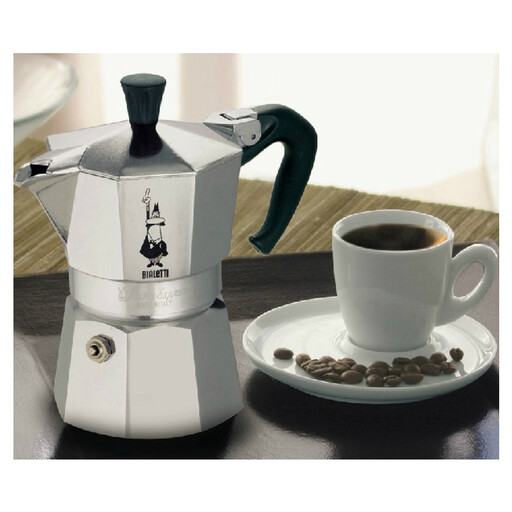
Why this product suits this profile: According to the product details, the 3-cup version holds approximately 130 to 150 ml and is suitable for individuals or couples looking for a classic stovetop coffee maker for use on gas, ceramic or electric hobs.
The stated capacity helps prevent the cup size from being confused with large coffee mugs. The compatible hob types are clearly limited to gas, ceramic and electric hobs.
Aluminium construction, reusable filter and a safety valve that can be monitored; according to the product information, Made in Italy.
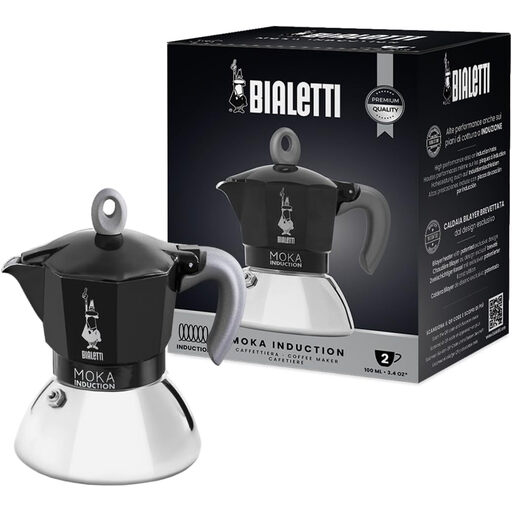
Why this product suits this profile: According to the description, this induction moka pot is designed for all hob types and makes approximately 90 ml. It is therefore suited to two small servings and versatile kitchens.
The stainless-steel boiler sets this model apart from a classic aluminium pot, which generally requires an adaptor plate for induction.
Aluminium upper section, stainless-steel boiler, manual operation and reusable coffee filter; available in red and black.
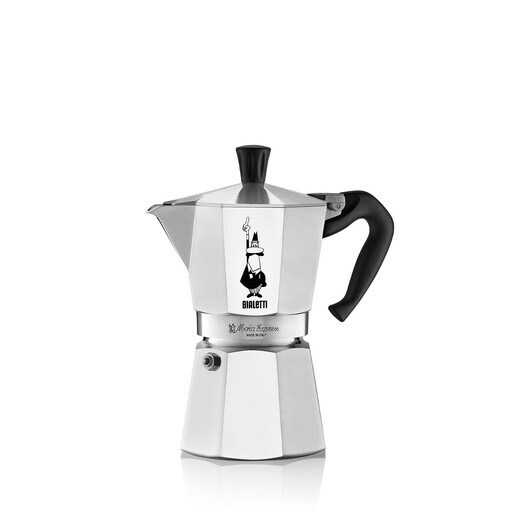
Why this product suits this profile: With a capacity of 420 ml, this version is aimed at families, guests or users who want to prepare several small servings in a single brewing cycle.
The large capacity is stated specifically in millilitres. This makes it easier to judge whether the pot matches your actual requirements.
Classic aluminium design, safety valve and ergonomic handle; specified for gas and electric hobs, and for induction with an adaptor plate.
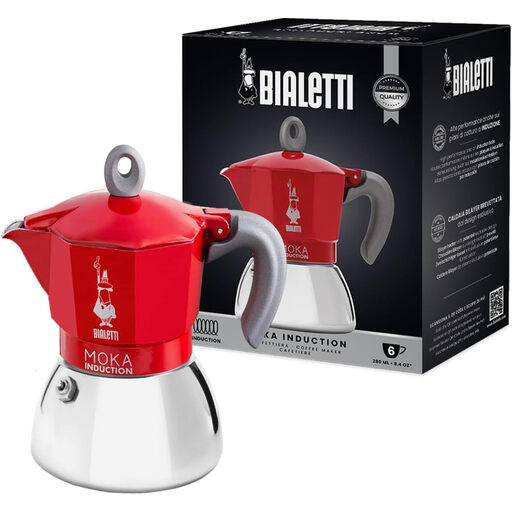
Why this product suits this profile: The stated capacity of 280 ml and suitability for gas, electric and induction hobs make this model an interesting choice for larger households, offices or camping with different cooking options.
The compatible hob types are stated explicitly. At the same time, the actual quantity is given in millilitres, making it easier to put “6 cups” into perspective.
Aluminium and stainless-steel construction, safety valve and manual, electricity-free operation.
We have put together a complete, regularly updated list of products that fully meet these strict selection criteria and the safety regulations applicable in the EU.
A moka pot does not require a power connection or capsules. The ongoing costs mainly consist of water, ground coffee and the occasional replacement seal or filter. The reusable coffee filter reduces the need for disposable filters, but it must be rinsed after every use.
Finely to medium-finely ground coffee is used for brewing, but it should not be as fine as coffee ground for a portafilter machine. The pot should only be used on a suitable heat source and must never be operated when empty. The safety valve must not be covered.
Classic aluminium Moka Express models are not usually directly suitable for induction. Depending on the model, a Bialetti adaptor plate may be required. According to the product details, the Moka Induction is designed with a stainless-steel boiler for all the hob types mentioned.
The service life depends on usage, the seal, filter and care. A manual pot has no electric pump or heating element. Regular rinsing, thorough drying and checking the safety valve can help extend its service life. Wear parts should be replaced when necessary.
For the models listed here, dishwasher cleaning is not recommended. The manufacturers’ instructions recommend rinsing with clean water. Before buying, check the care instructions for the specific model, as the material and design are decisive factors.