
Lieferung heute & morgen

Qualitätsgarantie

Willkommens-Angebote freischalten: KOSTENLOSE Lieferung | Bis zu 80 % RABATT | Kostenlose 30-Tage-JoyPlus-Testphase
App herunterladen
A Bialetti Moka Pot brings the traditional Italian coffee-making experience to your own hob. However, not every moka pot suits every household. Mistakes often happen because buyers focus only on colour and cup count, while overlooking hob type, material and cleaning.
A classic Bialetti Moka Express made from aluminium is generally designed for gas, electric and ceramic hobs, but not directly for induction. Some product descriptions only mention induction in connection with a separate adapter plate. If you need an espresso maker for induction, you should specifically choose the Bialetti Moka Induction or a model that is explicitly induction-compatible.
On a moka pot, “1 to 9 cups” usually refers to small Italian espresso cups. A 3-cup pot produces roughly 130 to 150 ml of coffee depending on the model, while a 6-cup version can deliver around 250 to 300 ml. An espresso maker is therefore not designed for a large mug of filter coffee.
Aluminium, seals and surfaces can be damaged by dishwasher detergent and high temperatures. For the Bialetti models mentioned, cleaning with fresh water and by hand is recommended. A model with removable parts makes care easier, but does not replace the need to dry everything thoroughly before reassembling.
For an espresso maker for a gas hob, the classic aluminium moka pot is ideal. Many Moka Express models are also suitable for electric and ceramic hobs. With induction, the base is crucial: aluminium alone is not directly heated by an induction hob. The Bialetti Moka Induction therefore combines an aluminium upper body with a stainless steel boiler.
Before buying, you should check:
The classic aluminium moka pot is lightweight and part of the traditional Moka Express design. Aluminium heats up quickly, but must not be treated with harsh cleaners. With the Moka Induction, the boiler is made from stainless steel combined with an aluminium upper section. According to the product description, this makes the model suitable for all the hob types mentioned, including induction.
Typical components include:
The safety valve must never be blocked. Before each use, it should be free of coffee residue.
The right size depends on the number of small portions you want to brew per session. A larger pot should not be only partially filled, as the filter system is designed for its specific size.
As a guide:
To brew, fill the water chamber up to the bottom edge of the safety valve. Add the coffee grounds loosely into the filter without pressing them down. As soon as the typical gurgling sound starts, reduce or switch off the heat.
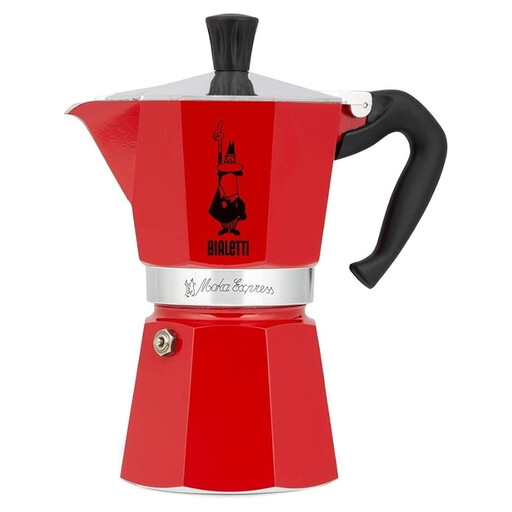
Why this product fits the profile: The 3-cup size is ideal for daily coffee in a small household. This manual aluminium model is designed for open flames and electric hobs.
The product specifications clearly state the limitation regarding induction. This makes it easy to assess hob compatibility before purchase.
Aluminium body, reusable filter and compact 3-cup design.
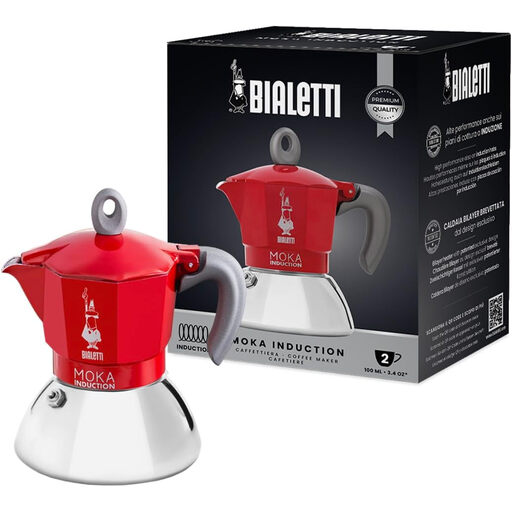
Why this product fits the profile: If you are looking for an espresso maker for induction while also wanting to use gas or electric hobs, this combination of aluminium and stainless steel is designed for that purpose.
The stainless steel boiler is explicitly designed for induction hobs. The 2-cup capacity prevents an unnecessarily large pot for small portions.
Suitable for all specified hob types; reusable filter and manual operation.
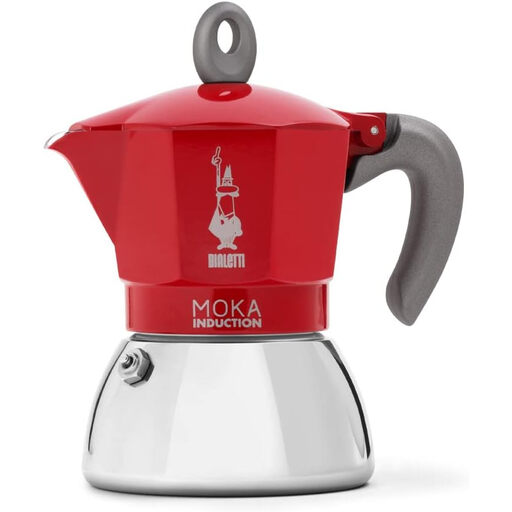
Why this product fits the profile: The 4-cup version is suitable for multiple portions and can be used on gas, electric and induction hobs according to the product specifications.
The size is not confused with a large mug. The stated capacity helps you plan for several small coffee portions.
Induction-compatible stainless steel boiler, aluminium upper section and reusable filter.
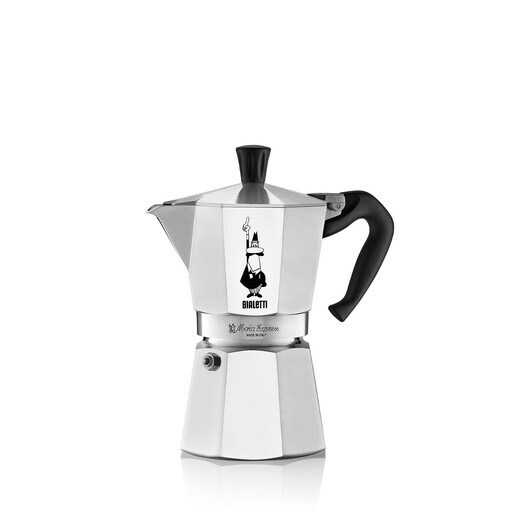
Why this product fits the profile: With around 420 ml, this hob pot is aimed at families, offices or situations where several small portions are served one after another.
The large capacity is clearly stated in small espresso cups. This helps you avoid choosing a pot that is too big for single use.
420 ml capacity, aluminium construction and safety valve; induction only with a suitable adapter plate.
Never use the pot empty and keep the handle away from the flame. Seals and filters are wear parts. If the seal becomes less effective or you notice visible cracks, they should be replaced. It is not possible to give a general lifespan, as frequency of use, water quality and care are all decisive factors.
We have put together a complete, regularly updated list of products that fully meet these strict selection criteria and the safety regulations in force in the EU.
Not every model. The classic Moka Express made from aluminium generally requires a suitable adapter plate. The Bialetti Moka Induction, on the other hand, has a stainless steel boiler and is designed for induction, gas and electric hobs according to the product specifications.
Use small Italian espresso cups as your guide. For one person, 1 or 2 cups are usually enough. Three cups are suitable for a small household, while 6 or 9 cups will serve several people. The pot should be filled according to its intended size.
After each use, let it cool down completely, disassemble it and rinse with fresh water. Avoid dishwasher detergent, scouring pads and the dishwasher unless the product specifications state otherwise. Regularly check the safety valve, seal and filter for residue and wear.