
Lieferung heute & morgen

Qualitätsgarantie

Willkommens-Angebote freischalten: KOSTENLOSE Lieferung | Bis zu 80 % RABATT | Kostenlose 30-Tage-JoyPlus-Testphase
App herunterladen
A Bialetti Moka pot brings manual coffee preparation to the hob and requires neither capsules nor a power connection. However, misunderstandings often arise before purchase: with Bialetti, the term “cups” generally refers to small espresso cups rather than large mugs. What is more, a classic aluminium espresso maker is not automatically suitable for induction hobs.
By checking the model, capacity and hob type in advance, you can avoid buying the wrong product. The following selection explains the key criteria and shows which Bialetti Moka Express, Bialetti Moka Induction or Mini Express is best suited to different everyday situations.
With a stovetop moka pot, one cup usually corresponds to a small portion of around 30 to 50 ml. An espresso maker for 1 cup, for example, produces approximately 40 to 60 ml, depending on the model. An espresso maker for 3 cups can produce around 130 to 150 ml, while an espresso maker for 6 cups holds approximately 250 to 300 ml, depending on the design.
The pot should therefore be selected according to the amount you want to brew at a time. A 6-cup pot cannot simply be half-filled to make a single cup, as the filter and water chamber are designed for the specified size.
Aluminium is a common material for classic moka pots, but many induction hobs do not recognise it. If you have an induction hob, the product must explicitly be stated as “suitable for induction”. Alternatively, some classic models can be used with a suitable Bialetti adapter plate.
According to the product details, the Bialetti Moka Induction combines an aluminium upper section with a stainless-steel boiler and is designed for various hob types, including induction. A classic aluminium Moka Express, on the other hand, is generally suitable for gas, electric and ceramic hobs, but not directly for induction.
Many models are not dishwasher-safe. Detergents and intensive programmes can affect surfaces, seals or the taste of the coffee. The usual method is to rinse the parts with water and then dry them thoroughly.
Before each use, check that the seal, filter screen and safety valve are free from residue. The pot must also not be filled with water above the safety mark.
The classic Italian espresso maker is often made from aluminium. This material is lightweight and traditionally used for the Moka Express. Stainless-steel variants or models with a stainless-steel boiler are more relevant for induction. The upper section may still be made from aluminium.
Look for a heat-insulating handle, a securely closing screw thread and an easily accessible safety valve. When placing the pot on the hob, the valve should not be facing a wall or another obstruction.
The manufacturer’s cup specification is more important for moka pots than their external dimensions. As a guide based on the available models:
These quantities refer to the coffee output or nominal capacity and may be stated differently depending on the model description.
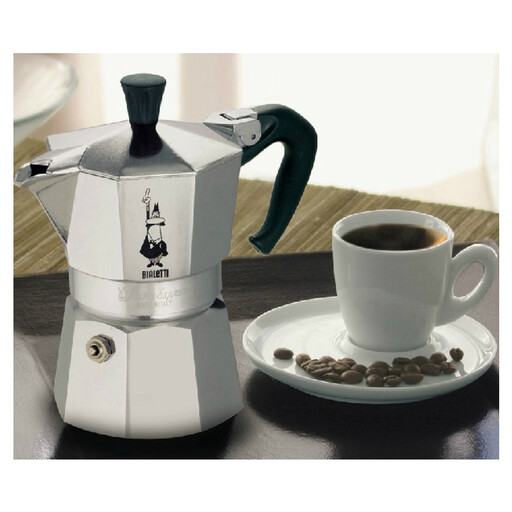
Why this product suits the profile: This compact aluminium pot is designed for single-person households and small portions. According to the product details, it holds 60 ml and is suitable for gas and electric hobs.
The specified 1-cup size reduces the risk of buying a pot that is too large for everyday use by one person. A separate solution is required for induction.
Aluminium body, manual preparation and a reusable filter; according to the supplier, made in Italy.
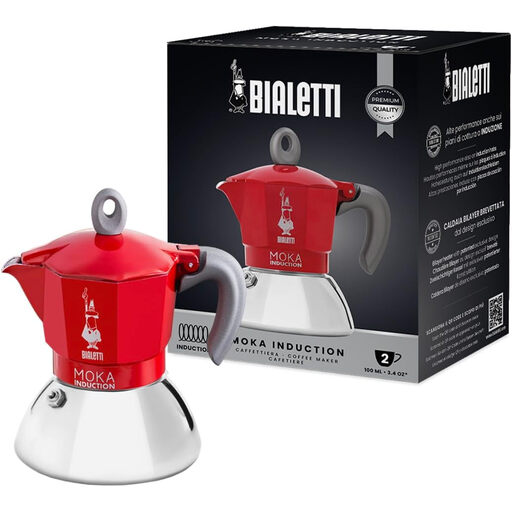
Why this product suits the profile: According to the product description, the stainless-steel boiler is suitable for all hob types, including induction. The 2-cup size is ideal for couples and small households.
The stated induction compatibility avoids the common confusion between classic aluminium and a hob-compatible induction base.
A combination of aluminium upper section and stainless-steel boiler, with manual operation and a reusable filter.
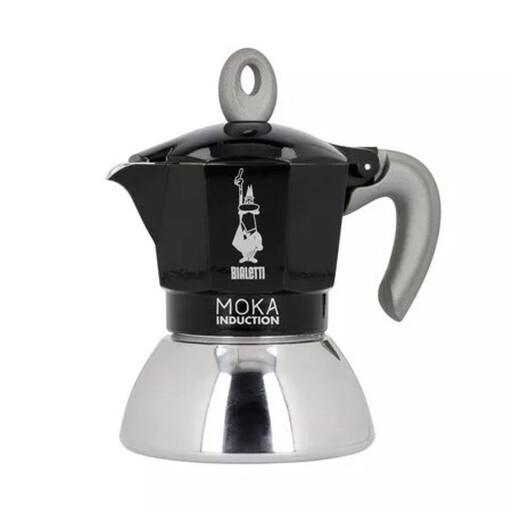
Why this product suits the profile: According to the product data, this pot is suitable for gas, electric and induction hobs and provides up to 300 ml. That makes it a good choice for households with several coffee drinkers.
Hob compatibility is explicitly stated, eliminating the uncertainty of using an aluminium pot that is not suitable for induction on an induction hob.
6-cup capacity, stainless-steel and aluminium construction, plus a reusable filter.
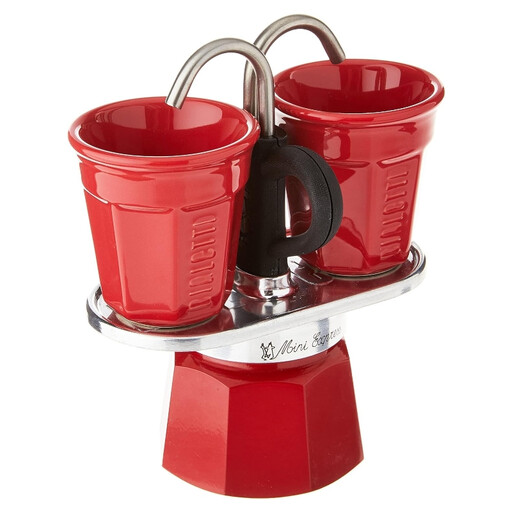
Why this product suits the profile: The Mini Express serves the coffee directly into two included cups. According to the product description, the design is made in Italy and is suitable for sharing a serving.
Serving directly into two cups makes the intended portion size clearer than a general pot specification. Nevertheless, you should check the hob type before buying.
2-cup output, included cups and a special aluminium support plate to keep the coffee warm during preparation.
The safety valve opening must remain clear. The handle should not be positioned over an open flame. If you notice visible cracks, a damaged seal or a blocked filter, stop using the pot.
We have put together a complete, regularly updated list of products that fully meet these strict selection criteria and the safety regulations applicable in the EU.
According to the available product details, a classic aluminium Moka Express is suitable for gas, electric and ceramic hobs, but not directly for induction. For an induction hob, we recommend a model from the Bialetti Moka Induction range or a suitable adapter plate.
Its service life depends on the seal, filter screen, screw thread and care. With regular cleaning, careful handling and timely replacement of worn parts, a manual moka pot can be used for many years. Dishwashers, aggressive cleaning products and overheating should be avoided.
The running costs mainly consist of water, ground coffee and the energy used by the hob. As no capsule system is required, there is no capsule consumption. The actual cost depends on the type of coffee, the amount used and the electricity or gas price.