
Lieferung heute & morgen

Qualitätsgarantie

Willkommens-Angebote freischalten: KOSTENLOSE Lieferung | Bis zu 80 % RABATT | Kostenlose 30-Tage-JoyPlus-Testphase
App herunterladen
A Bialetti Moka Pot brings manual stovetop espresso-making into your kitchen. However, misunderstandings often arise before purchase: the "cup" measurement on a Moka Pot doesn't refer to large coffee mugs, not every aluminium Moka Pot works on an induction hob, and a striking design doesn't necessarily mean it's suitable for your needs.
This buying guide from the Joybuy Product Recommendation Officer will help you objectively compare model ranges, materials, capacities and hob types.
With Bialetti, the size indication usually refers to small Italian espresso cups. A 3-cup Moka Pot therefore doesn't produce three large mugs of filter coffee. Depending on the model, the stated quantity is roughly 130 to 150 ml. A 6-cup model can make around 250 to 300 ml, while a 9-cup model yields approximately 420 ml.
You should therefore choose your pot based on the number of small servings you want. A Moka Pot cannot be operated with significantly less water or coffee grounds without altering the intended ratio.
The classic Bialetti Moka Express is made from aluminium. Aluminium alone isn't recognised by many induction hobs. With these models, induction use is usually only possible with a suitable Bialetti adapter plate. If you want to make stovetop espresso directly on an induction hob, you should instead opt for the Bialetti Moka Induction or a variant explicitly marked as suitable.
For gas, electric and ceramic hobs, classic Moka Express models are suitable according to their product descriptions. The specific information on the product page remains the deciding factor.
Many Bialetti models are not dishwasher safe. Detergents and high temperatures can affect the surface, seal or flavour. For the variants mentioned here, the recommended cleaning method is generally rinsing with clean water and then drying thoroughly.
Before each use, the safety valve, filter and seal should be free of residue. A damaged seal or blocked valve isn't just a cosmetic issue – it's a reason not to use the appliance any further.
First, check your hob:
The pot should also fit the size of your cooking zone. The handle must not sit directly over a naked flame, and the Moka Pot should never be left unattended while in use.
The available sizes cater to different households:
These figures may vary slightly depending on the model and retailer. So alongside the cup count, also pay attention to the millilitre measurement.
An aluminium Moka Pot heats up quickly on suitable hob types and follows the classic Moka Express design. With the Moka Induction, Bialetti combines an aluminium upper section with a stainless steel boiler, enabling the stated use on induction hobs.
To prepare your coffee, fill the water chamber up to the safety valve level. Add the coffee grounds loosely into the filter without tamping them down. After screwing the pot together, heat it on a medium setting. As soon as you hear the coffee rising and the characteristic gurgling sound begins, turn off the heat. The handle and lid knob can become hot during this process.
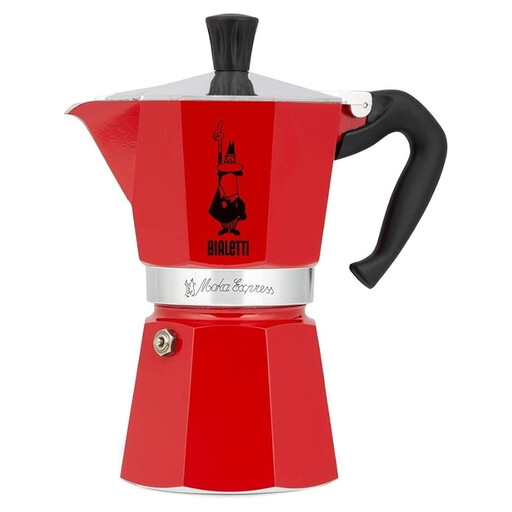
Why this product fits the profile: The manual 3-cup size is ideal for smaller households and is stated as suitable for gas and electric hobs.
The stated cup size and hob compatibility are clearly indicated. However, this aluminium model is not directly designed for induction hobs.
Aluminium body, manual operation, ergonomic handle and reusable filter.
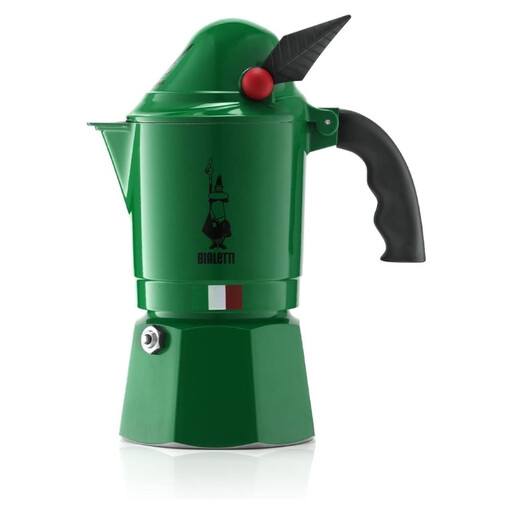
Why this product fits the profile: This version is specified as featuring aluminium, a safety valve, ergonomic handle and Made in Italy. It appeals to buyers who value construction and origin.
The description distinguishes between direct hob use and induction with an adapter plate. This avoids the common confusion with aluminium models.
3-cup format, patented safety valve, aluminium and Made in Italy origin.
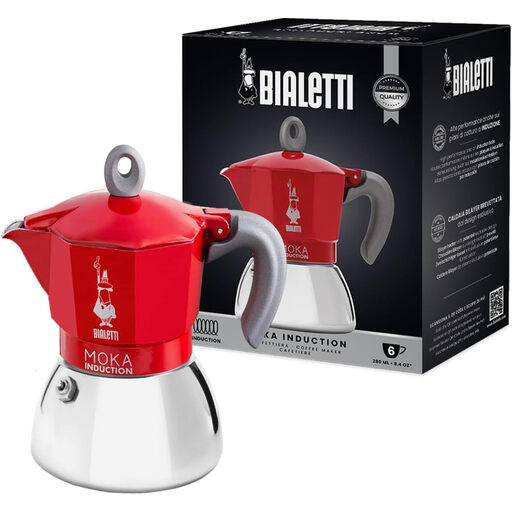
Why this product fits the profile: The stainless steel boiler is stated as suitable for induction, gas and electric hobs. The 6-cup format works well for several people.
Direct induction compatibility is explicitly stated. This eliminates the uncertainty of assigning a classic aluminium pot without a suitable boiler.
6-cup capacity, stainless steel and aluminium construction, reusable filter and manual preparation.
We've put together a complete, regularly updated list of products that fully meet these strict selection criteria and the safety regulations in force in the EU.
Coffee grounds should not be left to dry in the filter. The sealing ring and filter are wear parts and should be replaced when they become brittle, deformed or leaky. The exact lifespan depends on usage, heat, care and replacement of parts.
The classic Moka Express made from aluminium is not directly induction-compatible in the versions mentioned. On an induction hob, you will need a suitable adapter plate. Alternatively, the Bialetti Moka Induction with a stainless steel boiler is a good choice.
The cup count refers to small Italian servings. A 1-cup model yields around 40 to 60 ml depending on the variant, a 3-cup model approximately 130 ml, and a 6-cup model about 250 to 300 ml. The specific millilitre measurement on the product page is the definitive guide.
After cooling, disassemble the pot and rinse it with clean water. For the models mentioned, avoid detergents, abrasive sponges and the dishwasher. Before the next use, the pot, filter and seal must be completely dry and undamaged.