
Lieferung heute & morgen

Qualitätsgarantie

Willkommens-Angebote freischalten: KOSTENLOSE Lieferung | Bis zu 80 % RABATT | Kostenlose 30-Tage-JoyPlus-Testphase
App herunterladen
A Bialetti Moka pot might look straightforward at first glance: fill with water, add coffee grounds, place on the hob. But when it comes to buying one, mistakes are all too common. A model for induction gets mistaken for a classic aluminium pot, the cup size is misjudged, or the care instructions are simply ignored.
This buying guide shows you what coffee lovers in the UK should look out for. It covers hob compatibility, capacity, material, care and brewing method – the criteria that really matter in everyday use.
A classic Bialetti Moka Express made from aluminium usually works on gas, electric and ceramic hobs. However, aluminium alone is not suitable for an induction hob. For that, you will need either a compatible Bialetti induction adapter plate or a model with a magnetic stainless steel base, such as the Bialetti Moka Induction or Bialetti Venus.
If you are buying a stovetop espresso maker for induction, do not just rely on the product name – make sure you check the stated hob compatibility.
On a moka pot, one cup usually refers to a small Italian espresso cup. A Bialetti with 1 cup yields roughly 40 to 60 ml, depending on the model. With 3 cups, you get around 130 ml, while a 6-cup pot can brew approximately 270 ml.
For a large mug of coffee, a 1-cup or 2-cup pot simply will not do. On the other hand, a 6-cup stovetop maker is often unnecessarily large for a single person.
Many models should only be rinsed with clean water after use. Washing-up liquid and dishwashers can damage the surface, seals or even the flavour. Before buying, it is worth checking the care instructions for your specific model. If retailer information contradicts the manufacturer’s guidance, always follow the manufacturer.
The classic Moka Express is mostly made of aluminium and is normally designed for gas, electric and ceramic hobs. On induction, it only works with a suitable adapter plate.
A stovetop coffee maker for induction, on the other hand, has an induction-compatible base, often made of stainless steel. The Bialetti Moka Induction, for example, combines an aluminium upper section with a stainless steel boiler. The Bialetti Venus is made entirely of stainless steel and, according to the product description, is suitable for various hob types including induction.
For camping and travel, gas or electric hob models are practical, as long as the available heat source matches the pot. The flame should not extend beyond the base of the pot.
Bialetti sizes are given in Italian cups. As a rough guide:
A moka pot should not be partially filled, as the water and coffee filters are designed for the specific size. If you regularly brew coffee just for yourself, a 1- or 2-cup pot is usually more practical. For a household with several people, a 3- or 6-cup version may be a better choice.
Aluminium is the classic, lightweight choice for the Moka Express. Stainless steel models like the Venus are ideal for buyers who specifically want a stainless steel espresso maker. Regardless of the material, a well-positioned safety valve, a heat-resistant handle and a tightly sealing thread are all important features.
A moka pot works manually and requires ground coffee. The grounds go into the filter, but should not be tamped down. As soon as you hear the coffee rising – or the pot starts to gurgle – reduce the heat or turn it off. A moka pot is not an electric bean-to-cup machine, nor does it replace a portafilter machine.
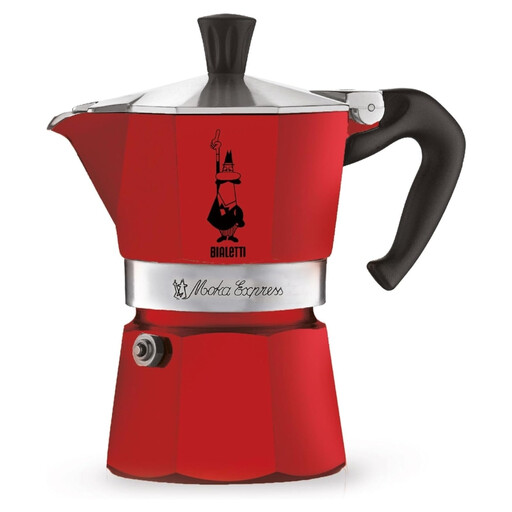
Why this product fits the profile: The compact 1-cup version is ideal for single users and takes up very little space. According to the product details, it holds around 60 ml and is suitable for open flames and electric hobs.
The clearly stated cup size reduces the risk of buying a pot that is too large for single use. An adapter plate is required for induction hobs.
Aluminium body, ergonomic handle, visible and cleanable safety valve, and a weight of around 320 g.
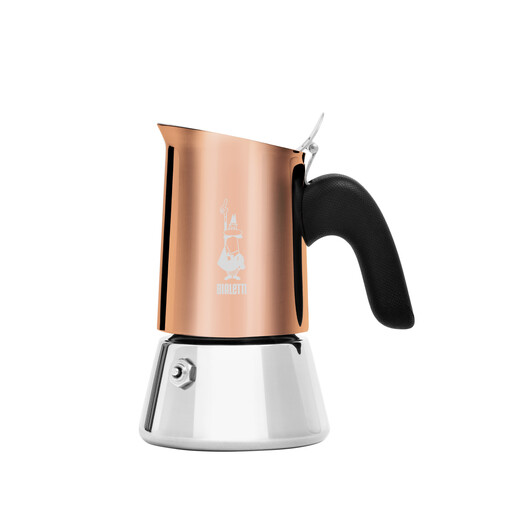
Why this product fits the profile: The 18/10 stainless steel body and stated suitability for all hob types including induction appeal to buyers who prioritise material and compatibility.
The stainless steel body avoids the typical limitation of a pure aluminium boiler on induction hobs. The 2-cup size also remains compact.
18/10 stainless steel, manual brewing, reusable filter and stated use on gas, electric, ceramic and induction hobs.
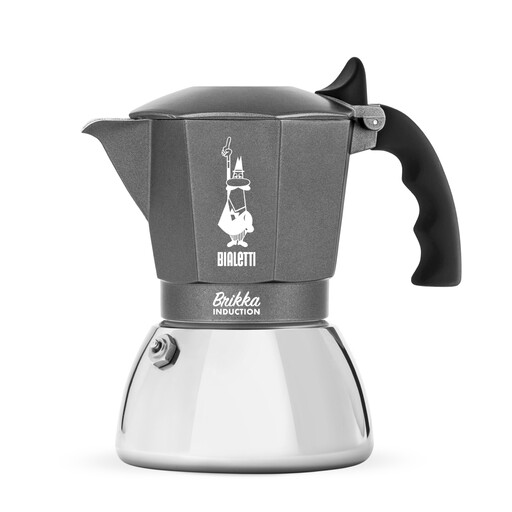
Why this product fits the profile: The 170 ml version is aimed at households with several coffee drinkers and users of an induction hob who want a manual pot with a larger output.
The induction compatibility is clearly stated. The 170 ml capacity helps avoid mistaking the pot for a small single serving.
Double-walled boiler, removable water tank, safety valve and manual use with ground coffee.
We have put together a full, regularly updated list of products that meet these strict selection criteria and all applicable EU safety regulations.
Do not use the pot without water, and never open it while it is hot. If you notice visible damage to the seal, filter or safety valve, check the relevant spare part or stop using the pot altogether.
A classic aluminium Moka Express is not normally directly compatible with induction. Depending on the manufacturer’s guidance, it can be used with a suitable adapter plate. If you want to brew without an adapter, choose a model like the Bialetti Moka Induction or Venus, whose hob compatibility explicitly includes induction.
The lifespan depends on care, frequency of use and the condition of the wear parts. The seal, filter and safety valve should be checked regularly. Gentle cleaning with water, thorough drying and avoiding the dishwasher can help maintain usability. Because usage varies so much, it is not possible to give a reliable overall lifespan.
A manual stovetop espresso maker does not need its own power supply. Costs mainly come from ground coffee and the short time you use your gas, electric, ceramic or induction hob. The exact amount depends on the coffee, portion size and hob power. Compared to pod systems, you also avoid the regular cost of buying pods, although the brewing process requires more manual effort.