
Lieferung heute & morgen

Qualitätsgarantie

Willkommens-Angebote freischalten: KOSTENLOSE Lieferung | Bis zu 80 % RABATT | Kostenlose 30-Tage-JoyPlus-Testphase
App herunterladen
A Bialetti Moka Pot is a manual espresso maker for use on the hob. Water is heated in the lower chamber and forced through the ground coffee into the upper section. The process requires neither capsules nor electricity, making it ideal for preparing Italian-style coffee at home, while camping or as a gift.
However, three points are often overlooked before buying: the cup capacity does not correspond to the usual size of a coffee cup, aluminium models are not automatically suitable for induction hobs, and cleaning differs from that of a traditional coffee machine. Checking these aspects can help you avoid the wrong purchase.
With a moka pot, one cup usually refers to a small espresso serving of around 30 to 50 ml. A three-cup model therefore does not produce three large mugs of coffee. According to the product specifications, the three-cup Bialetti Moka Express prepares around 130 to 150 ml. The one-cup version holds approximately 60 ml.
A one-cup espresso maker is suitable for single users or one small serving. Depending on how much coffee they drink, couples can choose a two- or three-cup espresso maker. For several people, six-cup versions holding around 250 to 300 ml are more practical.
A classic aluminium espresso maker such as the Bialetti Moka Express is suitable for gas, electric and ceramic hobs according to the available product specifications. However, an appropriate adaptor plate or a model specifically designed for induction is required for an induction hob.
An espresso maker for induction usually has a stainless steel base or stainless steel boiler. For example, the Bialetti Moka Induction combines an aluminium upper body with a stainless steel lower section. In contrast, the Bialetti Moka Express Italia Tricolore is not suitable for induction according to its product description. Before buying, you should therefore look not only at the design but specifically for the statement “suitable for induction”.
Aluminium is lightweight and forms part of the classic design of many moka pots. It should generally only be rinsed with water and should not be cleaned in the dishwasher. Cleaning products may leave residues and affect the surface.
A stainless steel moka pot is particularly interesting if you are looking for a model suitable for different types of hob. The manufacturer’s care instructions still apply, however. With all versions, the safety valve, seal and filter must remain clean and fully functional. The water level must not exceed the safety marking, and the coffee grounds should not be pressed down firmly.
The 1 to 6 cups specification describes the number of small espresso servings produced per brewing cycle. A larger moka pot should not be only partially filled, as the water chamber and coffee filter are designed for the relevant size.
For a gas hob, a classic espresso pot for gas hobs is usually sufficient. With ceramic and electric hobs, the base diameter should match the cooking zone. For induction, a compatible stainless steel base is essential. An adaptor plate may be an option for certain aluminium models, but it must be purchased separately and can alter how the pot is used.
An easily accessible safety valve makes checking and cleaning easier. Other important features include a heat-resistant handle, a securely closing screw thread, and replacement seals and filters that are readily available. With regular use, these are wear parts that may eventually need replacing.
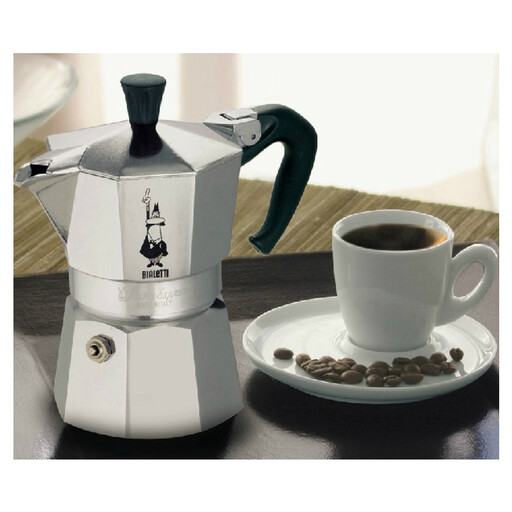
Why this product suits this profile: The 60 ml version is designed for a small serving and is suitable for single users, offices or occasional espresso preparation on gas and electric hobs.
The clear 60 ml specification reduces the risk of confusing a small moka serving with a large mug. According to the product specifications, the aluminium body is not suitable for induction without an adaptor.
Manual operation, reusable filter and a low weight of around 0.32 kg according to the product data.
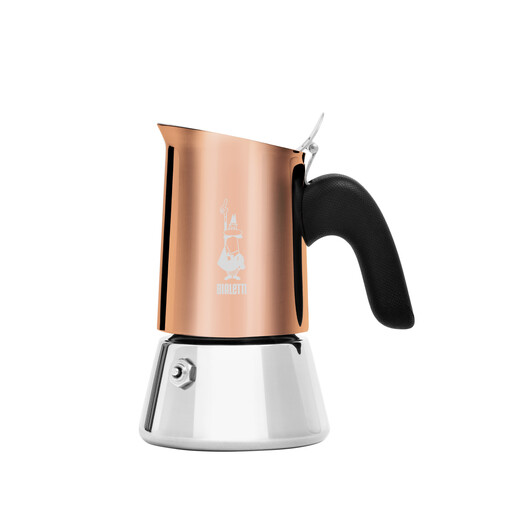
Why this product suits this profile: The two-cup version, made from 18/10 stainless steel, is designed for couples and households with induction, gas, electric or ceramic hobs.
The stated compatibility with all the hob types listed prevents the common confusion between classic aluminium models and induction suitability.
18/10 stainless steel, manual operation and a size designed for two small servings.
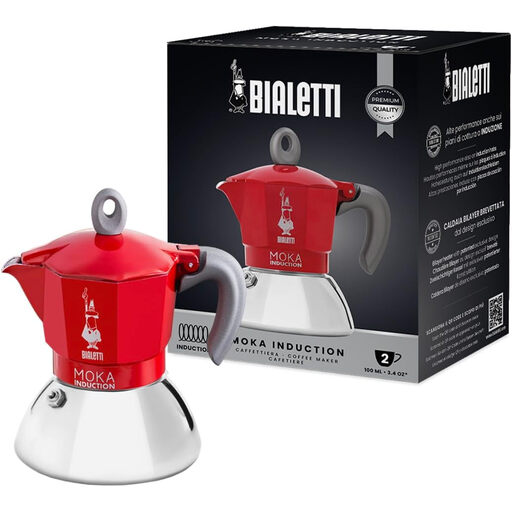
Why this product suits this profile: This model is suitable for households with an induction hob, as well as users looking for a single espresso maker that works on different types of hob.
The product description explicitly states that it is suitable for induction. This removes the uncertainty of choosing a pure aluminium pot without a suitable base.
Aluminium upper section, stainless steel boiler, reusable filter and compatibility with all common hob types according to the product specifications.
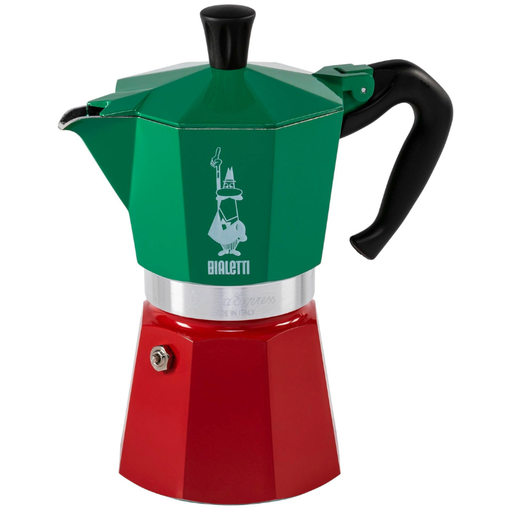
Why this product suits this profile: The six-cup size is designed for several small servings and may be suitable for families, guests or mobile use with an appropriate heat source.
The product information specifies around six cups and also states that the model is not suitable for induction. This makes it easy to check hob compatibility before buying.
Aluminium construction, heat-resistant handle and capacity for up to six small espresso servings.
Most of the models mentioned are not dishwasher-safe. On a gas hob, the flame should not extend beyond the base. The safety valve must not be blocked or forced open.
We have put together a complete, regularly updated list of products that fully meet these strict selection criteria and the safety regulations applicable in the EU.
Not every model. According to the product specifications, the classic aluminium Moka Express requires a suitable Bialetti induction adaptor plate. Models such as Moka Induction and New Venus are specifically designed for induction hobs.
Its lifespan depends on how it is used and cleaned, as well as the condition of the seal, filter and safety valve. With careful hand washing, the body can remain usable for a long time. Wear parts should be replaced when necessary. A damaged or leaking pot should no longer be used.
The espresso maker requires neither capsules nor its own power connection. Ongoing costs mainly cover ground coffee, water and the energy needed to heat it on the hob. With an induction model, energy consumption also depends on the hob’s power, heating time and quantity used.