
Lieferung heute & morgen

Qualitätsgarantie

Willkommens-Angebote freischalten: KOSTENLOSE Lieferung | Bis zu 80 % RABATT | Kostenlose 30-Tage-JoyPlus-Testphase
App herunterladen
A Bialetti Moka pot may look simple at first: add water, add ground coffee and put it on the hob. In practice, however, incorrect size assumptions, a lack of induction compatibility and unsuitable cleaning methods can easily lead to the wrong purchase. Check a few technical details before you buy and you’ll find it easier to choose an Italian-style coffee maker that suits your home.
For Bialetti, a cup usually means a small Italian espresso cup. Depending on the model, a 3-cup Moka pot makes around 130 to 150 ml, while a 6-cup Moka pot may hold around 270 ml. That may not be enough to fill a large mug.
Always check the capacity in millilitres before you buy. Models with a capacity of around 40 to 60 ml are suitable for one serving. Couples might prefer around 90 to 150 ml, while larger households may need a model with a capacity of around 270 to 280 ml.
Classic models such as the Bialetti Moka Express are often made from aluminium. Induction hobs don’t usually detect aluminium on its own, so a classic aluminium espresso maker is generally suitable for gas, electric and ceramic hobs, but not induction.
If you have an induction hob, look specifically for Bialetti induction or a Moka pot for induction. Compatible models may have a stainless steel base, for example. An induction adapter plate may be an option for some classic pots, but it needs to be bought separately and changes how you use the pot.
Many Moka pots aren’t dishwasher-safe. Manufacturers often recommend rinsing the parts with water once they’ve cooled, then drying them thoroughly. Detergents and intensive dishwasher cycles can damage surfaces and may leave residues or affect the flavour.
Another common mistake is overfilling the pot. Fill it only up to the safety mark, or just below the safety valve. Add the ground coffee loosely without pressing it down, and make sure the safety valve opening stays clear.
Classic aluminium pots are often a practical choice if you’re looking for a stovetop espresso maker for gas and electric hobs. For ceramic hobs, make sure the base diameter suits the cooking zone. For induction, you’ll need a model specifically approved for use on an induction hob. Check that claims such as “suitable for all hob types” are confirmed in the product description.
Choose a size that suits how much coffee you actually drink:
These amounts aren’t equivalent to the capacity of a filter coffee machine. A Moka pot makes a concentrated Moka-style brew, which you can drink neat, with hot water or with milk.
Aluminium is widely used for classic Moka pots and heats up quickly. Stainless steel parts can provide the magnetic properties needed for induction models. Whatever the material, make sure the handle, seal, filter and safety valve are easy to access. Wear-and-tear parts such as the sealing ring and filter screen can be replaced on many models; check that replacements are available before you buy.
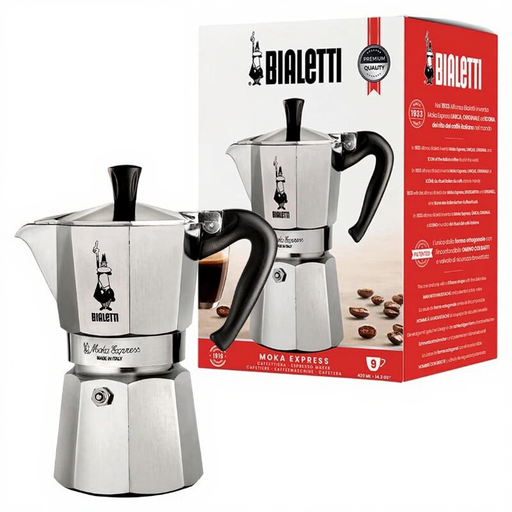
Why this product suits this profile: The classic 3-cup model makes around 130 ml of coffee, making it suitable for individuals or couples who prefer smaller servings. It’s listed as suitable for gas, ceramic and electric hobs.
The precise capacity in millilitres helps prevent the cup count from being mistaken for the number of large mugs. Hob compatibility is clearly specified.
Aluminium body, classic Moka Express design and manual brewing without an electrical connection.
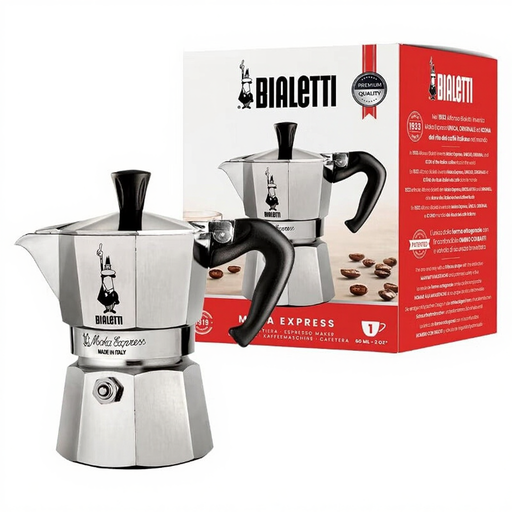
Why this product suits this profile: With a stated capacity of 270 ml, this model is designed for households that want to make several small servings at once.
The capacity is given in both millilitres and cups. It’s also clearly stated that the pot isn’t suitable for induction or dishwasher use.
Octagonal aluminium body, reusable filter and compatibility with gas, ceramic and electric hobs.
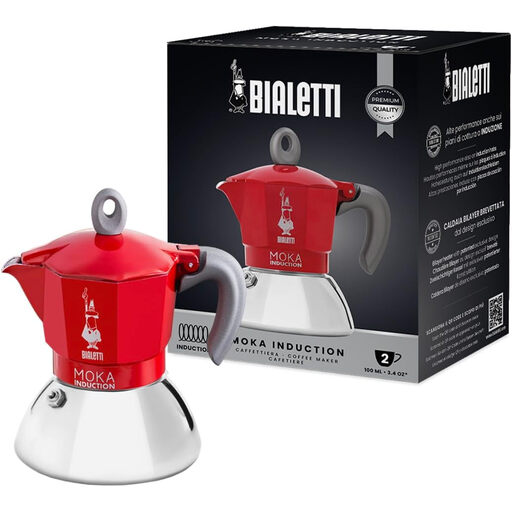
Why this product suits this profile: The aluminium upper section and stainless steel boiler are designed for induction, gas and electric hobs. It’s a good fit for households with different types of hob.
Its stated induction compatibility reduces the risk of buying a classic aluminium pot that won’t work with your hob.
Listed as suitable for all common hob types, with manual operation and a reusable filter.
We’ve put together a complete, regularly updated list of products that meet these strict selection criteria and fully comply with the safety regulations in force in the EU.
A Moka pot works differently from an electric espresso machine. It makes a strong Moka-style coffee, but it doesn’t produce the same pressure or crema as a pump espresso machine. If you prefer larger amounts of milder coffee, you could consider a French press such as the BODUM BRAZIL, with a 1-litre capacity, or a filter coffee machine instead.
A classic aluminium Moka Express is generally not suitable for induction on its own. You’ll need either a compatible adapter plate or a model from the Bialetti induction range with a suitable stainless steel boiler.
Its lifespan depends on how it’s used and cared for, as well as the condition of the seal, filter and safety valve. With proper hand-washing, thorough drying and timely replacement of worn seals, a Moka pot can last a long time. Don’t continue using damaged or misshapen parts.
A manual Moka pot doesn’t need a continuous electricity supply. The main costs are water, ground coffee and the short time it takes to heat the pot on the hob. Actual energy costs depend on the type of hob, its power, heating time and your electricity tariff.