
Lieferung heute & morgen

Qualitätsgarantie

Willkommens-Angebote freischalten: KOSTENLOSE Lieferung | Bis zu 80 % RABATT | Kostenlose 30-Tage-JoyPlus-Testphase
App herunterladen
The Bialetti Moka Express is one of the best-known solutions for making coffee manually on the hob. However, it is worth looking more closely before you buy: not every moka pot is suitable for every hob, and the stated number of “cups” does not automatically correspond to the number of large mugs of coffee. Materials, cleaning requirements and what is included can also vary from one model to another.
This buying guide from the Joybuy Product Recommendation Officer explains the key criteria and shows which option is suitable for different households, offices, camping situations and travel habits.
On a Bialetti espresso maker, the cup measurement generally refers to small Italian espresso cups. According to the product specifications, a Bialetti Moka Express 1 cup makes around 60 ml, the 3-cup version around 130 ml and a 6-cup model around 250 to 270 ml. If you regularly drink coffee from large mugs, you should therefore assess the capacity rather than relying solely on the cup count.
A classic aluminium espresso maker is normally designed for gas, electric and, in some cases, ceramic hobs. Aluminium alone is not sufficient for an induction hob, however. Several Moka Express models therefore require a Bialetti induction adapter plate. Some special Mini Express induction models, on the other hand, may be designed for direct use on induction. The information on the relevant product page is decisive.
For classic Bialetti models, it is often recommended that you rinse the pot with clean water after use and allow it to dry completely. According to the relevant product information, washing-up liquid, abrasive cleaners and dishwashers can affect the material, seals or flavour of the coffee. At the same time, some listings contain conflicting care instructions. You should therefore check the supplied instructions before buying and when you receive the product.
The size should depend on how much coffee you need to brew at a time:
A moka pot should not be kept only partially filled over the long term. With many models, the water and coffee grounds are measured according to the specified filling level. It is therefore better to choose the size that suits your usual brewing routine.
An Italian espresso maker is heated on the hob. Pay attention to the following:
The Bialetti Moka Express is a manual coffee pot without an integrated pump. This means you need ground coffee, water and a working heat source. For an espresso pot for the hob, this straightforward operating principle is a fundamental part of the concept.
Classic models are primarily made from aluminium and feature a multi-part body with a filter funnel, seal and safety valve. The valve should remain visible and free from deposits. A brief check before every use is recommended:
The body becomes hot. Use the handle when pouring and keep the pot away from children while it is in use. A new product may have minor visual variations or machining marks. These depend on the particular version and the quality of the delivery, and should be taken into account when making your purchase decision.
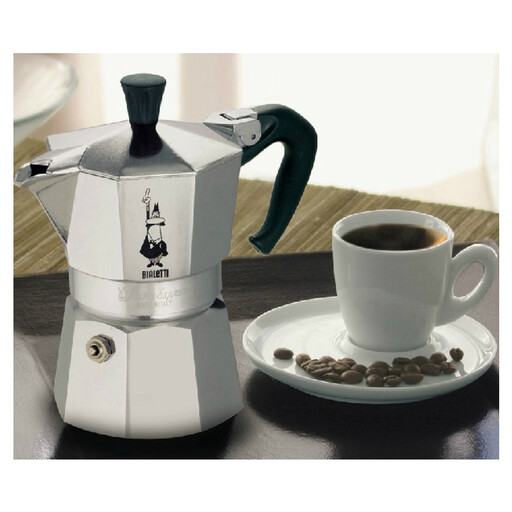
Why this product suits this profile: With a compact capacity of around 60 ml, this version is ideal for individuals, small kitchens, the office or occasional camping.
The clearly stated 1-cup size reduces the risk of buying a pot that is too large for everyday individual use. An additional adapter plate should be allowed for if you use an induction hob.
Aluminium body, manual operation, ergonomic handle and, according to the product information, a controllable safety valve.
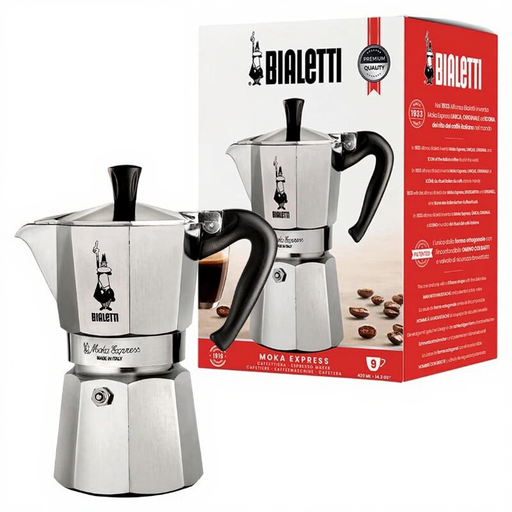
Why this product suits this profile: The classic 3-cup version combines a moderate capacity with traditional aluminium styling and the Made in Italy designation.
The product description explicitly mentions gas, ceramic and electric hobs. It is not directly compatible with induction, making it easier to avoid a disappointing purchase.
Around 130 ml of coffee, an aluminium body and an additional grip area for easier handling.
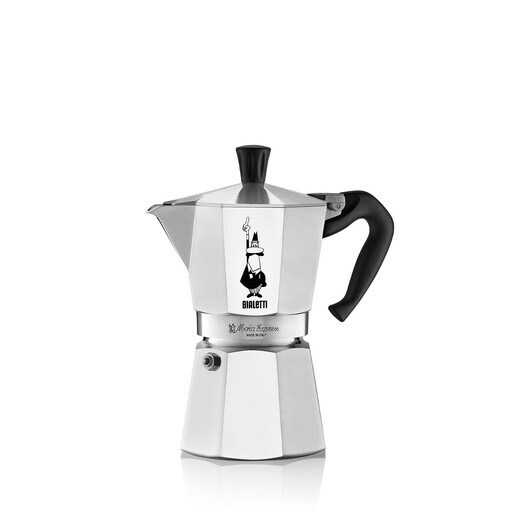
Why this product suits this profile: With around 420 ml, this version is designed for several people, families, offices or shared coffee breaks.
The high capacity is clearly stated. This makes it easier to judge whether the pot suits your actual needs, rather than planning several small brewing sessions.
420 ml capacity, aluminium construction, ergonomic handle and a safety valve according to the product description.
We have put together a complete, regularly updated list of products that fully meet these strict selection criteria and the safety regulations applicable in the EU.
After brewing, the Bialetti Moka Express should be allowed to cool before it is taken apart. Rinse the individual parts with water and leave them to dry open. Check the seal, filter and safety valve regularly. Wear parts such as seals may eventually need replacing if the pot is used frequently. The exact service life depends on heat, water quality, care and frequency of use, so it is not possible to give a reliable general timeframe.
Classic aluminium versions are generally not directly suitable for induction. On an induction hob, you will usually need a suitable Bialetti adapter plate. Check the individual model to see whether direct induction compatibility is specified.
The stated capacities refer to small espresso cups. Depending on the version, it can make around 60 ml for 1 cup, 130 ml for 3 cups, around 250 to 270 ml for 6 cups and approximately 420 ml for 9 cups. The technical specifications of the specific listing are the definitive source.
For classic models, hand-washing with water is often recommended. According to the product information, washing-up liquid and dishwashers can affect the surface, seals or flavour of the coffee. The care instructions for the specific product should take priority.