Joybuy Insights

Guide to TV Backlighting and Common Mistakes

A dynamic TV backlight can fundamentally transform your home cinema or gaming experience. It extends the picture beyond the screen, creates atmosphere, and can reduce eye strain during long sessions. However, the market is flooded with products whose marketing promises often fall short in practice. Before you invest, it's crucial to understand the common pitfalls that lead to disappointment and unnecessary expense.

As your Joybuy Product Recommendation Officer, I have analysed the most common issues buyers encounter and will show you what to look for to make an informed decision.

The 3 Most Common Pitfalls When Choosing TV Lighting

Many products look promising at first glance but only reveal their weaknesses after installation. Pay special attention to these three points:

  1. Inaccurate or Delayed Colour Sync: The core promise of many systems is syncing the light colours with the on-screen content. Budget models often use slow sensors or inadequate software, resulting in noticeable lag or incorrect colour reproduction. The result disrupts immersion rather than enhancing it.
  2. Poor Adhesion and Short Lifespan: A common annoyance is LED strips for TVs whose adhesive fails to withstand the heat generated on the back of the TV. They start peeling off after just a few weeks. Additionally, low-quality LEDs can quickly lose their brightness or individual colour channels may fail.
  3. Limited Compatibility and Control: A system that doesn't seamlessly integrate into your existing smart home setup (e.g., with Alexa or Google Assistant) or is controlled by an unreliable app significantly reduces user convenience. The promised smart TV lighting quickly becomes a manual chore.

Crucial Parameters for Making the Right Choice

To avoid the issues mentioned above, you should check three core technical aspects before buying. These largely determine the quality and functionality of your future indirect TV lighting.

1. Colour Sync Technology

The method the lighting system uses to capture colours from the screen is critical for the final result. There are two common approaches:

  • Camera-Based Systems: A small camera is mounted on the top or bottom edge of the TV and films the screen content. Software analyses the colours at the edges and relays the information to the LED strips. Modern systems like the Govee TV Backlight use this technology. They are universally compatible with any image source (streaming apps, game consoles).
  • HDMI Sync Boxes: These boxes are placed between the signal source (e.g., Blu-ray player, console) and the TV. They analyse the HDMI signal directly, enabling nearly latency-free and highly accurate colour reproduction. The downside is often a higher price and potential compatibility issues with the latest HDMI 2.1 standards like 4K@120Hz or VRR.

2. LED Type: The Difference Between RGB and RGBIC

The type of LEDs used has a major impact on the visual effects.

  • RGB Strips: With a conventional RGB strip, all LEDs can only display a single colour at the same time. A smooth transition or displaying multiple colours simultaneously is not possible.
  • RGBIC Strips: The RGBIC Light Strip technology is significantly more advanced here. IC stands for "Independent Control". Each LED chip or small segments of the strip can be controlled independently. This allows for dynamic, flowing rainbow effects and a much more accurate representation of the on-screen content, where different colours shine on different edges. For a true Ambilight-like experience, RGBIC is the recommended choice.

3. Compatibility and Installation

Ensure the chosen product fits your setup. Check the following points:

  • TV Size: The length of the LED strips must match the perimeter of your TV (e.g., 55-65 inch or 75-85 inch). Strips that are too short will result in uneven illumination.
  • Smart Home Integration: Check for compatibility with voice assistants like Amazon Alexa and Google Assistant for convenient control.
  • App Functionality: An intuitive and stable app is essential for setting up and customising scenes, brightness, and effects.

Our Top Recommendations

Based on the criteria above, we have identified some products that are suitable for different user groups.
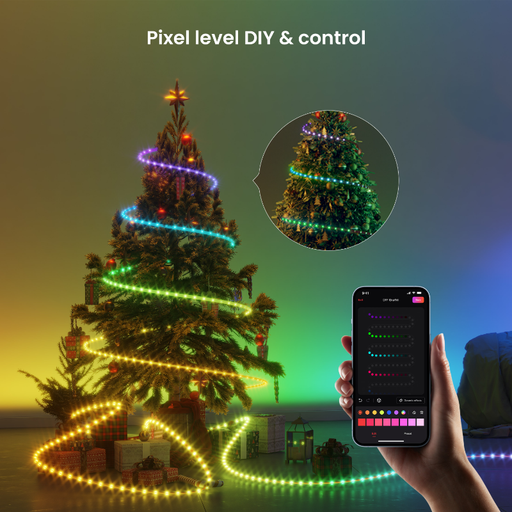
MATCH FOR: Budget-Conscious Beginners
Yeelight Obsid RGBIC LED Light Strip – Smart Colour-Changing LED Strip for Room, TV, Desk & Gaming Ambience,1Pack,2M

Yeelight Obsid RGBIC LED Light Strip – Smart Colour-Changing LED Strip

Why This Fits Their Persona: Ideal for users looking for dynamic ambient lighting without spending the budget on a camera system. Perfect for creating moods or as accent lighting for a gaming setup.

How It Avoids the Trap

This product uses advanced RGBIC technology, thus avoiding the pitfall of outdated RGB strips that can only display one colour. You get smooth effects at an accessible price.

Key Advantage & Pros

Offers segmented colour control (RGBIC) and is controllable via an app. The basic set is expandable, providing flexibility for different TV or room sizes.
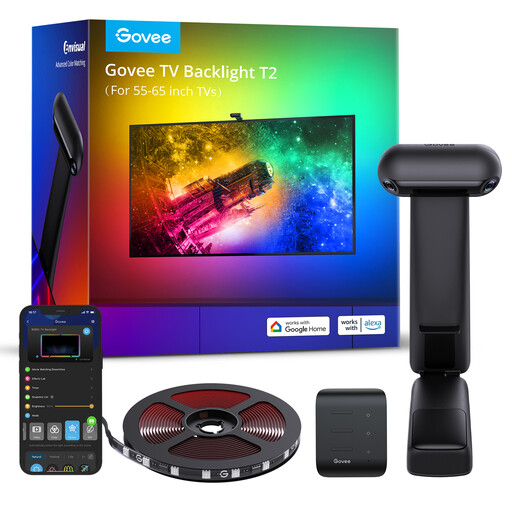
MATCH FOR: Immersive Experience Enthusiasts
Govee Envisual TV Backlight T2 with Dual Cameras for 55-65 Inch TVs

Govee Envisual TV Backlight T2 with Dual Cameras

Why This Fits Their Persona: For home cinema fans with 55-65 inch TVs who want the most precise and responsive colour sync for movies and series to achieve maximum immersion.

How It Avoids the Trap

The dual-camera system directly addresses the pitfall of inaccurate colour capture. According to the manufacturer Govee, the two cameras capture a higher pixel density, which improves colour accuracy compared to single-camera systems.

Key Advantage & Pros

The combination of a dual-camera system and RGBIC technology ensures highly accurate and dynamic ambient lighting. It also offers music sync and is controllable via app and voice commands.
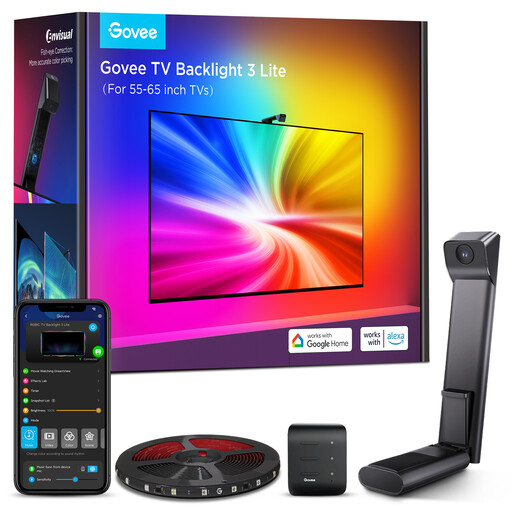
MATCH FOR: Smart Home Integrators and Gamers
Govee TV Backlight 3 Lite TV 55-65" SMART LED Backlight RGBICW

Govee TV Backlight 3 Lite (55-65 Inch)

Why This Fits Their Persona: Perfect for users who want reliable integration into their smart home (Alexa/Google) and responsive lighting for their gaming room lighting. The audio sync further enhances the gaming experience.

How It Avoids the Trap

This model bypasses the pitfall of poor compatibility. It offers a stable connection via Wi-Fi and Bluetooth, as well as mature integration into the most common smart home ecosystems and a well-rated app.

Key Advantage & Pros

The fisheye camera ensures precise colour capture, even on ultra-thin TVs. The RGBICW technology allows for the display of warm and cool white light in addition to vibrant colours.

Looking for More Options?

We have compiled a complete, real-time updated list of products that fully meet these strict selection criteria and relevant safety regulations.

Frequently Asked Questions (FAQ)

1. Does TV backlighting really reduce eye strain?

Indirect lighting behind the TV, also known as bias lighting, can increase viewing comfort in a dark room. It reduces the harsh contrast between the bright screen and the dark surrounding wall. This means the eyes don't have to adjust as much to extreme differences in brightness, which many users find more comfortable. However, this is not a medical treatment.

2. How do I correctly install an LED strip on my TV?

For a durable installation, you should follow these steps:

  • Clean: Thoroughly clean the back of the TV with an alcohol wipe to remove dust and grease.
  • Plan: Lay out the strip as a test run to ensure the length is correct and the corners can be rounded cleanly. Avoid sharp folds.
  • Adhere: Peel off the protective film gradually and press the strip down firmly. Apply pressure along the entire length for a few seconds.
  • Connect: Connect the strips to the control box and power supply only after everything is secured.

3. Do camera-based systems work with ultra-thin TVs?

Yes, many modern systems are designed for this. Manufacturers like Govee, for example, use cameras that are simply hung over the top edge of the screen using a counterweight (gravity-suspended design). This requires no clamping and works even with very narrow bezels without obstructing the picture.