
Lieferung heute & morgen

Qualitätsgarantie

Willkommens-Angebote freischalten: KOSTENLOSE Lieferung | Bis zu 80 % RABATT | Kostenlose 30-Tage-JoyPlus-Testphase
App herunterladen
Choosing the right bicycle helmet can be a challenge given the vast array of models, features, and designs. Whether for the daily commute, a weekend sports ride, or a leisurely tour on your e-bike, the requirements for a helmet are as individual as the rider. This guide serves to highlight the most important criteria and introduce you to a selection of functional models and accessories.
To make an informed decision, it's helpful to consider a few fundamental aspects. While a proper fit and certified safety are the foundation, modern helmets offer much more than just impact protection.
A helmet can only protect you if it fits correctly. Measure the circumference of your head at its widest point (about one centimetre above your eyebrows) with a measuring tape to determine the right size. Most helmets feature an adjustment system at the back of the head to fine-tune the fit. In the European Union, the EN 1078 standard is the benchmark for bicycle and skateboard helmets. It ensures that the helmet meets basic safety requirements. For faster S-Pedelecs (up to 45 km/h), the Dutch NTA 8776 standard exists, which imposes stricter protection requirements.
Modern helmets are tailored for specific use cases.
For many riders, the ability to communicate or listen to music while riding has become important. A helmet Bluetooth headset allows for a wireless connection to your smartphone for navigation prompts, calls, or music. Such systems for bicycle helmet communication can either be retrofitted or are already integrated into some high-end models. They are designed to ensure ambient sounds remain audible, which is essential for safety in traffic.
Here, we present a selection of products that are compelling for different user groups due to their specific features.
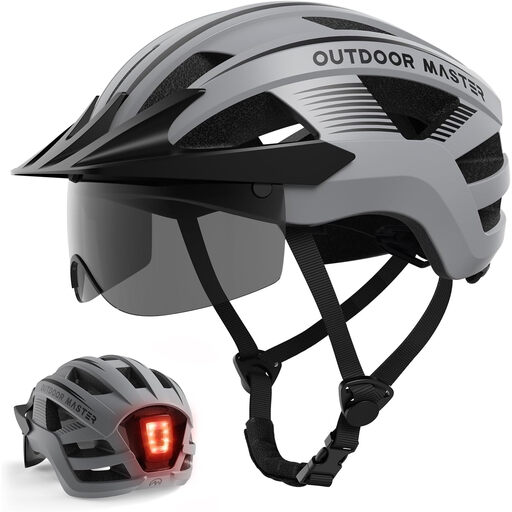
What makes it stand out The RhinoUrban from OutdoorMaster is a versatile helmet for the urban environment. It combines several practical functions in one package: a USB-C rechargeable rear light, magnetically attached goggles, and a removable visor. The in-mold construction, where the PC outer shell is directly bonded to the EPS foam, ensures a stable helmet structure.
Pros
Who is it for? This helmet is an excellent choice for commuters and tour riders looking for an adults' bicycle helmet with integrated lighting and weather protection. The combination of a light and visor makes it particularly practical for year-round use on a bicycle or e-bike.
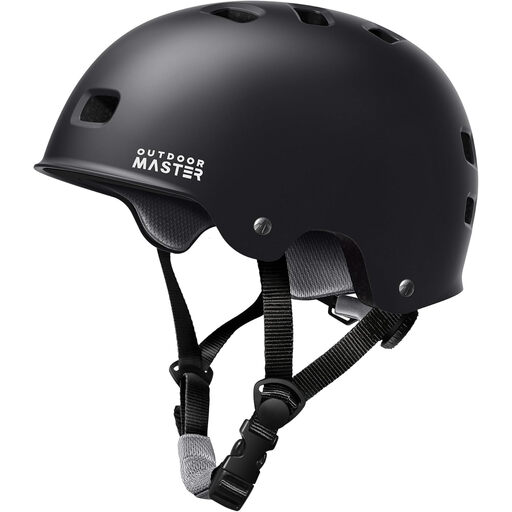
What makes it stand out The OutdoorMaster Oryx is designed as a rugged multi-sport helmet. Its reinforced ABS outer shell and thick, shock-absorbing EPS core offer solid protection for various activities. A special feature is the two removable liners, which allow for adjustment to different head sizes and can be easily removed for cleaning.
Pros
Who is it for? Ideal for users who want a single helmet for multiple sports like skating and cycling. Its robust construction makes it a reliable option for anyone looking for a durable and versatile skateboard helmet.
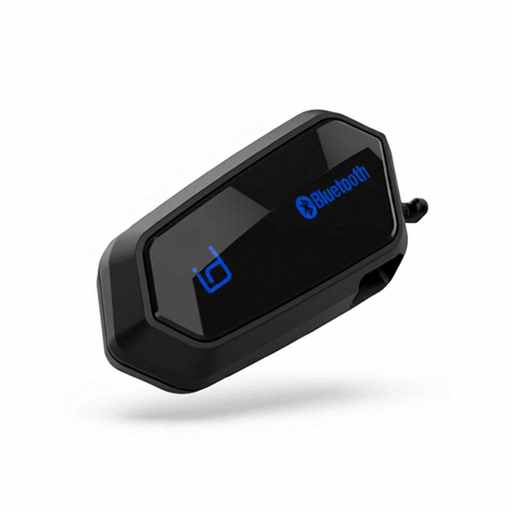
What makes it stand out The ID221 Moto A2 Pro is not a helmet, but an advanced retrofit helmet Bluetooth headset. It uses Bluetooth 5.2 for a stable connection and enables communication between two riders. A special feature is the "Music Sharing" function, which allows two connected users to listen to the same music. The DSP noise cancellation filters out wind noise, improving voice quality.
Pros
Who is it for? This communication system is aimed at tech-savvy cyclists and motorcyclists who want to upgrade their existing helmet. It is ideal for riding in pairs, for navigation prompts, or simply for listening to music without compromising safety.
The selection presented here covers specific use cases. However, the market offers a much wider variety of models that differ in design, material, and function. If you are looking for other styles or specialised helmets, you may find the right model in our broader product range.
Explore our full range of protective helmets and find the model that perfectly suits your needs.
Measure your head circumference with a flexible measuring tape at the widest point, about a finger's width above your eyebrows and ears. Compare the result with the manufacturer's size chart. A well-fitting helmet should be snug but comfortable and should not shift during head movements. The adjustment dial at the back of the head is for fine-tuning.
A bicycle helmet should be replaced after any significant impact or fall, even if no external damage is visible. The internal protective structure made of EPS foam can be compressed by the force of the impact, causing it to lose its protective properties. Regardless of falls, most manufacturers recommend replacement every 3 to 5 years, as materials like plastic and foam can age and become brittle due to UV radiation and environmental factors.
For pedelecs that provide assistance up to 25 km/h, a conventional bicycle helmet certified to EN 1078 is sufficient in Germany. However, since e-bike riders often reach higher average speeds and cover longer distances, a special e-bike helmet can be beneficial. These are often certified to the Dutch NTA 8776 standard, which is designed for higher impact speeds and protects a larger area of the head.