
Lieferung heute & morgen

Qualitätsgarantie

Willkommens-Angebote freischalten: KOSTENLOSE Lieferung | Bis zu 80 % RABATT | Kostenlose 30-Tage-JoyPlus-Testphase
App herunterladen
As a Joybuy Product Recommendation Officer, I analyze market data daily to provide you with objective, practical purchasing advice. When selecting a professional automotive diagnostic tool, it's crucial to separate the quality options from the subpar ones. Many devices promise comprehensive features, but in practice, costly pitfalls often emerge only after the purchase. This guide will help you navigate these traps and make an informed decision.
Before we dive into the technical details, you should be aware of the three most common issues that lead to frustration and unnecessary expenses when purchasing a diagnostic tool.
To avoid a bad purchase, focus on three verifiable technical features. These define the difference between a simple code reader and a true workshop-grade diagnostic tool.
A bidirectional OBD2 diagnostic tool can not only receive data from ECUs (reading fault codes) but also send commands to them. This function, also known as an active test, is essential for efficient troubleshooting. It allows you to directly control individual components and actuators to verify their operation.
Real-world examples:
Without bidirectional control, you're often left with the time-consuming process of replacing parts based on suspicion alone.
Advanced diagnostic tools offer ECU coding capabilities. This allows you to write the correct vehicle data to a new module after a replacement or to unlock and customize manufacturer-specific convenience features.
Closely related is support for modern vehicle protocols. A future-proof scanner with CAN FD and DoIP is crucial for working on newer vehicles from manufacturers like GM, Ford, BMW, and the Volkswagen Group. CAN FD (Flexible Data-Rate) enables significantly faster data transfer, while DoIP (Diagnostics over Internet Protocol) is required for diagnostics via Ethernet-based vehicle networks. Also, look for features like FCA AutoAuth to gain secure gateway access on newer Fiat, Chrysler, and Jeep vehicles.
A professional diagnostic tool is only as good as its software. Check carefully how long updates are included in the purchase price and what they cost afterward. Models with several years of free updates or even lifetime updates offer greater planning security and better long-term value. This applies not only to the fault code database but also to the addition of new vehicle models and reset functions.
Here are three devices tailored to different user profiles that specifically avoid the pitfalls mentioned.
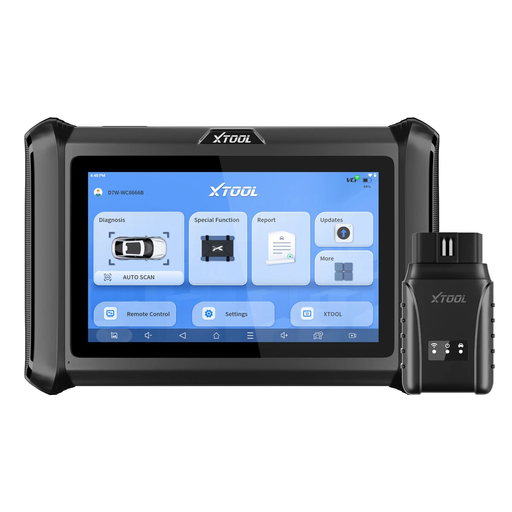
Why This Fits Their Persona: This wireless tablet is designed as a full-featured workshop-grade diagnostic tool. It combines comprehensive vehicle coverage with advanced functions required for professional repairs and service on modern vehicle fleets.
Native support for CAN FD and DoIP ensures compatibility with the latest vehicle architectures. The included 3 years of free updates also provide high investment security and protect against the outdated protocol trap.
Offers a wide range of professional functions, including ECU coding, key programming, 39+ reset functions, and FCA AutoAuth. This makes it a versatile all-in-one tool.
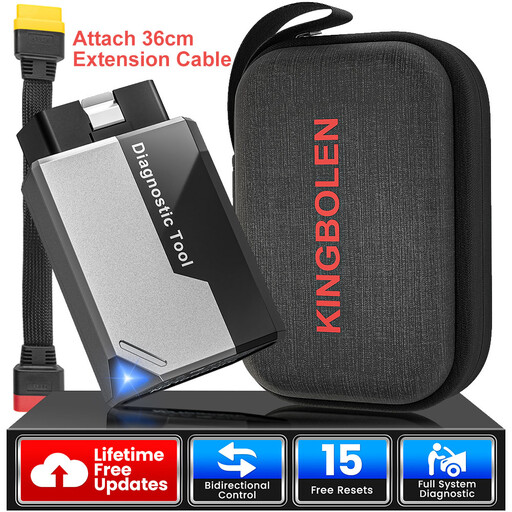
Why This Fits Their Persona: This compact Bluetooth adapter turns a smartphone into a powerful diagnostic tool. It's ideal for experienced DIYers who need deeper insights and control capabilities without investing in an expensive tablet system.
The device is advertised with lifetime free updates for all functions. This completely eliminates the subscription trap and ensures maximum cost transparency over its entire service life.
It offers bidirectional control and 15 essential service functions at a very accessible price point. Support for the CAN FD protocol and FCA AutoAuth also makes it relevant for newer vehicles.
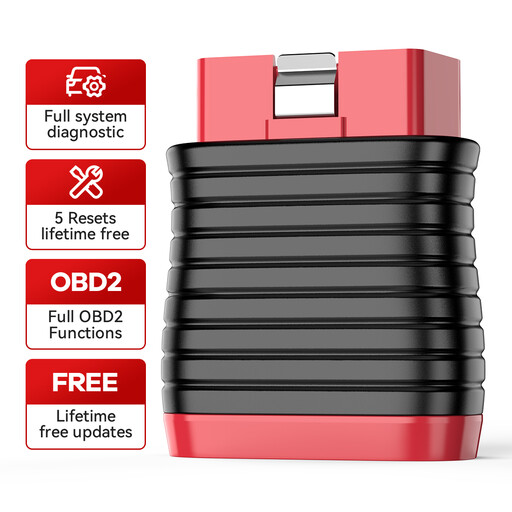
Why This Fits Their Persona: Perfect for car owners who want to do more than just read engine fault codes. This device offers a full system diagnosis and the most important reset functions for basic maintenance tasks like oil or brake service.
This device focuses on a clear set of features without exaggerated promises. The lifetime free use of its included functions provides clarity and avoids unexpected costs for basic applications.
A very cost-effective way to perform a diagnosis of all vehicle systems. The five included reset functions (IMMO, Oil, Brake, ABS, Throttle) cover the most common maintenance jobs.
We have compiled a complete, real-time updated list of products that fully meet these strict selection criteria.
1. What is the exact difference between a basic OBD2 scanner and a bidirectional diagnostic tool? A basic OBD2 scanner is a read-only device. It can read fault codes and live data from the ECUs. A bidirectional OBD2 diagnostic tool can also send commands to the ECUs. This allows you to actively test components like fans, valves, or pumps, which is essential for professional and rapid troubleshooting.
2. Are software updates for professional diagnostic tools really necessary? Yes, absolutely. Vehicle manufacturers constantly release new models and software versions for their ECUs. Without regular updates, your diagnostic tool may not be able to correctly interpret new fault codes, connect to new vehicle models, or perform new service procedures. A device with outdated software quickly loses its value and utility.
3. Can I perform key programming myself with such a device? That depends on the tool and the vehicle. Advanced tools like the XTOOL D7W offer key programming functions. This allows you to deactivate lost keys and learn new keys or remote fobs. However, the scope of this function varies greatly depending on the vehicle manufacturer, model, and year. For some brands, a PIN code is also required, which must be obtained through special services or an authorized dealer. Always check the compatibility with your specific vehicle before purchasing.