
Lieferung heute & morgen

Qualitätsgarantie

Willkommens-Angebote freischalten: KOSTENLOSE Lieferung | Bis zu 80 % RABATT | Kostenlose 30-Tage-JoyPlus-Testphase
App herunterladen
Deciding on a new bicycle and the right accessories can be complex, given the overwhelming array of choices and marketing claims. Many buyers invest in products that don't suit their actual needs or whose quality fails to meet expectations. This guide focuses on the objective criteria that will help you make an informed decision and steer clear of common pitfalls.
Before diving into specific models, it's wise to understand the most common mistakes that lead to dissatisfaction and unnecessary expenses.
To make the right choice, you should concentrate on a few crucial technical features. These are the primary determinants of a bike's suitability for your intended use.
The frame is the heart of any bicycle. The most common materials in the entry-level and mid-range segments are:
When it comes to brakes, there are two main systems to consider:
The number of gears is less important than the quality and range of the gearing system. A 21-speed system from an established manufacturer is perfectly sufficient for most everyday and recreational riders. On a city e-bike, the mechanical drivetrain is supplemented by an electric motor. Key factors here are the motor's power (limited to 250 watts of nominal continuous power for pedelecs in Germany) and the battery's capacity (in watt-hours, Wh), which determines the range.
Special attention is required when buying bicycle accessories online. A bicycle helmet with a light significantly increases visibility. For helmets, look for certification marks like CPSC or ASTM, which confirm compliance with safety standards. In Germany, bicycle lighting must also be StVZO-approved to be used on public roads.
Here are some product recommendations tailored to specific user profiles and their requirements.
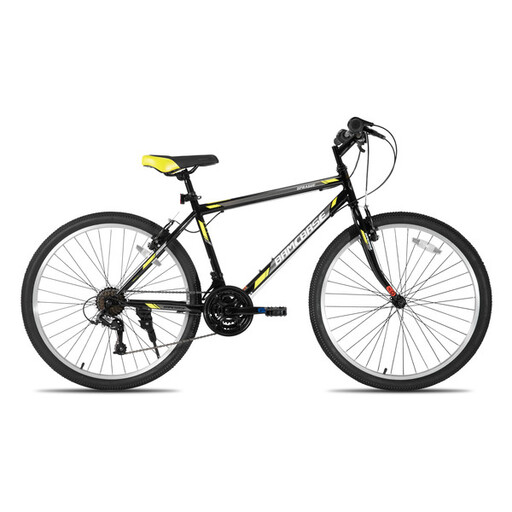
Why it's a good fit: Ideal for those seeking a reliable bike for commuting to work, school, or for occasional rides on paved paths and light trails without a large budget.
The bike offers a well-balanced package. Instead of promoting a single expensive part, it relies on proven, solid components like a Hi-Ten steel frame and dependable V-brakes, which are perfectly suited for its intended use.
The 21-speed gearing provides a sufficient gear range for various types of terrain. The V-brakes are easy to maintain, which keeps ownership costs low.
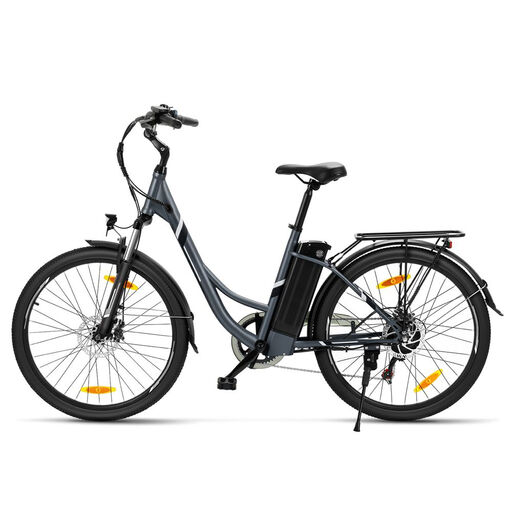
Why it's a good fit: Designed for the daily journey through the city. The step-through frame makes mounting and dismounting easy, while the electric motor makes commuting over longer distances or up hills effortless.
This e-bike focuses on practical, real-world features. The high battery capacity of 561.6 Wh allows for a range of up to 90 km in assist mode. Furthermore, the lighting is StVZO-certified, avoiding the pitfall of unsafe or non-compliant accessories.
The removable battery can be conveniently charged at home or in the office. The combination of disc brakes and an e-brake ensures enhanced safety in city traffic.
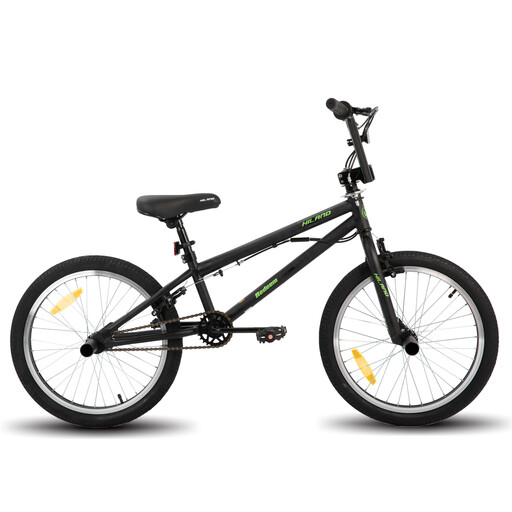
Why it's a good fit: Specifically developed for kids and teenagers interested in freestyle riding and tricks. This BMX bike is built to withstand the stresses of jumps and stunts.
Unlike a downsized mountain bike, this is a purpose-built BMX. The 360° rotor, which allows the handlebars to spin completely, and the included pegs are features that are missing from standard kids' bikes and are essential for freestyle use.
The robust Hi-Ten steel frame and wide 2.35-inch tyres provide the necessary stability and grip for tricks. The professional BMX U-brake system ensures reliable braking control.
We have compiled a complete, up-to-date list of products that fully meet these strict selection criteria and German safety regulations.
1. What is the right bike size for me? The correct size depends on your height and your inseam length. Most manufacturers provide a size chart on the product page. As a general guide: measure your inseam (inside of your leg from the floor to your crotch) and multiply this value by 0.66 to get an approximate frame height in centimetres. Always compare this value with the manufacturer's specific recommendations.
2. Does my e-bike need to be insured in Germany? That depends on the type of e-bike. So-called pedelecs, whose motor only assists when you pedal and cuts out at 25 km/h, are legally considered bicycles. They do not require insurance, a license, or registration. The Touroll B1 model presented here falls into this category. Faster S-Pedelecs (up to 45 km/h) are classified as mopeds and are subject to insurance and licensing requirements.
3. How important are safety certifications for a bicycle helmet? Very important. Certifications like CPSC (U.S. Consumer Product Safety Commission) or ASTM (American Society for Testing and Materials) ensure that the helmet has passed standardised impact tests. A helmet without such a seal offers no guaranteed protective effect. Always look for this information in the product description when making a purchase.