
Lieferung heute & morgen

Qualitätsgarantie

Willkommens-Angebote freischalten: KOSTENLOSE Lieferung | Bis zu 80 % RABATT | Kostenlose 30-Tage-JoyPlus-Testphase
App herunterladen
By the Joybuy Product Recommendation Officer, August 30, 2026
Choosing the right bike or the perfect accessory can be a challenge. Whether it's for a child's first attempt at riding or for maintaining your own high-end bicycle, the market is filled with options that don't always live up to their promises. This guide focuses on objective criteria to help you make informed decisions and steer clear of common purchasing traps.
Before deciding on a product, it's helpful to know the most common issues that lead to dissatisfaction or unnecessary expenses.
To avoid the problems mentioned above, you should focus on a few crucial technical features.
The most important measurement for a kids' bike is not age, but the child's inseam length. Measure the distance from the floor to the crotch while the child is standing straight with shoes on. The child should be able to stand with both feet flat on the ground at the lowest saddle setting.
Look for a frame with a low step-through design, which makes getting on and off easier, as well as child-friendly brakes.
A good bike repair stand is an investment in the longevity of your bicycle. The decisive factors are:
Here are some product suggestions tailored to specific user profiles that take the above criteria into account.
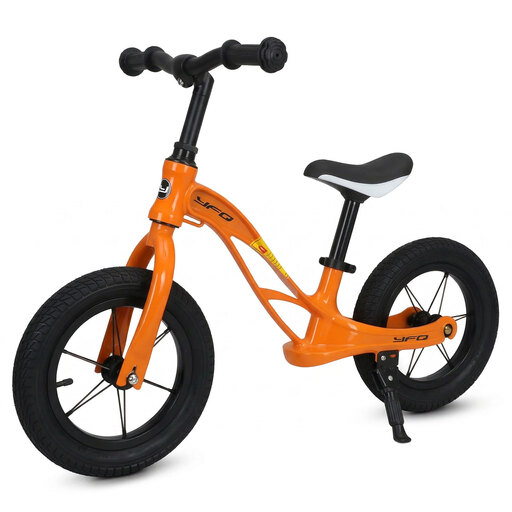
Why It's a Match: This balance bike is designed for children aged 3 to 6 and focuses on the essentials: learning to balance. Without pedals, children can fully concentrate on steering and balancing.
It avoids the "grow-into-it" trap, as the adjustable seat allows for precise adaptation to the child's current size, ensuring their feet always have secure contact with the ground.
Its low weight and puncture-proof tires reduce maintenance and make the bike easy for children to handle.

Why It's a Match: This bike is designed for children aged 4 to 7 (105-135 cm) and provides a solid foundation for riding with pedals. It comes with training wheels that can be removed later.
The Hi-Ten steel frame with a low step-through design makes getting on and off easy. Two independent braking systems (V-brake at the front, coaster brake at the rear) provide reliable stopping power.
A full chain guard and handlebar pads minimise the risk of injury. The bike comes 90% pre-assembled, which simplifies the final assembly.
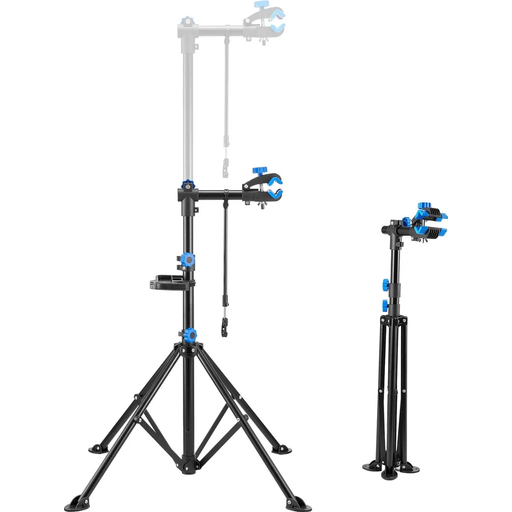
Why It's a Match: This repair stand is designed for home mechanics who regularly perform maintenance on mountain bikes or road bikes and need a stable, flexible solution.
The alloy steel construction with a four-legged base ensures high stability and prevents tipping. The specified load capacity of up to 29.9 kg is also sufficient for heavier bicycles.
The 360° rotating clamp and the magnetic tool tray enhance working comfort. The stand is also foldable and can be stored compactly.
We've compiled a complete, up-to-date list of products that fully meet these strict selection criteria and applicable safety standards.
The most reliable method is to measure your child's inseam length (the inside of the leg from the floor to the crotch). The child should be able to stand with both feet flat on the ground at the lowest saddle setting. Manufacturer age recommendations are only a rough guide.
A balance bike is often recommended for first attempts at riding because it helps children develop a sense of balance without having to concentrate on pedalling at the same time. The transition to a bike without training wheels is often easier afterwards. Training wheels can be an alternative, but they do not teach balancing in the same way.
The load capacity is a critical safety factor. Standard road or mountain bikes often weigh between 10 and 15 kg. However, e-bikes can easily weigh 25 kg or more. Choose a bike repair stand whose maximum load capacity is significantly higher than the weight of your heaviest bike to have a safe margin. A stand with a 30 kg capacity is a good choice for most applications, including many e-bikes.