
Lieferung heute & morgen

Qualitätsgarantie

Willkommens-Angebote freischalten: KOSTENLOSE Lieferung | Bis zu 80 % RABATT | Kostenlose 30-Tage-JoyPlus-Testphase
App herunterladen
A bike helmet with integrated lighting promises a dual safety benefit: protection in a fall and increased visibility in traffic. But the market is flooded with models whose real-world usability often only becomes apparent after purchase. Many cyclists invest in a helmet only to find that the battery is impractical to charge, the electronics fail in the rain, or the ventilation is inadequate.
As your Joybuy Product Recommendation Officer, I'm here to help you navigate these pitfalls. We'll focus on the objective criteria that define a quality helmet and expose three common flaws often hidden behind marketing promises.
To avoid making the wrong choice, let verifiable technical specifications—not marketing slogans—guide your decision. Three factors are crucial.
Not all bike helmets with lights are created equal. The difference is in the details.
A helmet's primary function is protection. Its protective performance is verified by recognised standards.
A helmet only protects you if it fits correctly and comfortably.
Based on these objective criteria, we have identified several models that are well-suited for specific user groups.
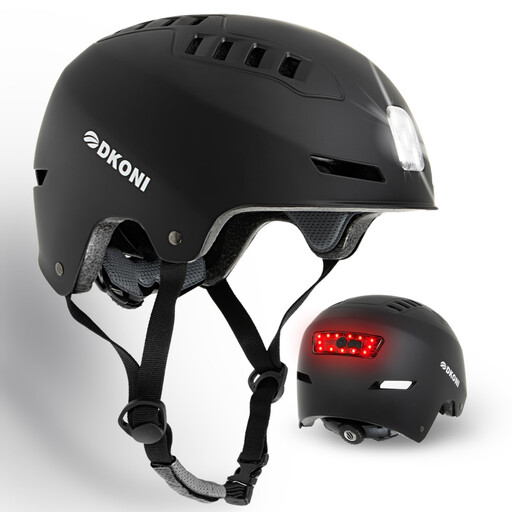
Why it's a match: For commuters who navigate dense city traffic daily, 360-degree visibility is crucial. This model combines a front and rear light, maximising your presence to other road users at intersections and in flowing traffic.
It solves the problem of poor visibility by offering not just a rear light, but also an integrated front light. The USB charging feature makes it practical for daily use.
Integrated lighting system with a front light (5 white LEDs) and rear light (13 red LEDs with 4 modes) for enhanced all-round visibility. Certified to CPSC, CE, and ASTM standards.
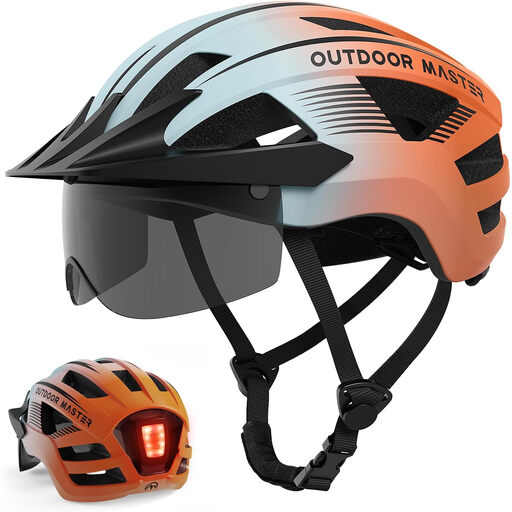
Why it's a match: Anyone who goes on long tours in changeable weather needs flexibility. The magnetically detachable goggles and visor offer protection from sun, wind, and rain without requiring separate gear.
It counters the overheating effect with 17 ventilation ports and offers a convenient solution to the battery trap with its modern Type-C charging port.
Modular system with magnetically detachable goggles and a sun visor. The Type-C rechargeable rear light with multiple modes ensures good visibility.

Why it's a match: For occasional rides at dusk or in poor visibility, this helmet provides the essential safety feature of an integrated rear light without burdening your budget with expensive extra features.
This model focuses on the essentials: a functional, USB-rechargeable rear light in a solid helmet. It avoids the cost of superfluous features.
Solid in-mold construction with 15 ventilation ports and a detachable, USB-rechargeable LED rear light with 2 modes. A pragmatic entry into the world of illuminated helmets.
We have compiled a complete, up-to-date list of products that fully meet these strict selection criteria and EU safety regulations.
Battery life varies significantly depending on the model and the light mode selected. As a rule of thumb, you can expect 2 to 5 hours in steady mode and up to 10 hours or more in flashing mode. Manufacturer specifications often refer to the most economical mode. A USB-rechargeable bike helmet with a Type-C port offers the advantage of being quick and easy to charge with common chargers.
No, wearing a bicycle helmet is generally not a legal requirement for adults in most of Europe, but it is strongly recommended for your own safety. Importantly, a helmet light does not replace the legally mandated bicycle lighting (a white headlight at the front, a red taillight at the rear). A bike helmet with LED lighting serves as an additional safety measure to increase your visibility to other road users, especially from the side.
On most helmets with integrated lighting, the electronic components are permanently installed and sealed to protect them from the elements. A user replacement is generally not intended. Attempting to open the unit can compromise the helmet's protective structure and water resistance. Consider the lifespan of the electronics as part of the overall lifespan of the helmet, which should be replaced after any significant impact anyway.