
Lieferung heute & morgen

Qualitätsgarantie

Willkommens-Angebote freischalten: KOSTENLOSE Lieferung | Bis zu 80 % RABATT | Kostenlose 30-Tage-JoyPlus-Testphase
App herunterladen
A bicycle helmet that combines an integrated light and visor promises enhanced safety and comfort. However, not all models live up to their marketing claims. Many cyclists invest in a helmet only to find that its critical features fail in daily use. Before you make a decision, it's important to understand the most common pitfalls that can lead to a bad purchase.
A widespread problem is the inadequate functionality of the integrated components. Often, the advertised bright rear light turns out to be disappointingly dim, with a battery life that barely lasts a single evening ride, and it charges via outdated ports. Another common weak point is the visor: flimsy attachments that rattle or detach at the first bump in the road and low-quality optics that distort your field of vision are not uncommon. Such defects not only compromise comfort but can also jeopardize your safety.
To find a helmet that reliably performs its function, you should focus your attention on three crucial technical features. These parameters serve as an objective benchmark for quality and durability.
A helmet's most important characteristic is its protective capability. Look for recognized safety standards. A CPSC-certified helmet (U.S. Consumer Product Safety Commission), for example, has passed rigorous impact tests. The ASTM standard is also an indicator of tested safety.
The construction is also critical. Many modern helmets use In-Mold technology, where the polycarbonate (PC) outer shell is fused directly with the shock-absorbing EPS (expanded polystyrene) hard foam. This results in a lighter yet more robust structure compared to helmets with merely glued-on shells.
An e-bike helmet with a rear light or a helmet for urban commuting must be one thing above all: reliably visible. Check the following points:
A visor protects against wind, rain, insects, and UV radiation. However, its usefulness depends heavily on its implementation. A helmet with a magnetic visor offers a clear advantage here. The magnetic attachment allows for quick mounting, removal, or even "parking" the visor in an inverted position on the helmet when not in use. This is significantly more convenient than fiddly click-in mechanisms. The visor material should also ensure a clear, distortion-free view and offer protection from UV rays.
Based on the criteria above, we have identified several models suitable for different types of users.
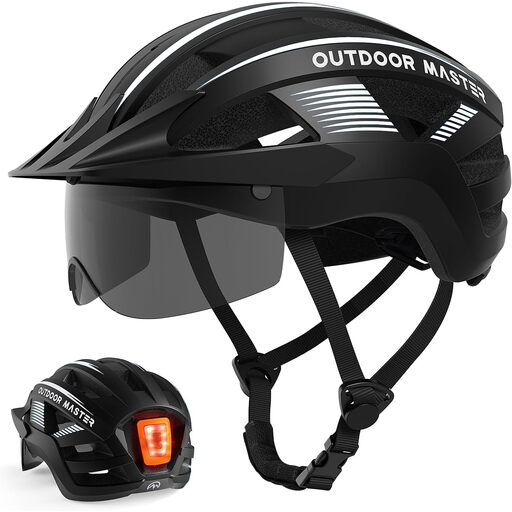
Why It's a Match: Ideal for the daily commute. The combination of a rear light and visor provides an all-in-one solution for changing weather and light conditions in city traffic.
The rear light charges via a modern Type-C port, and the magnetic visor attaches securely with a single hand, solving the problem of rattling or impractical visors.
CPSC and ASTM certified for proven safety. The 17 vents keep your head cool, even at a slower city pace.
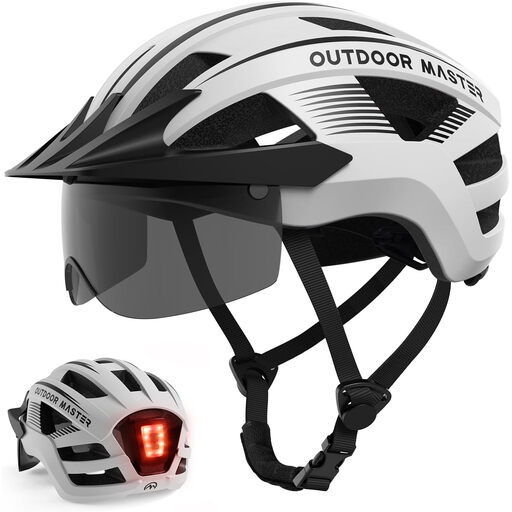
Why It's a Match: For use as a men's road bike helmet or an MTB helmet with a visor. Its low weight, thanks to the In-Mold construction, and excellent ventilation are advantageous on long, demanding rides.
The detachable visor and removable sun brim offer flexibility without compromising aerodynamics or adding unnecessary weight. The magnetic mount is robust enough for performance riding.
The combination of low weight, 17 air vents, and the practical magnetic visor makes it a versatile helmet for various disciplines.

Why It's a Match: This women's bike helmet with a light combines all the functional safety features with an appealing design. It's just as suitable for a weekend tour as it is for the daily city commute.
Functionality is not sacrificed for style here: the integrated light ensures visibility, and the visor provides reliable protection without compromising on handling or stability.
The adjustable fit system with a dial and chin straps ensures a secure and comfortable fit. The combination of protection, visibility, and style makes it a practical companion.
We have compiled a complete, up-to-date list of products that fully meet these strict selection criteria and safety regulations.
1. How long does a helmet light's battery last and how is it charged? The battery life varies depending on the model and the selected light mode. On the recommended OutdoorMaster bike helmet models, the light is charged via a standard Type-C port. The exact duration depends on usage but is typically sufficient for several rides before a recharge is needed.
2. Can I use a helmet with a magnetic visor if I wear glasses? Yes, in most cases, this is possible. Helmets with a detachable magnetic visor often provide enough space underneath for a standard pair of prescription glasses. The visor is positioned in front of the glasses, offering them additional protection from wind and rain. It is still advisable to check the exact dimensions.
3. When should a bicycle helmet be replaced? A bicycle helmet should be replaced immediately after any significant impact or fall, even if there is no visible damage. The shock-absorbing EPS structure can be compressed by the impact and lose its protective effect. Regardless of falls, most manufacturers recommend replacing a helmet every 3 to 5 years, as materials like EPS and plastics can degrade over time due to UV radiation and environmental exposure, reducing their protective performance.