
Lieferung heute & morgen

Qualitätsgarantie

Willkommens-Angebote freischalten: KOSTENLOSE Lieferung | Bis zu 80 % RABATT | Kostenlose 30-Tage-JoyPlus-Testphase
App herunterladen
Choosing a new bike helmet is a critical decision for your personal safety on the road. Especially at dusk, at night, or on overcast days, integrated lighting can significantly increase your visibility to other road users. This article serves as a guide, explaining which features to look for in a bike helmet with a light and presenting a selection of models based on objective product characteristics.
Selecting the right model depends on your individual needs. Three key criteria will help you make an informed decision.
A bike helmet with LED lighting offers more than just a static light. Modern helmets often feature both front and rear lights. While white front LEDs can illuminate your path, red rear lights increase your visibility from behind. Look for various lighting modes (e.g., steady, flashing, pulsing) to adapt to different light conditions and traffic situations. A USB-rechargeable battery is also a convenient and eco-friendly feature that eliminates the need to repeatedly buy batteries.
A safe bike helmet is defined by its certified materials and proper fit. Most helmets consist of a durable outer shell (often polycarbonate) and a shock-absorbing inner shell (EPS foam). Some models offer additional safety systems like MIPS (Multi-directional Impact Protection System). This system is a low-friction layer inside the helmet designed to help reduce rotational forces on the brain during an angled impact.
The fit is just as crucial. An adult bike helmet should have an adjustment system, usually a dial at the back of the head, that allows you to precisely fit the helmet to your head's circumference. Adjustable chin straps provide additional security.
Your intended use will influence your choice of helmet. A city helmet with a light is ideal for daily commutes and often features an understated design and good all-around visibility. An MTB helmet (mountain bike helmet) typically has deeper coverage at the back for better protection on trails and a visor for sun and debris protection. A road bike helmet is optimised for low weight and maximum ventilation.
Regardless of the type, ventilation ports are important for comfort on longer rides or on warm days. Removable and washable inner pads also help maintain hygiene.
Based on the criteria mentioned above, we have compiled a selection of models that cater to different needs.
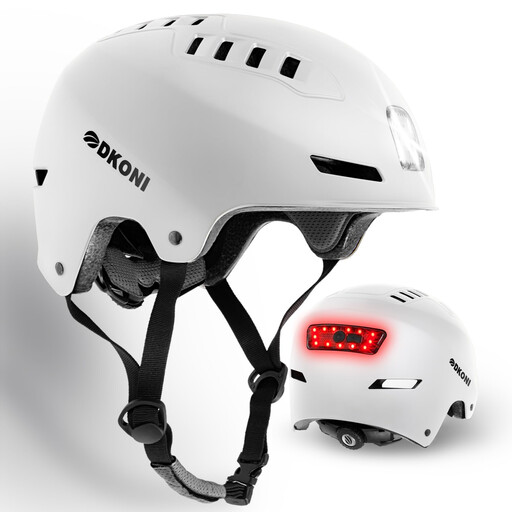
Why It Stands Out: This model is distinguished by its comprehensive lighting system, which includes both a front and a rear light to ensure 360-degree visibility.
Pros:
Who It's For: This helmet is an excellent choice for commuters and urban riders who want to both see and be seen, and who value a fully integrated lighting system. It is suitable as a women's bike helmet and a men's bike helmet.
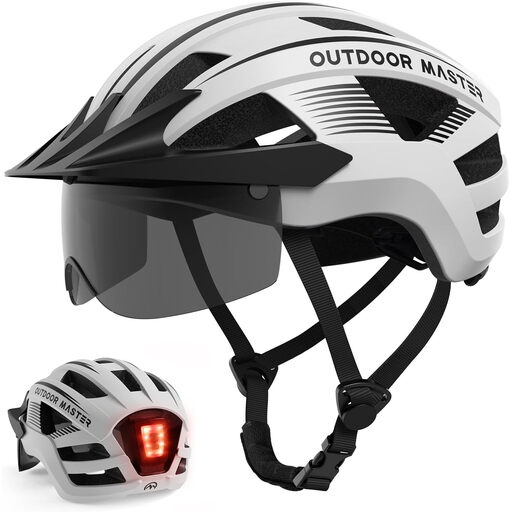
Why It Stands Out: This helmet's strength lies in its versatility, achieved through a detachable magnetic goggle and sun visor.
Pros:
Who It's For: Ideal for cyclists looking for one helmet for various disciplines like city biking, touring, and light mountain biking, and who appreciate the flexibility of removable accessories.
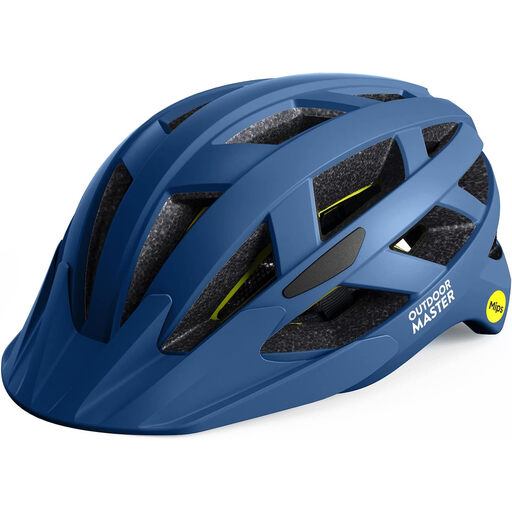
Why It Stands Out: This model integrates the MIPS safety system, which offers an additional layer of protection against certain types of impacts.
Pros:
Who It's For: This helmet is aimed at safety-conscious recreational and sport cyclists who prioritise MIPS technology. Although it doesn't have integrated lighting, it's a compelling option for users who value this protection mechanism and are willing to use separate clip-on lights.
If you're looking for a helmet specifically optimised for high speeds and long distances on the road, you can find more models in our category.
? Discover Our Selection of Road Bike Helmets
1. Is a bike helmet with a light mandatory in Germany? No, there is no general helmet requirement for cyclists in Germany (with the exception of S-Pedelec riders). Integrated helmet lighting is considered a supplementary safety feature, but it does not replace the legally required, StVZO-compliant bicycle lighting (headlight and taillight on the bike itself). It serves as an addition to increase visibility.
2. What does MIPS mean on a bike helmet? MIPS stands for "Multi-directional Impact Protection System." It is a low-friction layer inside the helmet. In an angled impact, this layer is designed to move 10–15 mm relative to the head. This mechanism is intended to help reduce the rotational motion that might otherwise be transferred to the brain.
3. How do I find the right helmet size? Measure your head circumference at its widest point, about one centimetre above your eyebrows, using a flexible measuring tape. Compare the result with the manufacturer's size chart (e.g., S: 48–55 cm, M: 52–58 cm). A well-fitting helmet should be snug but comfortable and should not shift excessively when the chin strap is unbuckled. The adjustment dial at the back is used for fine-tuning.