
Lieferung heute & morgen

Qualitätsgarantie

Willkommens-Angebote freischalten: KOSTENLOSE Lieferung | Bis zu 80 % RABATT | Kostenlose 30-Tage-JoyPlus-Testphase
App herunterladen
A reliable bike light isn't an optional accessory; it's an essential component for your safety on the road. However, the market is flooded with products making bold claims that often create more confusion than clarity. Many cyclists invest in a new bike light only to find it's unsuitable for German road traffic, impractical, or breaks down after a short time. Before you make a decision, it's crucial to understand the most common pitfalls.
To make an informed decision, you should focus on the technical parameters that really count. Instead of being swayed by marketing buzzwords, examine the following three core aspects.
A bike light with StVZO approval is essential for use on German roads. This approval is identifiable by a wave symbol followed by a "K" and a test number (e.g., ~K12345) engraved on the housing or lens. This certification ensures that the bike headlight produces a clearly defined, glare-free beam pattern. The upper part of the beam has a sharp cut-off, so oncoming traffic is not dazzled, while the area in front of you is optimally illuminated. This is the crucial difference compared to non-approved lights, which often produce just an uncontrolled circular spot of light.
While lumen measures the total amount of light a lamp emits in all directions, lux describes the illuminance that actually arrives on a specific surface—in this case, the road in front of you. For StVZO-compliant headlights, lux is the far more meaningful metric.
A modern LED bike light offers high efficiency and longevity.
The type of power source directly impacts the reliability and convenience of your lighting.
Instead of presenting an overwhelming list, we have identified a few products that meet specific needs and avoid the pitfalls mentioned earlier.
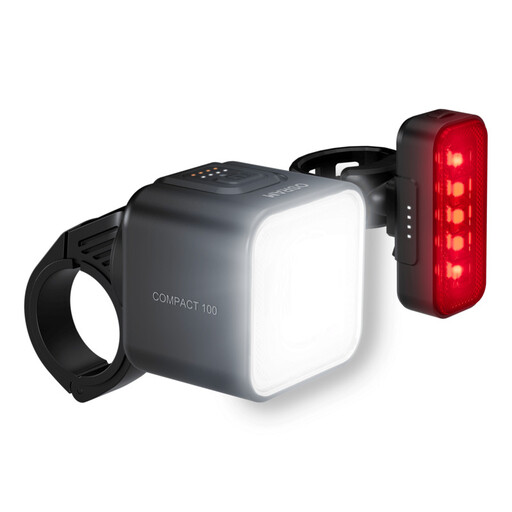
Why this set is a great fit: This bike light set is a hassle-free, all-in-one solution for the daily commute or a weekend ride. With 50 lux, the headlight provides solid illumination for urban and semi-rural environments.
The set is fully StVZO-approved and delivers a glare-free beam. It focuses on the relevant lux metric and features a modern USB-C port and a clear battery indicator.
Offers a well-balanced package of brightness, battery life, and functionality that's ready to use out of the box.
Why this set is a great fit: For anyone seeking maximum visibility and smart safety features. With 100 lux, the headlight reliably illuminates even dark country roads. The standout feature is the intelligent rear light with an integrated brake light function.
This set goes beyond mere brightness figures to offer active safety features. The brake light function and automatic light sensor are practical functions that provide real added value over standard lights.
The integrated bike light with brake light and the light sensor significantly increase safety and convenience in changing conditions.
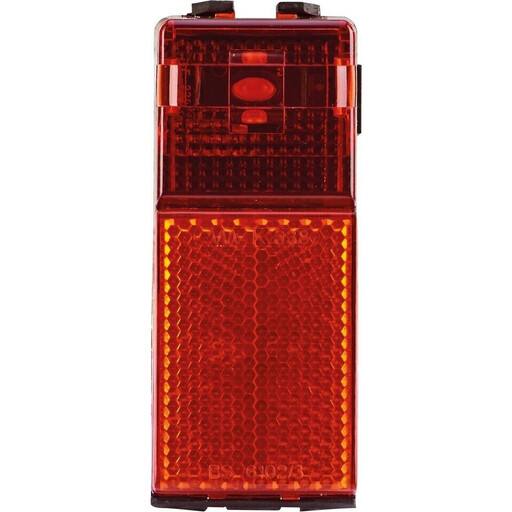
Why this light is a great fit: The ideal 'fit-and-forget' solution for bikes with hub or side-runner dynamos. This rear light is securely mounted to the mudguard and connected directly to the dynamo, so it's always ready to go.
This rear light completely eliminates the problem of dead batteries and forgotten charging sessions. It is StVZO-compliant and designed for a long, low-maintenance service life.
Permanent, reliable lighting with zero charging hassle. Ideal for everyday bikes and e-bikes where reliability is the top priority.
We have compiled a complete, up-to-date list of products that fully meet these strict selection criteria and German safety regulations.
Approval according to the German Road Traffic Licensing Regulations (StVZO) confirms that a bike light meets the legal requirements for public road use in Germany. The most important feature is the glare-free beam pattern with a sharp cut-off line. Every approved component bears a K-number (e.g., K12345) certifying its compliance.
The required lux rating depends on your typical riding environment. For rides in well-lit urban areas, 30 to 50 lux is often sufficient. If you regularly ride on unlit country roads, gravel paths, or in forests, headlights with 70 lux, 100 lux, or more offer significantly better visibility and thus greater safety.
No. Many particularly bright lights, often advertised with four-digit lumen ratings, are designed for mountain biking or off-road sports. They do not have StVZO approval because their round, uncontrolled beam pattern severely dazzles oncoming traffic. Using such lights on public roads is not only dangerous but also prohibited and can result in a fine. Therefore, always look for the K-number.