
Lieferung heute & morgen

Qualitätsgarantie

Willkommens-Angebote freischalten: KOSTENLOSE Lieferung | Bis zu 80 % RABATT | Kostenlose 30-Tage-JoyPlus-Testphase
App herunterladen
A bike light set with a front and rear light might seem straightforward at first glance. In practice, however, models differ significantly when it comes to brightness, battery life, mounting, charging port and approval. For everyday cyclists, commuters and e-bike riders, these details are crucial to ensure the lights suit your bike for city traffic, unlit paths and changing weather conditions.
Many poor purchases come down to three typical marketing pitfalls:
A StVZO bike light shouldn't just be advertised as "suitable for road use". Look for a specific statement about approval or the corresponding marking on the product itself. For use on public roads, both the front and rear lights must meet the applicable requirements. You should also check the reflectors, mounting position and alignment.
An approved bike light must not unnecessarily dazzle other road users. Therefore, the front headlight should be adjusted so that the beam illuminates the road ahead but doesn't shine directly into the eye level of oncoming people.
For city riding, moderate brightness levels can be sufficient, while unlit paths require stronger illumination. A 50 lux bike light can be a good option for regular commutes in well-lit areas. A 100 lux bike light offers higher illuminance and a greater claimed range according to product specifications, but it may require more battery capacity.
Multiple modes are useful:
What matters isn't just the maximum brightness, but also whether the light output suits your route, speed and ride duration.
Buying a rechargeable bike light reduces the need for disposable batteries. Before you buy, check the charging time, the runtime per mode and whether there's a battery or charge indicator. A USB-C bike light can be charged in most homes and offices using existing cables or power adapters. Still, keep the supplied cable handy in case the manufacturer specifies a particular compatibility.
The ingress protection rating is also relevant. IP54 means limited protection against dust and protection against splashing water. This is not the same as being submersible. After a wet ride, let the set dry before charging or storing it.
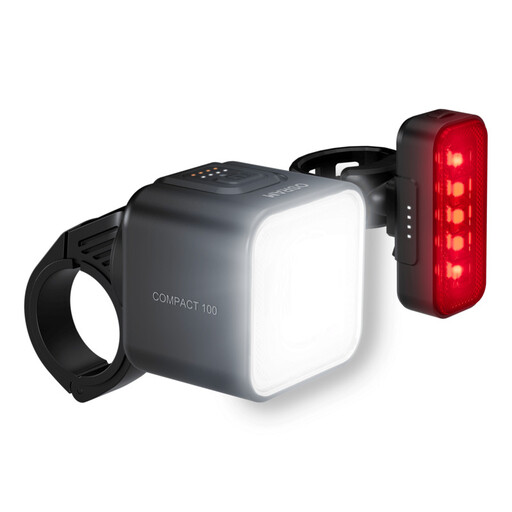
Why this product suits the profile: This set covers the basic essentials with a front and rear light, offering three brightness levels for city rides, commutes and leisure trips.
The product specifications state 50 lux, up to 75 metres range, USB-C charging and StVZO approval. This makes the key buying criteria directly verifiable.
Up to 14 hours runtime in Eco mode, USB-C charging times of three hours for the front and two hours for the rear, plus IP54 protection.
Why this product suits the profile: For frequent rides in changing light conditions, this set offers 100 lux, a claimed light range of up to 95 metres and automatic modes.
The brightness can be selected manually in three levels or adjusted automatically. The product description also mentions an integrated brake light function on the rear light.
USB-C charging, battery indicator, IP54 protection, Garmin-compatible mounts for handlebars with a diameter of 22.2 to 35 millimetres, and stated StVZO approval.
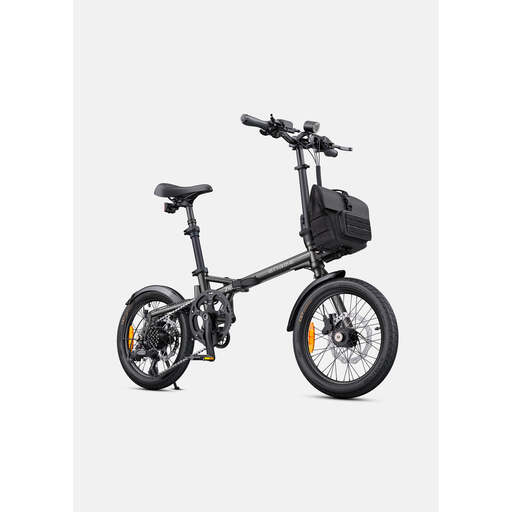
Why this product suits the profile: This folding e-bike is aimed at commuters who combine cycling with trains and cars, or who want to store their bike compactly at home.
The data sheet states a weight of 16.9 kilogrammes without the battery, folded dimensions of 625 × 673 × 374 millimetres and a maximum total load of 120 kilogrammes.
250-watt hub motor, torque sensor, hydraulic disc brakes, Shimano 7-speed gears and a 360 Wh battery. Front and rear lights are included in the delivery.
We've put together a complete, regularly updated list of products that fully meet these strict selection criteria and the safety regulations in force in the EU.
Before your first ride, fully charge both lights and secure them properly. Check regularly:
With a front and rear bike light, make sure the position isn't blocked by bags, baskets or clothing. After riding in the rain, a soft, dry cloth is usually enough. Don't clean the housing with abrasive cleaners, solvents or a pressure washer.
For e-bike lighting, you should also check whether the lights operate independently of the bike's main battery. A separate, rechargeable set can still be available when the e-bike battery is flat, but it also needs to be charged regularly.
For lit streets, a model with 50 lux can be sufficient depending on your route. On dark paths or at higher speeds, a 100 lux bike light can be more practical. The actual suitability also depends on the light distribution, your route and correct alignment.
The runtime varies according to brightness level, battery condition, temperature and usage. For the OSRAM sets mentioned, the front light is stated to last several hours up to twelve or 14 hours depending on the mode. The maximum runtime refers to the respective Eco mode, not the highest brightness.
No. An LED alone doesn't confirm StVZO compliance. What matters is the specific product marking and the information about approval. Also check that the front and rear lights are correctly mounted and that the required reflectors are present on your bike.