
Lieferung heute & morgen

Qualitätsgarantie

Willkommens-Angebote freischalten: KOSTENLOSE Lieferung | Bis zu 80 % RABATT | Kostenlose 30-Tage-JoyPlus-Testphase
App herunterladen
As a Joybuy Product Recommendation Officer, I see customers every day who are confused by vague product descriptions and exaggerated marketing. A bike repair stand is an investment that makes repairs and maintenance significantly easier. However, the selection is vast, and not every model delivers on its promise. This guide will help you identify the essential features and make an informed decision.
Before we dive into the important features, let's highlight the three most common issues that can lead to frustration and, in the worst case, damage to your bike.
To avoid the problems mentioned above, you should carefully check three technical aspects before buying. These define the functionality and durability of a good bike maintenance stand.
A stable base is the foundation for safe work. Pay attention to the following points:
The clamp must hold the bike securely without damaging it.
A good bike repair stand adapts to you, not the other way around.
To illustrate the criteria above, we present a model that combines these requirements into a well-designed total package.
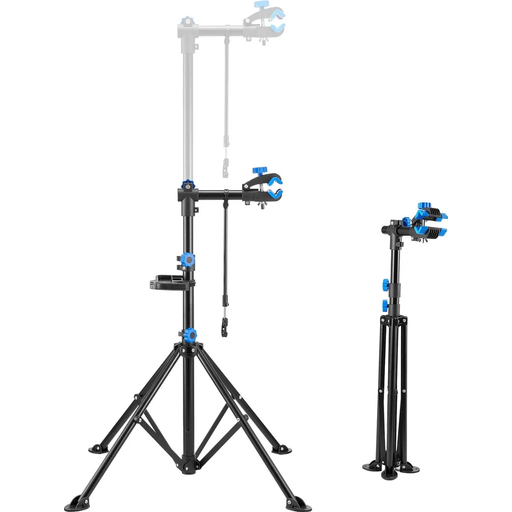
Why This Fits Their Persona: This model is a functional solution for hobby mechanics who need a reliable platform for maintaining various bike types, such as mountain bikes and road bikes. It combines essential adjustability with a solid construction.
The 4-leg alloy steel design ensures a stable base. The rubber-lined 360° clamp with a 25-50 mm range protects the frame from scratches, and the 83.5 to 144 cm height adjustment allows for ergonomic work.
Load capacity of up to 30 kg as per the manufacturer, suitable for heavy bicycles. Includes a magnetic tool tray and a handlebar holder. Folds down compactly for storage.
We have compiled a complete, up-to-date list of products that fully meet these strict selection criteria and applicable regulations.
For most bikes, especially those with carbon frames, it is recommended to clamp the bike by the seatpost. The seatpost is designed for high clamping forces and is less sensitive than the thin-walled tubes of the main frame. Only tighten the clamp enough to hold the bike securely without it rotating.
The weight of your heaviest bike is the deciding factor. Weigh your bike or look up the manufacturer's weight specification. E-bikes can easily weigh 25 kg or more. Choose a bike repair stand with a maximum load capacity at least 5 kg above your bike's weight to ensure a safe margin.
Yes, modern and well-constructed foldable models are perfectly stable for home use. Look for high-quality joints and a secure locking mechanism. A wide footprint from the legs when unfolded is also an indicator of good stability. For professional workshop use, permanently mounted floor or wall models are available as an alternative.