
Lieferung heute & morgen

Qualitätsgarantie

Willkommens-Angebote freischalten: KOSTENLOSE Lieferung | Bis zu 80 % RABATT | Kostenlose 30-Tage-JoyPlus-Testphase
App herunterladen
As a homeowner or garden enthusiast, you know the problem: bicycles, garden tools, or a motorcycle need a weatherproof and secure space, but a solid garage or wooden shed is often too expensive, too large, or requires planning permission. A bike storage tent seems like the ideal solution—flexible, cost-effective, and quick to assemble.
However, the vast selection often leads to disappointment. Many products don't live up to their promises and become unusable after just one winter. Before you make a decision, it's crucial to understand the common weak points that often only become apparent after the purchase.
The 3 most common pitfalls when buying a utility tent:
To avoid a bad purchase, don't be swayed by marketing promises. Instead, focus on verifiable technical specifications. These three factors determine the longevity and functionality of your new storage solution.
The core of any utility tent is the combination of its tarp and frame. Look for the following specifications:
Don't rely on the number of bikes advertised. Instead, check the exact external and internal dimensions (Length x Width x Height). Measure the widest point of your bikes (usually the handlebars) and their total length. Plan for at least 15-20 cm of extra clearance to comfortably move the bikes in and out. For a motorcycle storage tent or for storing lawnmowers, the door opening's clearance height and width are particularly relevant.
A practical garden storage tent is distinguished by its easy-to-use entrance. A wide, roll-up door with heavy-duty zippers on both sides is ideal. A fastening mechanism for the rolled-up door, such as a Velcro or snap-button closure, makes loading and unloading easier. Good ventilation is also important to prevent condensation and mould from forming inside.
Based on these objective criteria, we have analysed various models suitable for different users and space requirements.
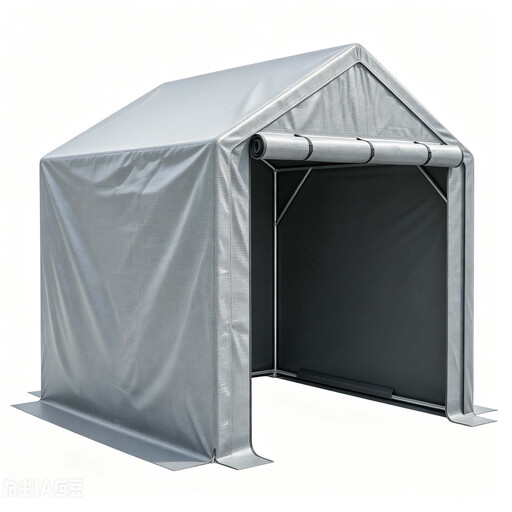
Why This Fits Their Persona: Ideal for users who need to store 3-5 bikes or bulky garden equipment. The 200 cm height allows you to stand upright inside for comfortable access without having to bend over.
The tarp made of 170g PE fabric with UV protection and the galvanised steel frame address the pitfalls of material and stability weaknesses. The clear dimensions (190×170×200 cm) prevent misjudging the capacity.
Generous internal height for easy access. Robust, weatherproof materials for year-round use. Tool-free assembly.
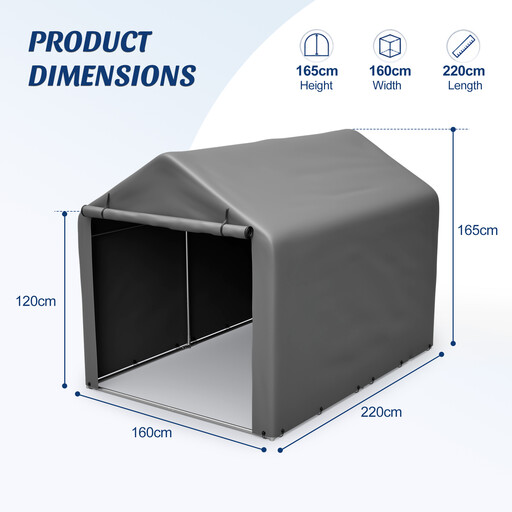
Why This Fits Their Persona: Perfect for users with limited space on a patio or in a yard. The design maximises depth (218 cm) to store 2-4 bikes one behind the other, while keeping the width compact.
Here too, the galvanised steel frame and the 170g PE fabric ensure longevity. The precise dimensions (218x160x166 cm) allow for accurate planning and avoid the trap of unclear capacity claims.
Efficient use of space thanks to its elongated design. Offers the same material quality as larger models in a more compact footprint.
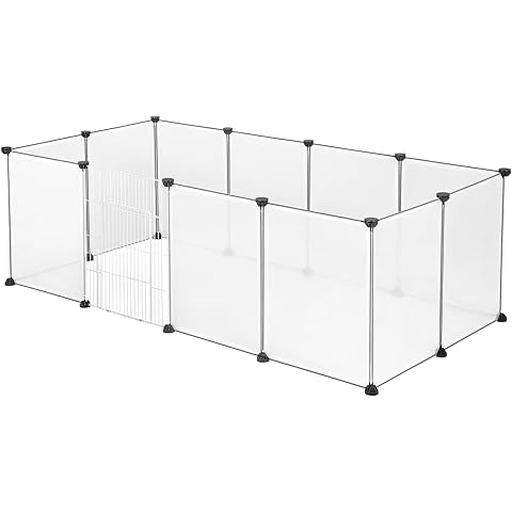
Why This Fits Their Persona: This product is not a bike tent, but a playpen for small animals like guinea pigs or rabbits. It's a perfect example of how important it is to read the product description carefully.
This example highlights the pitfall of judging products by appearance alone. Although it's described as a "tent" or "enclosure," it is unsuitable for storing bikes or heavy equipment and would be damaged immediately.
For its intended purpose, it provides a secure, modular, and easy-to-clean habitat for small animals. The waterproof floor mat protects the surface underneath.
We have compiled a comprehensive, up-to-date list of weatherproof shelters that meet strict selection criteria.
Winter-readiness depends on three factors: the material, the construction, and maintenance. A utility tent with a tarp made of thick PE fabric (170g/m? or more) and a frame of galvanised steel provides a solid foundation. However, it is crucial that the tent is assembled tautly and securely anchored to the ground. During heavy snowfall, the snow load should be regularly cleared from the roof to prevent overloading the structure.
Typically, a permanent foundation like one for a wooden shed is not required. A level, solid surface (e.g., lawn, paving stones, or a patio) is sufficient. More important is secure anchoring. Use the included pegs or, for very windy locations or hard ground, use additional weights or special ground anchors to prevent the tent from lifting or tipping over in a storm.
Manufacturer specifications are just guidelines. The actual capacity depends on the type and size of your bikes. Two e-bikes with wide handlebars and baskets require significantly more space than two narrow racing bikes. The most reliable method is to measure your bikes (especially handlebar width and total length) and compare these with the tent's internal dimensions. Always plan for some extra buffer space for comfortable handling.