
Lieferung heute & morgen

Qualitätsgarantie

Willkommens-Angebote freischalten: KOSTENLOSE Lieferung | Bis zu 80 % RABATT | Kostenlose 30-Tage-JoyPlus-Testphase
App herunterladen
A powerful pressure washer can make the tedious job of cleaning patios, walkways, and vehicles significantly easier. However, the market is flooded with devices whose performance specs often promise more than they deliver. Many buyers invest in a model that is either too weak for the task or quickly loses power due to low-quality components. This guide shows you which technical details truly matter and how to avoid the typical pitfalls when making a purchase.
Before you make a decision, you should be aware of the most common marketing promises and their drawbacks. These three points often lead to disappointment and additional costs.
To avoid a bad purchase, you should focus on the objective performance data relevant to your intended applications.
A device's true cleaning power comes from the combination of water pressure and flow rate.
A balanced ratio is crucial for efficient cleaning. For example, a value of 185 bar combined with a high flow rate of over 500 L/h is an indicator of a very powerful device for demanding tasks.
The motor power, specified in watts (W), is the engine of the system. An electric pressure washer with a power rating of 2000 W or more can typically maintain consistently high pressure and a high flow rate. Pay attention to information about the pump material. A pump with an aluminium housing is a good compromise between durability and weight.
Before buying, consider which tasks you primarily want to perform.
Here are some recommendations tailored to different needs and areas of application.
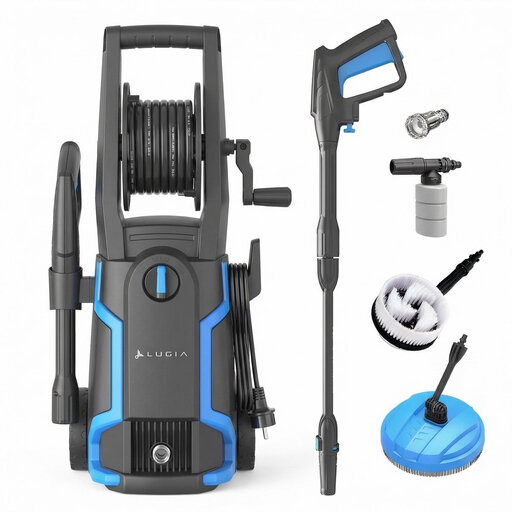
Why this model is a good fit: Ideal for homeowners with smaller areas who need a reliable device for occasional cleaning jobs like washing the car, cleaning garden furniture, or a small balcony.
With 135 bar and 430 L/h, the device offers a balanced ratio of pressure and flow rate, which is sufficient for most standard tasks and avoids the "Bar-Only" trap. The included accessories are designed for common applications.
Complete accessory package including a patio cleaner, rotating brush, and turbo nozzle for versatile, out-of-the-box use.
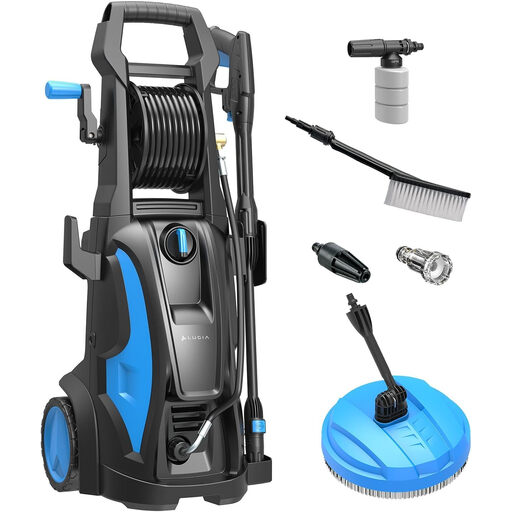
Why this model is a good fit: Perfect for home and garden owners with large areas such as driveways, walls, or multiple vehicles. The high power allows for fast and thorough cleaning, even with heavy soiling.
This model delivers real power: 185 bar of pressure is supported by a very high flow rate of 550 L/h. The 2200 W motor ensures this performance remains constant even during extended use.
High surface coverage for fast and efficient cleaning. The complete set with robust accessories covers all major applications.
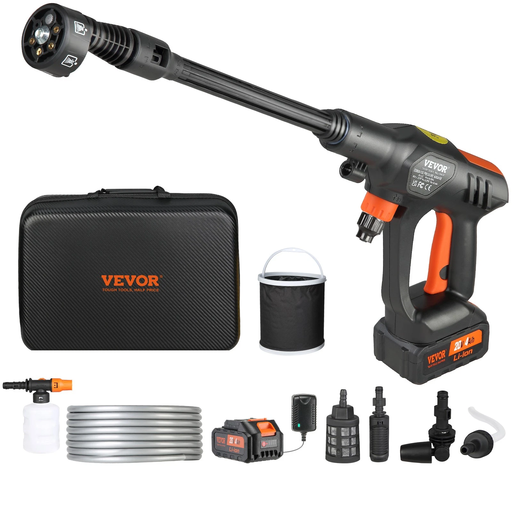
Why this model is a good fit: For anyone without direct access to a power or water supply, such as in an allotment garden, at a campsite, or for a quick bike clean-up after a ride.
This device doesn't promise unrealistic performance. It is clearly positioned as a mobile solution for lighter cleaning tasks. The self-priming function, drawing water from a bucket or canister, makes it independent of a fixed water connection.
Maximum mobility thanks to battery operation and low weight. Ideal for cleaning jobs in locations without infrastructure.
We have compiled a complete, up-to-date list of products that fully meet these strict selection criteria and German safety regulations.
For most applications around the house and garden, such as cleaning bicycles, garden furniture, and normal car washing, a pressure between 110 and 140 bar is perfectly adequate. If you regularly need to clean large, heavily soiled surfaces like paved driveways or weathered concrete walls, a model with 140 to 185 bar can significantly speed up the work. However, always remember to also consider the flow rate (L/h).
In principle, yes, but using a standard or turbo nozzle for large surfaces is not recommended. It is very time-consuming, often leads to an uneven, streaky result, and can damage sensitive surfaces like wooden decking with its concentrated jet. A dedicated patio cleaner attachment distributes the pressure evenly over a larger area, protects against backsplash, and delivers a clean, uniform result in a fraction of the time.
A pressure washer typically works with cold water, using high pressure to mechanically remove dirt. A hot water pressure washer, on the other hand, heats the water and uses hot water or steam to dissolve grease, oil, or stubborn organic contaminants in particular. Hot water units are usually more expensive and are mainly used in commercial settings. For typical cleaning tasks in a private setting, a cold water pressure washer is the more suitable and economical choice.