
Lieferung heute & morgen

Qualitätsgarantie

Willkommens-Angebote freischalten: KOSTENLOSE Lieferung | Bis zu 80 % RABATT | Kostenlose 30-Tage-JoyPlus-Testphase
App herunterladen
Biodegradable disposable plates are a practical alternative to conventional disposable tableware for family celebrations, barbecues, picnics, buffets and catering events. However, materials, strength, coatings and disposal methods can vary considerably. Anyone who focuses only on terms such as “eco-friendly”, “compostable” or “leak-proof” could end up buying a product that is unsuitable for the planned food or local waste-disposal rules.
Sugarcane fibre plates and bagasse plates are often advertised as biodegradable or compostable. However, this does not automatically mean that they can be disposed of in a home compost heap or every food waste bin. The key factors are the labelling of the specific product and the requirements of your local waste-collection authority.
Before buying, you should therefore check:
With compostable paper plates, the specific material construction is important. A water- and grease-resistant surface can be helpful when serving sauces, salads or barbecue food. However, this does not automatically mean that the plate is microwave-safe.
One example is the Jeden Tag Paper Plate 23cm White. According to the product description, these plates are intended for hot and cold food as well as greasy foods, but are not suitable for microwaves or boiling liquids. Manufacturer information should therefore always take precedence over general marketing claims.
Disposable plates measuring 23 cm, or around 9 inches, are suitable for main courses, side dishes and desserts. For cake, fruit or small snacks, 15 cm is often sufficient. Soups, stews and liquid foods should be served in disposable bowls with a suitable capacity, such as 500 ml disposable bowls.
Pack size is also relevant: a pack of 50 disposable plates may be useful for larger celebrations, while a pack of 20 is sufficient for a small household or a modest gathering.
Sugarcane fibre is also known as bagasse. The material is made from the fibrous residue left over from sugarcane processing and is pressed into plates or bowls. Product details may mention a water- and oil-resistant surface, an insulating design or suitability for hot food.
Conventional paper plates, on the other hand, are made from cardboard and may have a food-safe inner coating. This construction is not automatically compostable. You should therefore check the material, coating and disposal instructions separately.
A plate with several compartments can be practical for catering, takeaway meals and buffets, as it keeps different foods separate. For soup, a raised bowl shape with sufficient capacity is more suitable.
When serving hot food, look for specific information about microwave suitability, oil resistance and leak protection. “Leak-proof disposable plates” is not a single legally protected technical term. The decisive factors are the individual supplier’s information and how you intend to use the plates.
For microwave use, only use products whose descriptions explicitly state that they are suitable. Plates with metallic decoration, unknown coatings or no stated microwave approval must not be put in the microwave. Even with microwave-safe paper plates, you should follow the maximum heating time and temperature instructions.
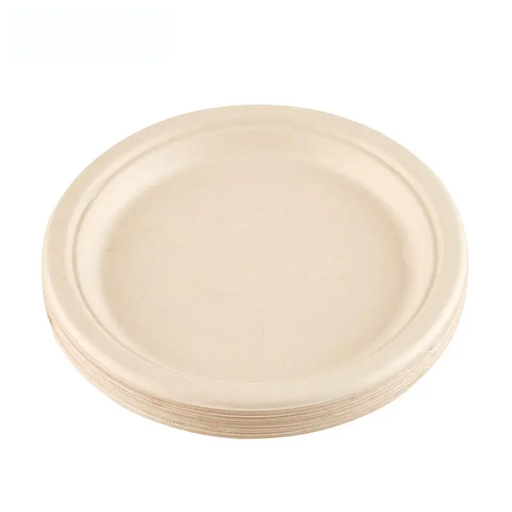
Why this product suits this profile: The pack of 20, with a diameter of 22.5 cm, is suitable for smaller celebrations, picnics and occasional household use.
The product description explicitly states that the plates are made from sugarcane fibre, are water- and oil-resistant and are microwave-safe. This helps distinguish them from paper plates without stated approval.
Food-safe sugarcane fibre, a diameter of 22.5 cm and, according to the product information, suitability for hot and cold food.
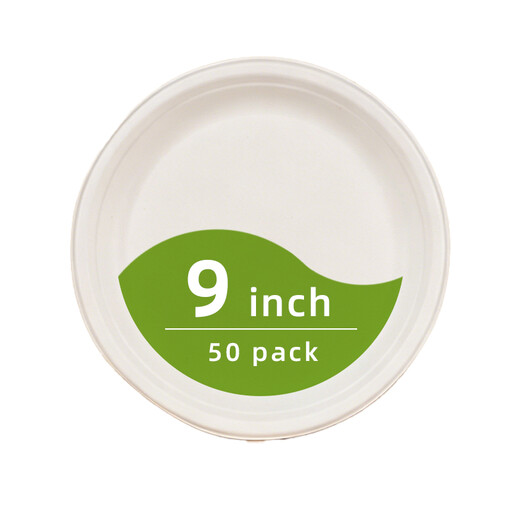
Why this product suits this profile: The pack of 50, with a diameter of 23 cm, is designed for larger groups, barbecues, birthdays and regular events.
The material and pack size are clearly stated. This makes it easier to match your choice to portion sizes and guest numbers, rather than deciding solely on the basis of general sustainability claims.
23 cm diameter and 50 plates per pack; according to the product name, they are intended for hot and cold food, picnics and barbecues.
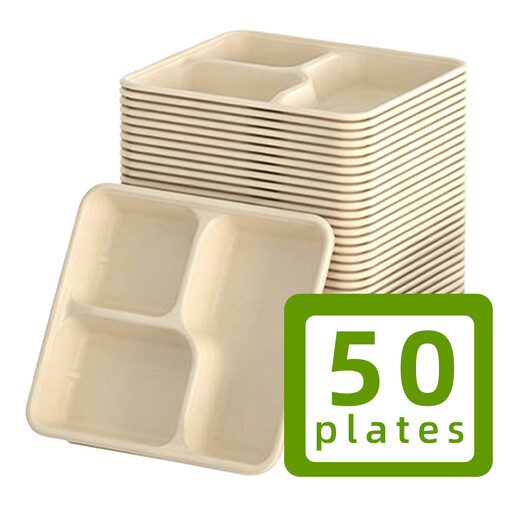
Why this product suits this profile: The three-compartment design and pack of 50 are ideal for buffets, catering, takeaway meals and dishes with separate components.
The dimensions of 21.6 × 23.7 cm and the compartment layout are clearly specified. This makes it possible to check whether the format is suitable for the portion size and transport requirements.
Three separate sections, sugarcane fibre and 50 plates per pack; according to the product name, they are intended for catering, buffets and takeaway meals.
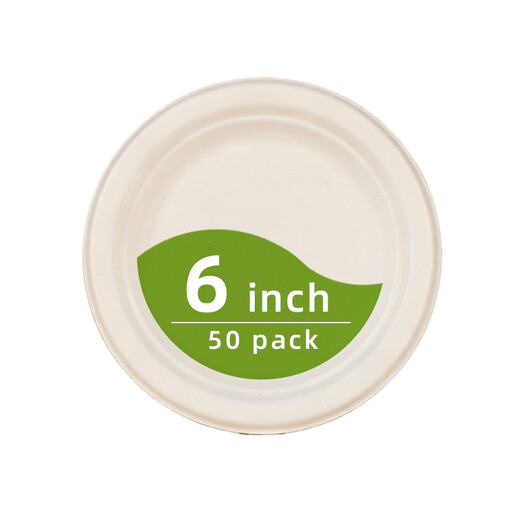
Why this product suits this profile: The compact size and pack of 50 are suitable for desserts, cake, snacks and larger children’s or club events.
The diameter is clearly stated. This prevents small dessert plates from being mistakenly planned as full-sized plates for main courses.
15 cm diameter, 50 plates and, according to the product name, a sugarcane fibre design for desserts and snacks.
We have put together a complete, regularly updated list of products that fully meet these strict selection criteria and the safety regulations applicable in the EU.
That depends on the material, shape and manufacturer’s information. Plates made from sugarcane fibre or bagasse are often offered for hot food. You should also check the guidance on heat, liquids and grease. Not all paper plates are suitable for boiling liquids.
Not necessarily. “Compostable” may refer to specific industrial conditions. The decisive factors are the product labelling and the requirements of your local council. If you are unsure, the tableware should not automatically be disposed of in the food waste bin.
There is no universally applicable usage time. It depends on the food, moisture, fat content and load placed on the plate. For soups and stews, 500 ml disposable bowls with stated leak protection are more suitable than shallow plates. At barbecues and buffets, it is also advisable to keep some spare plates available so that damaged or heavily loaded plates can be replaced.