
Lieferung heute & morgen

Qualitätsgarantie

Willkommens-Angebote freischalten: KOSTENLOSE Lieferung | Bis zu 80 % RABATT | Kostenlose 30-Tage-JoyPlus-Testphase
App herunterladen
Biodegradable disposable plates should reliably hold food while creating as little disposal hassle as possible after the event. In practice, however, products can differ significantly in terms of material, size, coating and pack contents. Anyone who focuses only on terms such as “eco-friendly”, “compostable” or “extra sturdy” may end up buying plates that are unsuitable for their intended use.
As a Joybuy Product Recommendation Officer, I will provide an objective overview of the most important selection criteria and show you which options suit different situations.
Sugarcane fibre, bamboo fibre and paper can all be plant-based. However, this does not automatically mean that a plate belongs in Germany’s organic waste bin or home compost. Factors such as the specific coating, local disposal regulations and any applicable certifications are also important.
The product information should therefore be checked carefully. Some sugarcane or bagasse plates are described as biodegradable. Disposal must still follow the manufacturer’s instructions and local requirements.
A paper plate that looks thicker is not necessarily suitable for heavy, wet or greasy foods. For grilled dishes, sauces and catering, resistance to grease and water, a firm rim and sufficient material thickness are more important than the colour or a decorative surface.
A large plate is not always practical for desserts or small snacks. Conversely, a small plate may overflow when used for main courses. Before buying, make sure the diameter and pack size match the menu and number of guests. Disposable plates 23 cm are typically suitable for main courses, while disposable plates 15 cm or smaller options are intended for cakes, fruit and side dishes.
Compostable paper plates are usually made from paper or cardboard, sometimes with an inner coating. This can improve grease resistance, but it also affects the disposal route. For hot and cold foods, the specific manufacturer’s information is decisive.
Sugarcane plates and bagasse plates are made from sugarcane fibres. Their surface is often designed for wet or greasy foods. Products with stated water and oil resistance can be practical for barbecues, catering and takeaway situations.
Bamboo fibre plates are available in a range of diameters and pack sizes. It is worth checking the exact material description, permitted uses and information regarding heat, liquids and disposal.
Not every disposable plate is suitable for microwave use. A product should only be used for reheating if this is expressly stated. A paper plate may be suitable for hot food but still not be approved for microwave use or boiling liquids.
For greasy foods, information such as grease-resistant disposable plates, “oil-resistant” or “water-resistant” is relevant. These terms should come from the product description and should not be inferred from the plate’s appearance alone.
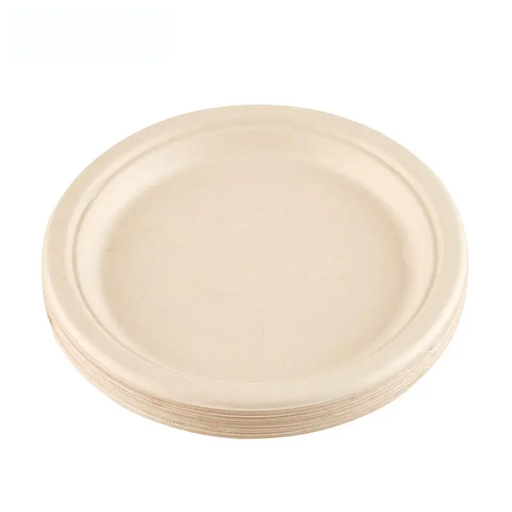
Why this product suits this profile: The 20-piece pack, with a diameter of approximately 22.5 cm, is sized for smaller celebrations, picnics and those beginning to use plant-based disposable products. According to the product description, the plates are made from food-grade sugarcane pulp.
The product information states that the plates are water- and oil-resistant and suitable for microwave use. This makes the relevant usage guidance clearer than choosing based on the word “paper” alone.
Sugarcane pulp, a diameter of approximately 22.5 cm and stated suitability for hot and cold foods according to the product description.
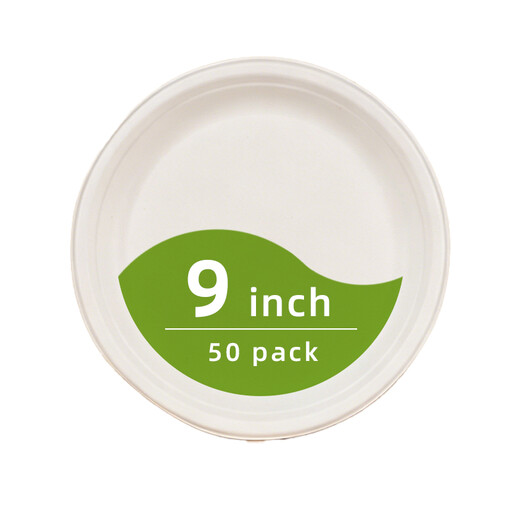
Why this product suits this profile: The pack of 50 plates with a diameter of 23 cm is aimed at larger households, birthday parties and barbecues serving traditional main courses.
The description states the sugarcane material, 23 cm diameter and suitability for hot and cold foods. This makes it easier to check the product against your planned menu.
50 pieces per pack and a 23 cm diameter designed for main courses, according to the product name.
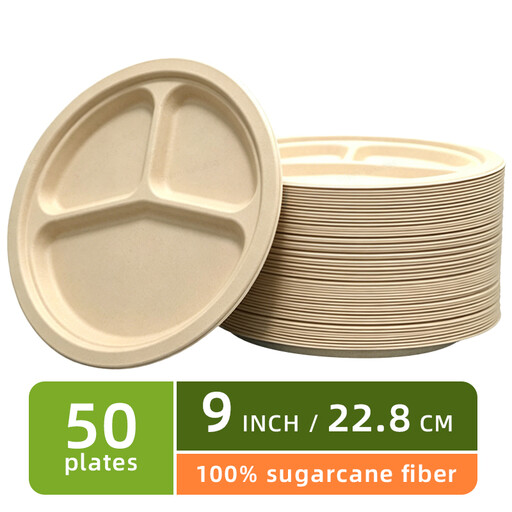
Why this product suits this profile: The three-section design is intended for catering, club events and buffets with separate side dishes. The pack of 50 covers larger events.
The 3-compartment design helps prevent foods from mixing. According to the product name, oil resistance is also stated, which is relevant for greasy catering dishes.
23 cm diameter, a pack of 50 and three separate sections for the main course, side dish and sauce.
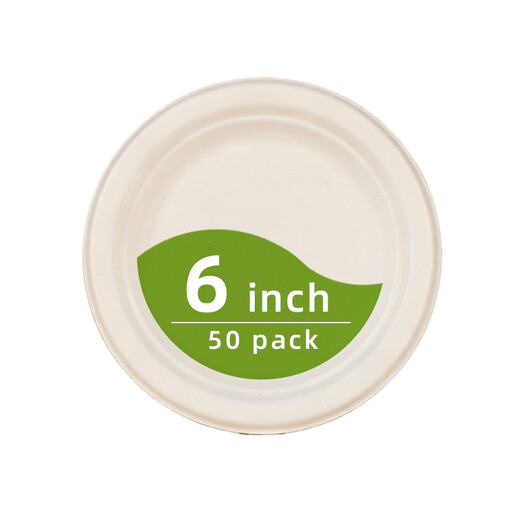
Why this product suits this profile: With a diameter of 15 cm, this option is suitable for cakes, fruit, snacks and smaller portions at birthdays, picnics or coffee gatherings.
The smaller size prevents unnecessarily large plates from being used for light dishes. Before buying, check the actual portion size against the plate diameter.
50 pieces per pack and a compact diameter for dessert and snack portions, according to the product name.
We have put together a complete, regularly updated list of products that fully meet these strict selection criteria and the safety regulations applicable in the EU.
This depends on the specific material and the manufacturer’s approval. Sugarcane and bagasse plates are often offered for hot foods. With paper plates, you should also check whether the coating is intended for greasy or wet dishes. Boiling liquids should only be used if this is expressly approved.
Not as a general rule. Some products, such as certain sugarcane pulp plates, are described as microwave-safe. Other paper plates are expressly unsuitable for microwave use. The labelling on the product page or packaging takes precedence.
Disposal depends on the material, coating and local regulations. A description such as “biodegradable” does not automatically mean that the plate belongs in every organic waste bin. Private households, hospitality businesses and catering operators should follow local authority guidance as well as the manufacturer’s instructions.