
Lieferung heute & morgen

Qualitätsgarantie

Willkommens-Angebote freischalten: KOSTENLOSE Lieferung | Bis zu 80 % RABATT | Kostenlose 30-Tage-JoyPlus-Testphase
App herunterladen
Biodegradable disposable plates are a practical alternative to conventional disposable tableware for barbecues, birthday parties, picnics and catering events. However, the term ‘biodegradable’ alone is not enough to identify a suitable product. The material, strength, size, coating and intended disposal conditions are all important.
If you focus only on an environmentally themed marketing claim or a low price per plate, you may end up buying plates that become soggy when used with hot food, give way under greasy dishes or are too small for their intended purpose. The following criteria will help you compare biodegradable disposable tableware objectively.
Biodegradable describes a material’s potential to break down under certain conditions. These conditions may depend on temperature, moisture, microorganisms and the length of treatment. A product labelled ‘compostable’ should therefore include as much specific information as possible about certification or disposal.
The DIN EN 13432 standard relates to requirements for industrially compostable packaging. It should not be interpreted as meaning that a plate will completely break down in a home garden compost heap. It is therefore worth checking the packaging and the manufacturer’s instructions before buying. After use, local disposal regulations also apply.
Sugarcane and bagasse plates are made from fibres that are pressed into rigid plates or bowls during processing. This can provide a suitable basis for hot and cold food. Nevertheless, not all products can withstand the same loads.
For stews, sauces, barbecue marinades and particularly greasy foods, look out for terms such as oil-resistant, grease-resistant, leak-proof or heat-resistant. These terms describe the intended use, but they do not replace specific temperature or load information.
A 23 cm disposable plate is typically suitable for main courses, salads and side dishes. A 15 cm dessert plate, on the other hand, is intended for cake, fruit, small snacks or desserts. Flat plates are unsuitable for soup, chilli and other liquid dishes. In these cases, 500 ml disposable bowls with a higher rim are the better choice.
A large pack is not always the most economical option either. A pack of 20 may be suitable for a private household with a few guests, while catering or club events will often benefit from packs containing 50 pieces.
Biodegradable disposable tableware may be made from sugarcane fibres, bagasse, paper or card. Sugarcane and bagasse plates are often rigid and designed for a range of dishes. With paper plates, the inner coating is also important, as it affects contact with grease and moisture.
Look out for:
Microwave suitability should not be assumed. For example, the ‘Jeden Tag Paper Plate 23cm White’ product specifically states that the plates are not suitable for microwaves or boiling liquids.
A high rim makes it easier to serve soup, sauces and liquid dishes. With 500 ml bowls, it is also important to check whether they remain sufficiently stable when being carried. ‘Leak resistant’ or ‘leak-proof’ are useful product descriptions, but they should always be considered in relation to the intended food and the amount being served.
Disposable plates with 3 compartments are suitable for keeping side dishes separate. They prevent sauce, salad and accompaniments from mixing directly with one another. This is particularly useful for buffets, takeaway meals and catering.
For straightforward planning, you can use the following guide:
For larger events, you should also plan for a few spares. Plates are often used twice when guests go back for seconds or when several dishes need to be served separately.
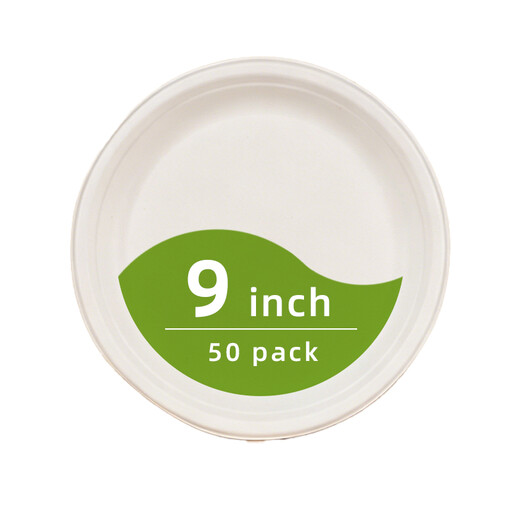
Why this product suits this profile: The pack of 50 sugarcane plates, each measuring 23 cm in diameter, is designed for private celebrations, picnics and barbecues with several guests.
The clear size and quantity information makes planning easier and reduces the risk of ordering plates that are too small or not enough pieces.
Sugarcane material, a 23 cm diameter and 50 pieces per pack; according to the product description, they are intended for hot and cold food.
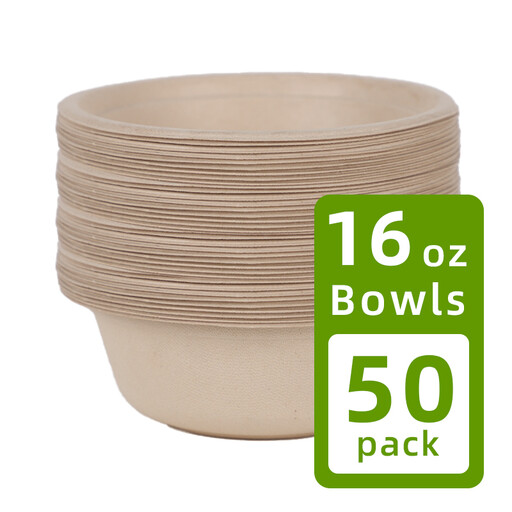
Why this product suits this profile: The 500 ml bowls are designed for soup, stews and more liquid dishes, complementing classic disposable tableware for parties and barbecues.
The 500 ml bowl shape is better suited to liquid food than a flat paper plate and reduces the risk of spills when filled appropriately.
50 bowls, sugarcane material and, according to the product name, a leak-resistant, heat-insulating design.
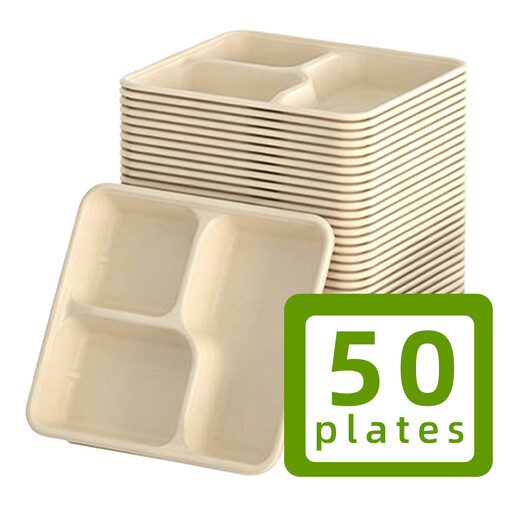
Why this product suits this profile: Measuring 21.6 × 23.7 cm and featuring three separate sections, these plates are suitable for catering, buffets, takeaway meals and events with several components.
The three compartments keep foods separate and help prevent sauces from spreading across the entire plate. The stated oil resistance is suitable for greasy dishes.
50 sugarcane-fibre trays, three compartments and, according to the product description, an oil-resistant design for catering and buffets.
For desserts or small portions, 15 cm dessert plates can be a useful choice. The packs of 50 plates take up little space and can be used at birthday parties, coffee gatherings or picnics alongside larger plates.
When choosing a colour, practical considerations may take priority. Natural-coloured products often suit buffets and outdoor events, while white paper plates create a uniform look for catering or club celebrations. Storage is also important for everyday use: disposable tableware should be kept dry and clean, away from direct sunlight.
That depends on the material and the manufacturer’s instructions. Sugarcane and bagasse plates are often marketed for use with hot food. However, this does not mean that they are generally heat-resistant. Check the information on temperature, liquids, grease and microwave use.
Disposal depends on the material, labelling and local authority requirements. ‘Biodegradable’ does not automatically mean that a product belongs in the food waste bin. Always follow the instructions on the packaging and the information provided by your local waste disposal service.
Plan on at least one plate per guest and main meal. At barbecues, buffets or events with several courses, additional plates for seconds, dessert and separate dishes are useful. For liquid dishes, calculate the required number of 500 ml disposable bowls separately.