
Lieferung heute & morgen

Qualitätsgarantie

Willkommens-Angebote freischalten: KOSTENLOSE Lieferung | Bis zu 80 % RABATT | Kostenlose 30-Tage-JoyPlus-Testphase
App herunterladen
Biodegradable disposable plates are a practical alternative to conventional disposable tableware for barbecues, picnics, buffets, catering and takeaway. However, products can vary considerably in their material, sturdiness, resistance to grease, compartments and disposal requirements. An eco-friendly product description alone is not enough to help you choose the right option.
The terms biodegradable, compostable and sustainable disposable tableware are sometimes used differently by retailers. What matters is whether the manufacturer gives clear details about the material and how the product should be disposed of. Sugarcane and bamboo fibres are plant-based materials, but used plates do not automatically belong in your food waste bin. Always follow local waste disposal rules and the guidance on the packaging and product page.
A plate may be suitable for dry foods but soften more quickly when used with greasy or very moist food. So look for specific information about water and oil resistance, rather than relying on claims such as “Heavy Duty” or “sturdy”. For barbecued food, sauces and hot meals, grease-resistant plates with a suitably raised rim are more practical.
Not every plate made from plant fibres or paper is suitable for microwave use. Always check the manufacturer’s instructions, particularly for coated products and bamboo fibre plates. If the product is not labelled as microwave-safe, don’t use it for heating food. The Ochama sugarcane fibre plate is one example of a product that is labelled as microwave-safe.
Compostable paper plates and sugarcane disposable plates are often made from bagasse, the fibrous residue left over from processing sugarcane. Bamboo fibre plates, on the other hand, are made from bamboo fibres. Both materials can be suitable for disposable tableware, provided the product is intended for food contact.
Before you buy, check:
A diameter of around 15 cm is better suited to desserts, side dishes or smaller portions. Plates measuring 22 to 23 cm are more versatile for main courses, barbecued food and buffets. For meals with several components, compartmentalised disposable plates or serving trays with three or five sections can be a good choice. They keep side dishes, sauces and main courses separate.
For liquid foods, disposable bowls are often more suitable than flat plates. If you’re transporting food, also check whether disposable bowls with lids are available. A lid can help reduce spills, but it doesn’t replace safe, upright transportation.
For curry, barbecued meat, chips or food with sauce, information about oil and water resistance is important. A product described as water- and oil-resistant may be more practical for these uses than a basic, untreated paper plate. Always check the product details for the specific temperature limit and whether it is microwave-safe.
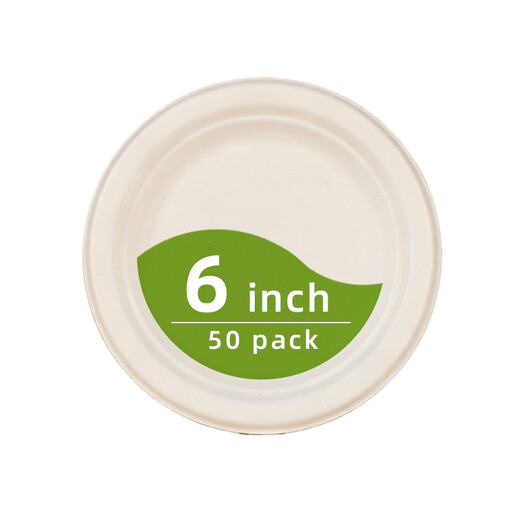
Why this product suits this type of buyer: The pack of 50 plates, each measuring 15 cm in diameter, is ideal for smaller portions, desserts, side dishes and private celebrations with lots of guests.
The clearly stated size and quantity make it easier to plan how many you’ll need. Check the product details if you plan to serve very moist or particularly greasy food.
50 plates per pack; 15 cm diameter; described as made from biodegradable sugarcane material.
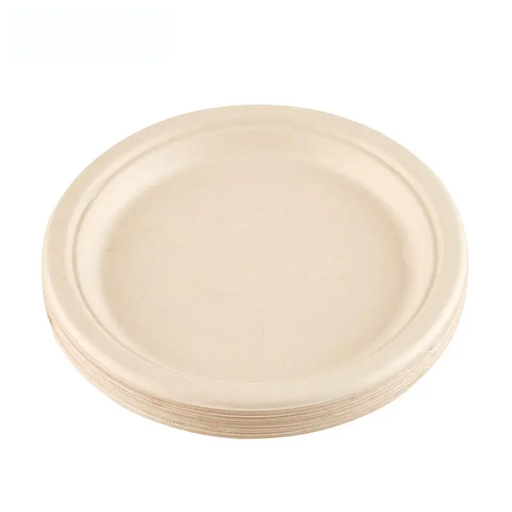
Why this product suits this type of buyer: At around 22.5 cm in diameter, this plate is designed for main courses, starters and desserts, with several clearly stated features for different uses.
The product description specifically states that it is food grade and water- and oil-resistant. It is also labelled as microwave-safe.
Sugarcane fibre material; approx. 22.5 cm diameter; described as biodegradable, water- and oil-resistant, and microwave-safe.
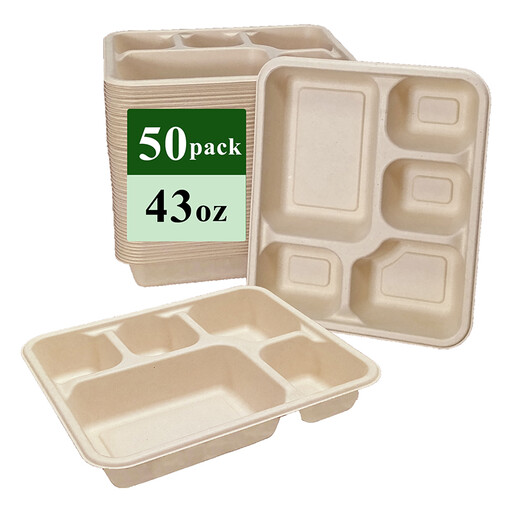
Why this product suits this type of buyer: With five compartments and 50 trays per pack, it’s designed for catering, takeaway, buffets, parties and regular meal service.
The five separate sections help keep side dishes and sauces apart. Important: according to the product details, the tray is not suitable for microwave use or high temperatures.
Bamboo fibre material; 43 oz capacity; five compartments; 50 pieces per pack; specified for catering and takeaway.
We’ve put together a complete, regularly updated list of products that meet these strict selection criteria and the safety requirements in force in the EU.
Before placing your order, it’s worth working out how many plates you’ll need. The number of guests, extra plates for second helpings and how you plan to use them will all affect the pack size you need. Plates with compartments or larger serving trays are useful for buffets, while small plates may be enough for cake, finger food and desserts.
After use, remove any food scraps and follow local disposal guidelines. “Compostable” doesn’t automatically mean that a product will break down completely in a home compost bin. Manufacturer guidance and local authority disposal rules take precedence. Bamboo fibre trays that are labelled as unsuitable must not be used in the microwave or near naked flames.
It depends on the material and the manufacturer’s instructions. Sugarcane disposable plates are often sold for serving hot food. Also check the guidance on temperature, water resistance and oil resistance. Bamboo fibre plates need to be explicitly approved for hot food.
Plates measuring around 22 to 23 cm are usually more practical for main courses, as they offer more room for meat, side dishes and salad. 15 cm plates are better suited to desserts, smaller portions or extra courses. If you’re serving several components, compartmentalised disposable plates can make serving easier.
Only if the specific product is explicitly labelled as microwave-safe. The material description alone isn’t enough to confirm this. Also check the maximum heating time and avoid using plates if the manufacturer says they’re not suitable for high temperatures.