
Lieferung heute & morgen

Qualitätsgarantie

Willkommens-Angebote freischalten: KOSTENLOSE Lieferung | Bis zu 80 % RABATT | Kostenlose 30-Tage-JoyPlus-Testphase
App herunterladen
Anyone looking for biodegradable disposable plates for a birthday party, picnic, or catering event will find a wide range of products described as “compostable,” “sustainable,” or “extra sturdy.” These labels alone reveal little about whether a plate is suitable for the intended use. The key factors are material, dimensions, pack size, resistance to grease, and disposal instructions.
Products made from sugarcane fibre, bamboo, or palm leaves are often promoted as environmentally conscious alternatives. However, the term biodegradable generally only means that a material can break down under suitable conditions. Whether a plate can go in the food-waste bin or on a home compost heap depends on local regulations, its coating, and the specific disposal conditions.
You should therefore check the product information on compostability and disposal before buying. Dirty plates are not automatically suitable for every municipal food-waste collection system.
Disposable plates measuring 15 or 18 cm are better suited to cake, snacks, and side dishes. For a complete meal, disposable plates measuring 23 cm or approximately 9 to 10 inches are generally more practical. For barbecues and buffets, it is also important to consider whether the rim is sufficiently raised and whether different foods can be kept separate.
Terms such as “heavy duty,” “strong,” or “oil-resistant” have limited meaning without specific material and product details. Sugarcane fibre, also known as bagasse, is often designed for hot and moist foods. Even so, you should check whether the manufacturer explicitly states that the product is water- and oil-resistant. With grease-resistant paper plates, the coating is also relevant, as it may affect disposal.
Sugarcane plates and bagasse plates are made from fibrous by-products of sugarcane processing. The sugarcane-fibre products featured here are described as suitable for a range of hot and cold foods. Some models have three compartments, which can make it easier to keep a main course, side dish, and sauce separate at catering events, for takeaway, or at buffets.
Bamboo plates and plates made from bamboo fibres differ in how they are intended to be used. Disposable models are available in multipacks and are designed for events with higher demand. Decorative bamboo plates such as the Atmosphera Bamboo Plate Rio and the Bamboo Plate Rio D26.5cm, by contrast, are described as reusable tableware. They should be washed by hand, not soaked for extended periods, and—unless expressly stated otherwise—not placed in the dishwasher.
Palm-leaf plates are made from dried palm leaves. Their natural texture may vary from one plate to another. This is not a sign of a defect, but a characteristic feature of the material. For the 23 cm model, the product description states that it is suitable for use in the microwave and dishwasher; hand washing is recommended to help preserve it for longer.
You can use the following guidelines when choosing:
The size “9 inches” corresponds to approximately 22.5 cm, while “10 inches” is about 25.4 cm. When shopping among international product listings, check the measurement in centimetres rather than relying solely on the inch size.
For a private celebration, the number of plates is often more important than an especially decorative design. A 50-piece pack may be suitable for birthdays, barbecues, or smaller catering jobs. For snacks and desserts, 100-piece packs of smaller plates may offer better value. With multipacks, you should also consider the storage space required and the height of the stack.
For microwave-safe disposable plates, the manufacturer must provide a corresponding statement. Do not heat plates for longer or at higher temperatures than specified in the product information. Palm-leaf and bagasse products are not automatically microwave-safe.
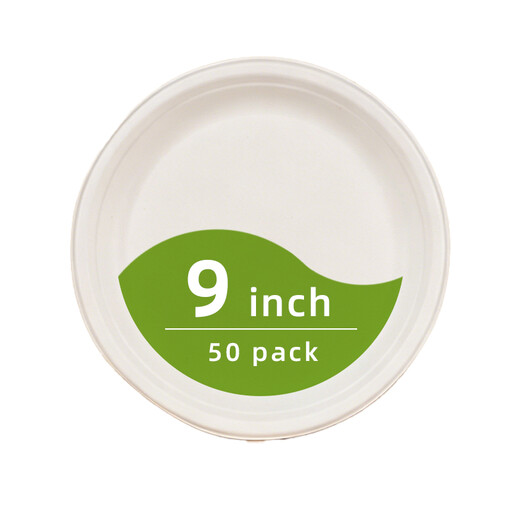
Why it is a good fit: The 23 cm sugarcane-fibre plates are described as suitable for picnics, birthdays, barbecues, and hot or cold foods.
The centimetre measurement makes the usable size easy to assess. The description specifies sugarcane fibre and use with hot and cold foods.
50 pieces per pack; 23 cm diameter; designed for picnics, parties, and barbecues.
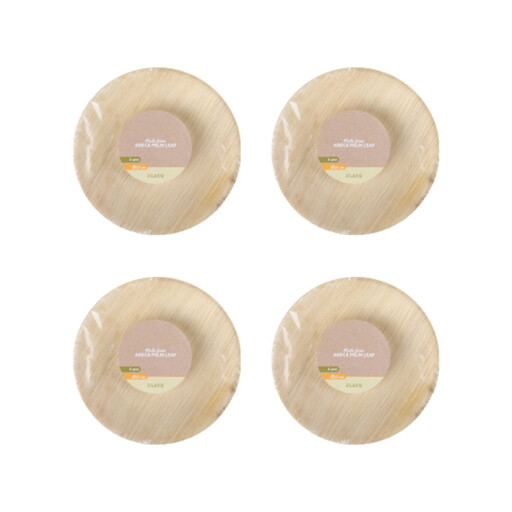
Why it is a good fit: The natural surface is ideal for smaller table settings, special occasions, and serving situations with a limited number of guests.
The product details specify the diameter, material, and cleaning instructions. This makes it easier to distinguish the model from poorly described disposable tableware.
23 cm diameter; described as microwave- and dishwasher-safe; natural palm-leaf texture.
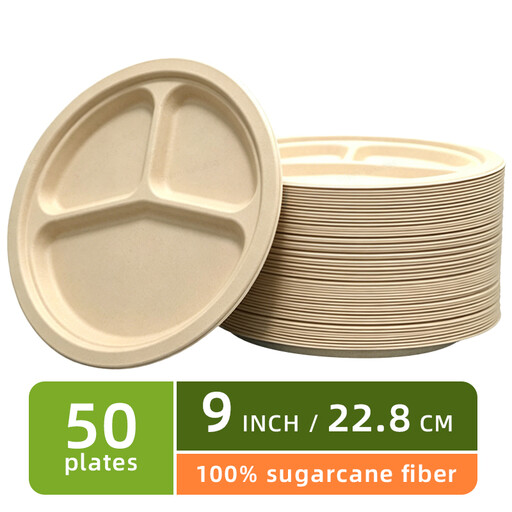
Why it is a good fit: The three-compartment design is intended for catering, food service, buffets, and meals with multiple components.
The three compartments help prevent foods from mixing. The product title also specifies 50 pieces, 23 cm, and oil resistance.
Three compartments; 50-piece pack; described for catering and food service; listed as oil-resistant.
We have compiled a complete, up-to-date selection of products to help you assess material, size, and intended use with confidence.
For sustainable disposable tableware, you should calculate your actual requirements as accurately as possible. At an event with 40 guests, 50 plates may not be enough if dessert plates or second servings are also needed. For catering, it is worth planning separately for main courses, side dishes, and desserts.
You should also pay attention to storage. Fibre and bamboo products should be kept dry and protected from direct heat. Reusable bamboo plates require different care from disposable versions. The Atmosphera and Suncha products, for example, are described as hand-washable serving or snack plates and should not be treated as compostable disposable plates.
That depends on the specific product. According to their product descriptions, some sugarcane and bagasse plates are suitable for hot and cold foods. No general statement can be made for all biodegradable plates. Before use, check the temperature, grease, and moisture specifications for the individual product.
For main courses, grilled foods, and larger salads, 22.5 to 23 cm is generally a practical size. For particularly generous portions or serving purposes, plates measuring 25 to 26.5 cm may be more suitable. Smaller 15 cm plates are better suited to cake, fruit, and snacks.
Not necessarily. Disposal depends on the material, coating, and local regulations in Germany. Read the manufacturer’s information and check with your local waste-disposal authority. “Compostable” should not be treated as synonymous with “suitable for every food-waste bin” without further verification.