
Lieferung heute & morgen

Qualitätsgarantie

Willkommens-Angebote freischalten: KOSTENLOSE Lieferung | Bis zu 80 % RABATT | Kostenlose 30-Tage-JoyPlus-Testphase
App herunterladen
Biodegradable disposable plates are a practical alternative to conventional disposable tableware for birthday parties, barbecues, picnics, buffets and takeaway meals. However, product descriptions do not always refer to the same properties. If you focus only on terms such as ‘eco-friendly’, ‘compostable’ or ‘sturdy’, you could end up buying plates that are unsuitable for the food you plan to serve.
The terms biodegradable, compostable and suitable for food waste are not interchangeable. The material, any coating and your local waste disposal rules all matter. A plate made from sugarcane fibres may be sold as biodegradable, but depending on local regulations, it may not be accepted in your food waste bin.
So check the product details and the information on the packaging. Do not put dirty plates in the paper recycling if they have food residue on them or are coated.
A diameter of 23 cm might seem big enough for a main course. But for liquid sides, barbecue marinades or heavier food, material thickness, rim height and moisture resistance also matter. Thin paper plates can bend under the weight of food or become soggy.
Sugarcane fibre plates, also known as bagasse plates, are often designed for warm, moist food, making them a popular choice for BBQs and catering. However, you should still check the product description to make sure they are suitable for your needs.
Grease- and water-resistant plates can cope better with sauces, oil or dressings. But that does not mean they are completely leakproof. For very liquid dishes, raised rims or three-compartment disposable plates can be useful, as they let you serve different sides separately.
For desserts, cakes and small snacks, 15 to 18 cm is often enough. A diameter of around 22 to 23 cm is better suited to main courses, salads or barbecue food. Plates measuring 28 cm offer plenty of space, but are often not disposable, so consider their material and cleaning requirements separately.
If you plan to heat food directly on the plate, the product must be explicitly labelled as microwave-safe. A general claim that it is biodegradable does not replace this information. For catering and takeaway, stackability, pack size and safe transport are also important.
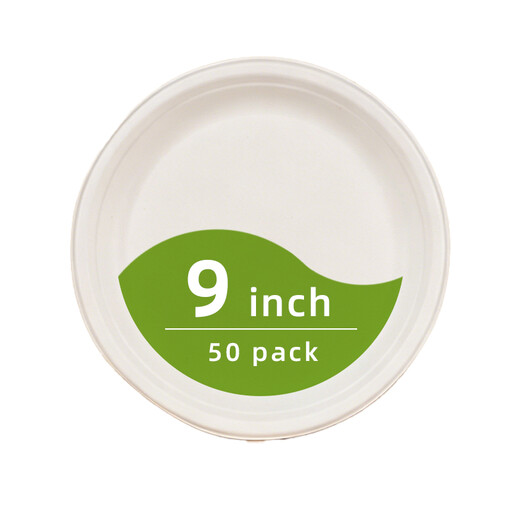
Why this product suits you: The pack of 50 plates, each measuring 23 cm in diameter, is designed for larger gatherings, picnics and barbecues.
The material and size details make it easier to choose than vague sustainability claims alone.
Sugarcane material, 23 cm diameter and 50 plates per pack, according to the product name.
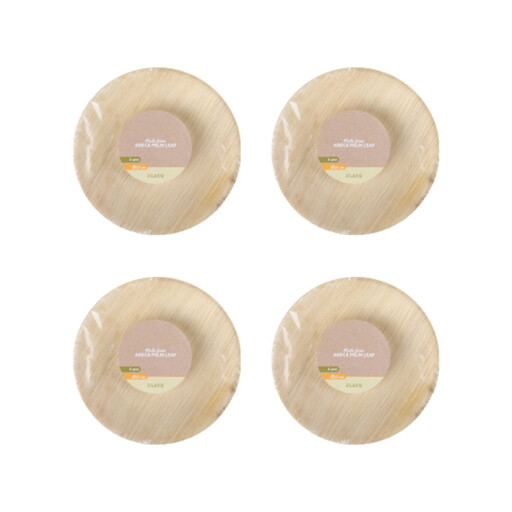
Why this product suits you: The natural finish and 23 cm diameter make these plates a good choice for smaller table settings, snacks and special occasions.
The pack of four means a small gathering won’t leave you with more plates than you need.
Made from 100% natural dried palm leaves, according to the product description; microwave- and dishwasher-safe, according to the seller.
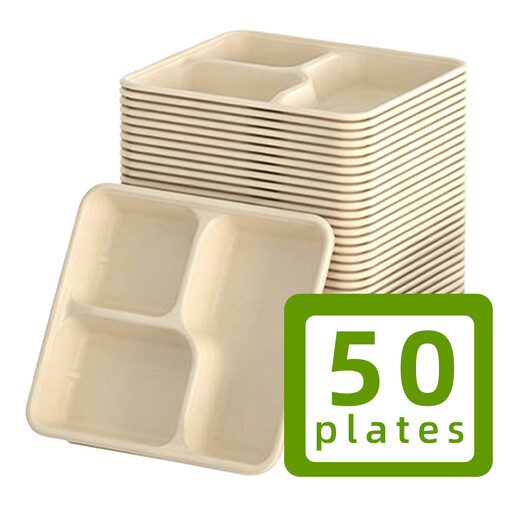
Why this product suits you: Three separate compartments are useful for buffets, catering, takeaway and meals with several components.
The compartments stop sides from mixing and help you serve more liquid foods separately.
50 plates, three compartments and a ‘grease-resistant’ product claim for catering and buffet use.
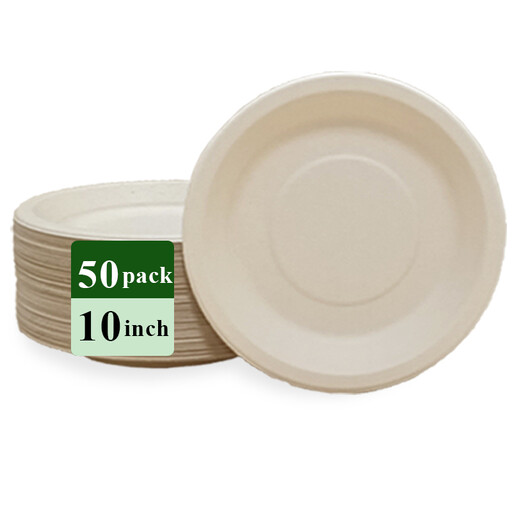
Why this product suits you: The pack of 50 plates, each measuring 10 inches, is sized for larger households, parties and regular events.
The clearly stated quantity and diameter make it easier to plan and help you avoid buying the wrong amount for a larger group.
Bamboo fibre according to the product name, 10-inch diameter and 50 plates per pack.
We’ve put together a complete, regularly updated list of products that meet these strict selection criteria and the safety regulations in force across the EU.
It depends on the material and the product details. Sugarcane fibre and bagasse plates are often sold for serving warm food. For very hot, liquid or particularly greasy dishes, also check the rim height and whether the plates are stated to be grease- or water-resistant.
Not every compostable plate can automatically go in the food waste bin. Local waste disposal rules and the manufacturer’s instructions are what matter. Remove food residue in line with local guidance, and don’t put dirty plates in the paper recycling without checking first.
For main courses and BBQ food, around 22 to 23 cm is usually practical. For cakes, desserts and small snacks, 15 cm is often enough. If you’re serving several sides, three-compartment disposable plates can make serving and transporting food easier.