
Lieferung heute & morgen

Qualitätsgarantie

Willkommens-Angebote freischalten: KOSTENLOSE Lieferung | Bis zu 80 % RABATT | Kostenlose 30-Tage-JoyPlus-Testphase
App herunterladen
Biodegradable disposable plates are handy for birthdays, picnics, buffets, food trucks and catering. However, the product name alone tells you little about how well they’ll work in everyday use, how many come in a pack or how to dispose of them. If you focus only on words such as “sustainable”, “sturdy” or “compostable”, you could end up buying unsuitable tableware despite your best intentions.
Three things are particularly likely to lead to the wrong purchase:
Biodegradable doesn’t automatically mean suitable for home composting.
A package or plate may biodegrade under certain conditions without being suitable for your home compost heap. Check the manufacturer’s specific information, any certifications and your local waste disposal rules.
Resistance to oil and water isn’t always clearly explained.
With sauces, salads, hot food or barbecued dishes, a thin plate may become soggy or lose its shape. Look for details such as oil-resistant or water-resistant, or an explicit statement that the plate is suitable for hot and liquid foods.
The plate size doesn’t suit the menu.
Plates measuring 15 cm are better suited to desserts, side dishes or small snacks. For main courses, a diameter of around 23 cm is more practical. Disposable plates with 3 compartments or disposable meal trays can be useful if you want to keep side dishes and main courses separate.
Sugar cane plates, bagasse plates and disposable plates made from sugar cane fibres are produced from the fibrous by-products of sugar cane processing. Bamboo fibre plates, on the other hand, are made from bamboo fibres. Both material types are often offered as alternatives to conventional plastic tableware.
Before you buy, check:
The term compostable shouldn’t automatically be taken to mean “suitable for composting in your garden”. A label stating DIN EN 13432 refers to requirements for packaging or products that are industrially compostable. It doesn’t replace the need to check local disposal options.
These simple guidelines can help you choose:
A larger plate isn’t automatically the right choice. At a buffet, compartments can help keep sauces away from dry side dishes. For a traditional cake buffet, however, a smaller plate is often enough.
A pack of 50 disposable plates can be more economical than several smaller packs for family celebrations, club events or catering. For a two-person household or a one-off small gathering, a pack of 20 or 25 may be enough.
Before you buy, work out:
Number of guests × expected plates per person + around 10 to 15 per cent extra
Allow more extra plates for multi-course meals, second helpings or separate dessert plates. Matching bowls, cutlery and serving platters can also make things easier to organise.
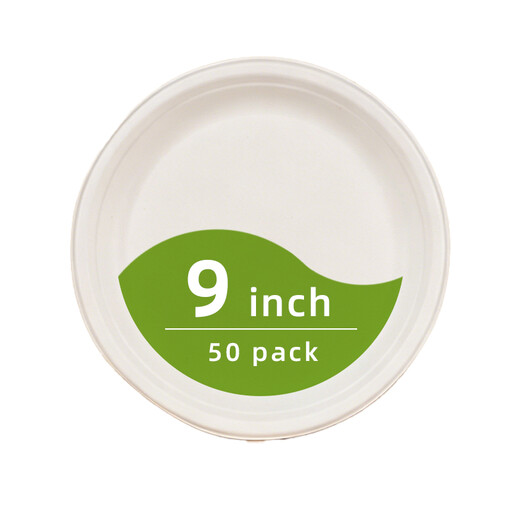
Why this product suits this profile: The pack of 50 sugar cane plates is suited to larger households, birthday parties, barbecues and picnics. At 23 cm in diameter, they’re a good size for full meals.
The stated size helps prevent main courses being served on a small dessert plate. Before buying, check the specific details on oil resistance and disposal.
50 plates; 23 cm diameter; the product name states they’re intended for hot and cold food.
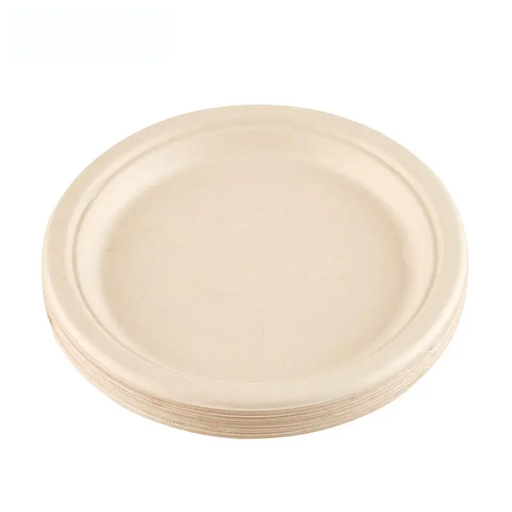
Why this product suits this profile: These 22.5 cm plates combine a practical everyday size with stated suitability for food contact, resistance to water and oil, and microwave use.
The product description specifically mentions resistance to water and oil, as well as microwave suitability. This makes key usage information clear before you buy; always follow the specific instructions for use.
Food-grade sugar cane fibres; 22.5 cm diameter; according to the product details, water- and oil-resistant and microwave-safe.
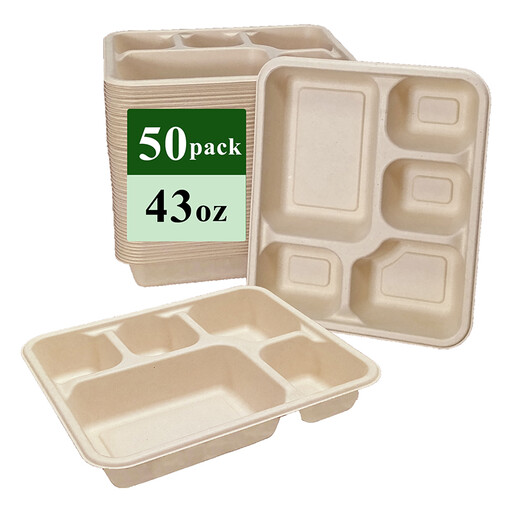
Why this product suits this profile: This disposable meal tray with five compartments is designed for catering, takeaways, food trucks and organised food service when you need to keep different items separate.
The five-compartment design helps stop different foods from mixing. Important: according to the product information, the tray isn’t suitable for microwave use or high temperatures.
43 oz capacity; five compartments; 50 trays; according to the product description, made from bamboo fibre and designed for catering, picnics and takeaways.
We’ve put together a complete, regularly updated list of products that fully meet these strict selection criteria and the safety regulations in force in the EU.
It depends on the product. Sugar cane and bagasse plates are often sold for serving hot food, but you should still check the temperature limits, oil resistance and microwave instructions in the product description. Some bamboo fibre plates may be explicitly stated as unsuitable for high temperatures.
Not every compostable plate belongs in the food waste bin or on your home compost heap. Follow the product labelling and your local waste collector’s instructions. If there’s no clear guidance, don’t automatically put the plate in your food waste.
Multiply the number of guests by the expected number of meals, then add 10 to 15 per cent extra. For a buffet, barbecue or catering event, a pack of 50 disposable plates is often handy. Extra plates with a 15 cm diameter may be useful for desserts and snacks.