
Lieferung heute & morgen

Qualitätsgarantie

Willkommens-Angebote freischalten: KOSTENLOSE Lieferung | Bis zu 80 % RABATT | Kostenlose 30-Tage-JoyPlus-Testphase
App herunterladen
Biodegradable disposable plates are a practical choice for birthdays, club events, buffets, picnics and takeaway offerings. However, products differ significantly in terms of material, sturdiness, compartment layout and disposal. A low unit price alone doesn't tell you whether a plate is suitable for hot, greasy or liquid foods.
These terms are sometimes used differently in the trade. A plate made from sugarcane fibre may be biodegradable, but whether it can be disposed of in your home compost still depends on the material, any coating and local regulations. That’s why you should always look for specific manufacturer information and check whether certification for industrial composting is mentioned.
Plastic coatings can affect disposal. Even with compostable plates, the rule is: food residue, local waste rules and the instructions on the packaging are what matter.
Marketing terms like “sturdy” or “robust” are no substitute for concrete details about the material and construction. Thin paper plates can go soggy with sauces, dressed salads or greasy foods. Water and grease resistance are therefore important selection criteria.
Disposable plates made from sugarcane, also known as bagasse plates, are made from pressed plant fibres. Their suitability for moist foods depends on the specific design. If you can’t find reliable information, don’t plan to use them for particularly liquid dishes.
A pack of 50 disposable plates may look economical at first glance, but it could be oversized for a small party. Conversely, 20 plates often aren’t enough for a buffet with seconds, dessert and spare plates. Allow at least one plate per guest for the main course, plus extra for seconds, cake or breakages.
Look for the label “suitable for food contact” as well as verifiable information about the material. For sugarcane and bagasse products, the description should clearly state that the plates are made from plant fibres or sugarcane pulp.
For commercial use, you also need information about compliance with the applicable regulations for food contact materials. If details about the material, manufacturer or responsible person in the EU are missing, it’s harder to make a proper comparison.
A diameter of around 22 to 23 cm works well for main courses, side dishes and desserts in many cases. For larger portions, 25 to 28 cm can be a better choice. Small plates around 15 cm in diameter are more suited to cake, snacks or side dishes.
A 3-compartment plate separates the main dish from side dishes. This is handy for catering, buffets and takeaway when you don’t want sauce, salad or vegetables to mix together. For a classic dinner without separate components, a flat plate is usually sufficient.
“Microwave-safe” should be explicitly stated in the product details. Only use biodegradable disposable plates within the specified temperature and time range. Plates with metal components or an unclear coating should not go in the microwave.
For grease-resistant paper plates and sugarcane plates, you should also check whether the claim actually comes from the manufacturer. A general description in the product name isn’t always enough.
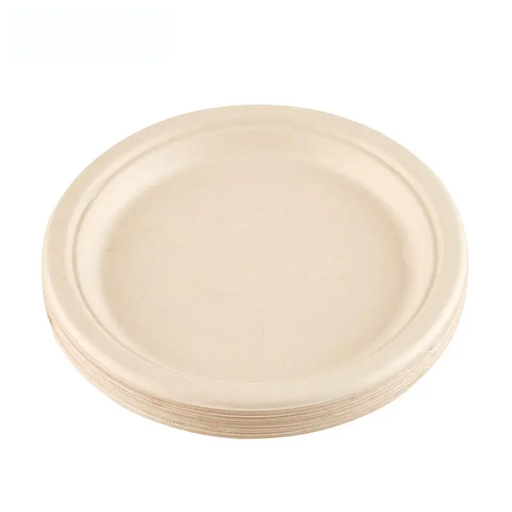
Why this product fits the profile: The 20-piece set with a diameter of 22.5 cm is ideal for smaller parties, picnics and occasional household use. According to the product description, the plates are made from food-grade sugarcane pulp and are microwave-safe.
The material, diameter and stated properties are all clearly described. This makes it easier to match the choice to your own needs.
22.5 cm diameter; stated to be water- and oil-resistant and suitable for the microwave.
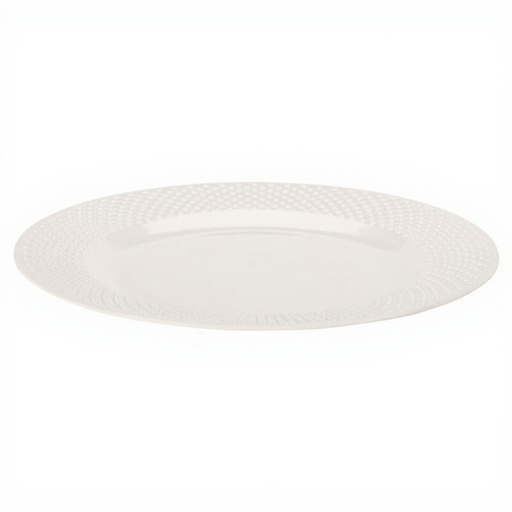
Why this product fits the profile: If you’re looking for durable tableware for camping, picnics or barbecues, this reusable melamine plate with a 28 cm diameter and a stated weight of 0.16 kg is a great option.
The product type is clearly identifiable: this is not a disposable plate. This avoids any confusion between biodegradability and reusability.
28 cm diameter; lightweight melamine tableware for indoor and outdoor use.
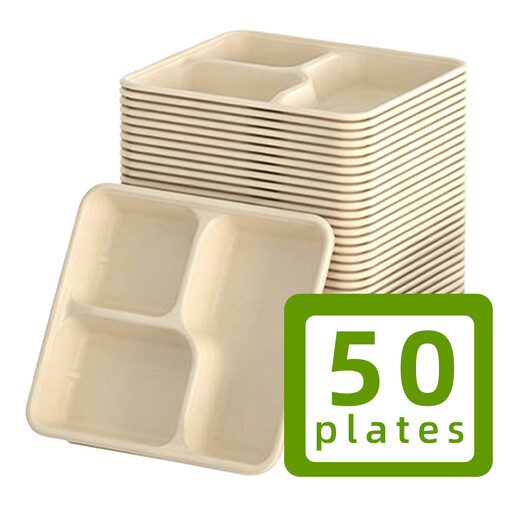
Why this product fits the profile: The stated three-compartment layout is practical for caterers, buffets, takeaway dishes and larger events. The pack contains 50 plates.
The compartment layout prevents different foods from automatically sitting on a shared surface. The quantity makes it easier to plan your amounts.
3-compartment format; 50 pieces; according to the product name, made from compostable sugarcane fibre.
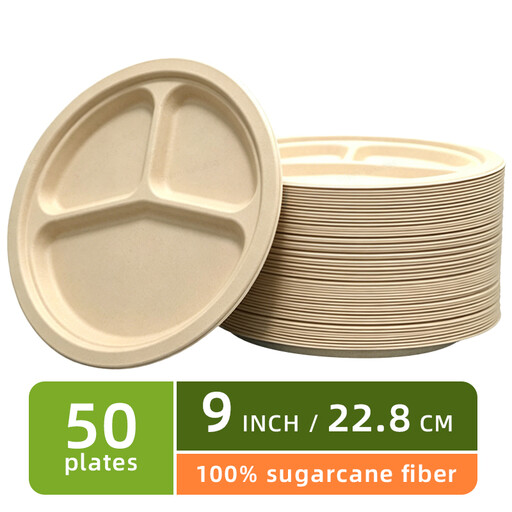
Why this product fits the profile: The 50-pack with a 23 cm diameter and three compartments is designed for parties, catering and serving separately portioned dishes.
The product name states the diameter, quantity and compartment layout. Oil resistance is also mentioned, which is relevant for catering dishes.
23 cm diameter; 50 pieces; 3-compartment design; according to the product name, compostable and oil-resistant.
We’ve put together a full, regularly updated list of products that fully meet these strict selection criteria and the safety regulations in force in the EU.
Before you buy, you should know how the plates will be disposed of after the party. Biodegradable doesn’t automatically mean the product can go in any food waste bin. Check the local rules in your town or council area.
For events, it’s also a good idea to collect separately:
When using the microwave, follow the manufacturer’s instructions. Plates should not be heated for longer than stated. Melamine products are different from biodegradable disposable plates and should only be used according to their product information.
That depends on the material and the manufacturer’s information. Sugarcane and bagasse plates are often offered for warm food. For very hot, liquid or very greasy dishes, you should specifically check the temperature, water and oil resistance.
Allow at least one plate per person for the main course. For buffets with dessert, seconds or multiple courses, extra plates are a good idea. For 20 guests, 25 to 30 plates may be enough depending on the format; for self-service buffets, a 50-pack could be more practical.
The comparison depends on the number of guests, washing effort, transport and storage. Disposable plates reduce the cleaning workload but incur ongoing costs per event. Reusable tableware can be more economical with regular use, but it requires water, energy and storage space. What matters most is how often you use it and the logistics you prefer.