
Lieferung heute & morgen

Qualitätsgarantie

Willkommens-Angebote freischalten: KOSTENLOSE Lieferung | Bis zu 80 % RABATT | Kostenlose 30-Tage-JoyPlus-Testphase
App herunterladen
If you are looking for biodegradable disposable tableware for a party, catering event or the next barbecue, you will find countless products described as “eco-friendly”, “compostable” or “sustainable”. However, these terms alone reveal little about the material, disposal requirements or practical durability. What matters are clear, verifiable details on size, capacity, intended use and the manufacturer’s instructions.
Whether you need compostable disposable plates, sugarcane tableware, bagasse plates, bamboo-fibre tableware or disposable boxes with lids, the right choice depends on the dishes being served and the number of portions required.
A product may be biodegradable or compostable under specific conditions. That does not automatically mean it belongs in the organic waste bin. In Germany, local regulations apply; coatings, food residue and industrial composting conditions may also be relevant. Always check the packaging information and the guidance provided by your waste-disposal authority.
If there is no clear certification or disposal guidance, the claim should be treated with caution. “Biodegradable” alone does not confirm a specific disposal route.
A small paper plate may be perfectly adequate for cake, while grilled meat, dressed salads or hot side dishes require greater stability. Details such as a 23 cm diameter, 500 ml capacity or a multi-compartment design can make the selection easier. Material thickness and guidance regarding grease, liquids and heat should also be taken into account.
Not all disposable tableware is microwave-safe. The available product information, for example, states for several bamboo-fibre products that they are not intended for use over an open flame or in a conventional oven. The white 23-cm paper plates from Jeden Tag explicitly advise against microwave use and serving boiling liquids.
For take-away and catering, you should therefore distinguish between serving, transporting and reheating.
Sugarcane tableware and bagasse plates are made from sugarcane fibres or sugarcane pulp. Product descriptions often present them as biodegradable or compostable under suitable conditions. Bagasse can be a practical option for hot main courses, grilled food and catering, provided the manufacturer confirms the intended use.
Bamboo-fibre tableware is available in a variety of formats, including plates, bowls, trays and bento boxes. The products listed here identify bamboo fibre as the primary material. Nevertheless, the usage instructions remain binding: some variants are intended for single use only and must not be used over an open flame or in the oven.
Paper plates are lightweight and space-saving. When assessing them, it is important to determine whether they have a coating and whether the manufacturer confirms their suitability for greasy or moist foods.
For main courses, plates measuring around 23 cm or larger formats of 9 to 10 inches are practical. Dessert plates measuring 15 cm are better suited to cake, fruit or smaller snacks.
For disposable bowls, the capacity should match the dish:
For liquids, you should also check whether the design is leak-resistant and what temperatures it can safely withstand.
A pack of 20 may be sufficient for a private picnic. For weddings, club events, food trucks or larger gatherings, packs of 50 or 100 are easier to organise. Multi-compartment plates and trays keep side dishes, sauces and main courses separate, reducing the need for additional bowls.
For take-away operators, disposable boxes with lids are also important. A well-fitting lid reduces the risk of food shifting or leaking during transport. Before buying, check whether lids are included and whether the box is suitable for hot food.
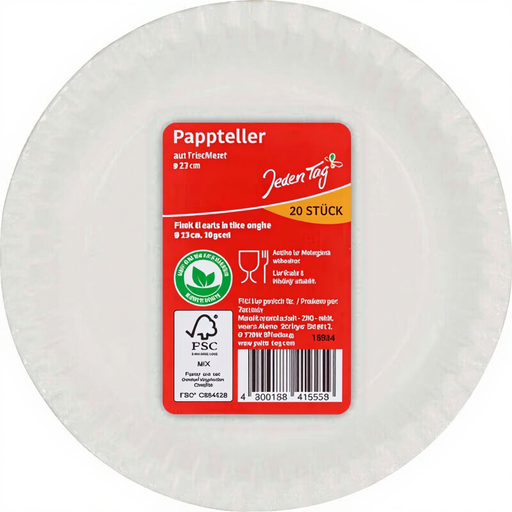
Why it’s a good fit: The 20-pack of 23-cm plates is suitable for smaller celebrations, picnics and everyday serving of hot or cold food.
The size and pack quantity are clearly stated. However, note that these plates are not intended for microwave use or boiling liquids.
23 cm diameter, 20 plates per pack and, according to the product description, a grease-resistant inner coating.
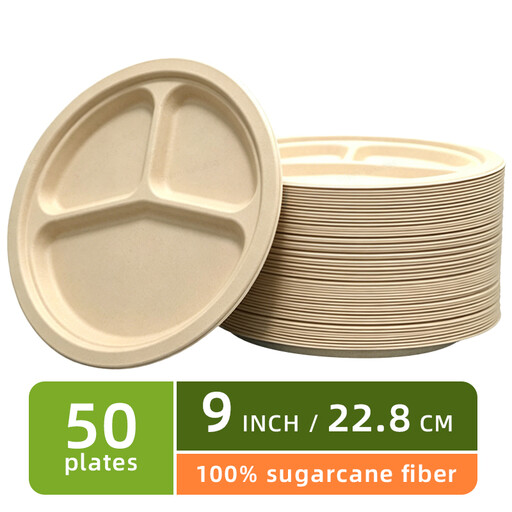
Why it’s a good fit: The three compartments make it easy to serve a main course, side dish and sauce separately at celebrations or catering events.
There is no need to divide the food among several small bowls. Nevertheless, check the temperature and disposal instructions before use.
50 plates, 23 cm diameter and three compartments; described as a sugarcane or bagasse product.
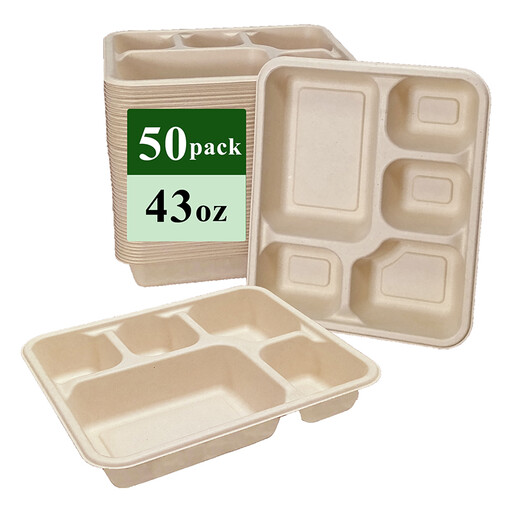
Why it’s a good fit: Five separate compartments and a stated capacity of 43 oz make it suitable for catering, take-away and generous portions.
The compartments help prevent different foods from mixing. According to the product information, the tray is not intended for microwave use, open flames or high temperatures.
50-pack, five compartments and bamboo fibre as the stated material for catering and events.
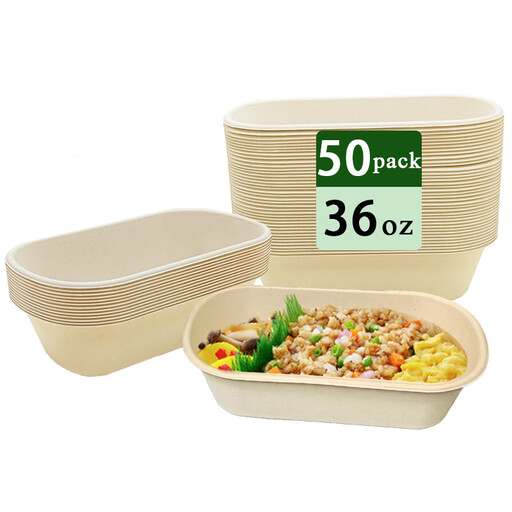
Why it’s a good fit: With a stated capacity of 36 oz, it is suitable for complete meals, side dishes and sauces in delivery or take-away operations.
The usage instructions specify limitations regarding ovens, open flames and prolonged heating. For transport, check separately whether a suitable closure is available.
50-pack, 36 oz capacity and suitable for take-away, catering, food trucks and picnics.
For disposable tableware for BBQs and picnics, plates of at least 23 cm and bowls for salads, sauces and side dishes are a sensible choice. For soups or stews, 500-ml bowls are ideal. The natural-coloured and white sugarcane bowls, supplied in packs of 50, are described as leak-resistant and insulating against heat; check the permitted temperatures on the product page before use.
When choosing disposable tableware for catering, consistent quantities, stackable designs and clear separation of different dishes are key. Multi-compartment plates and trays can streamline serving. For take-away, boxes with lids—or separate matching lids—are more practical than open plates.
Before buying, check:
We have put together a current selection of products that can be assessed against clear selection criteria for practical use and the relevant safety guidance provided for each item.
Shelf life before use depends primarily on storage conditions and material. Store plates, bowls and boxes in a dry, clean place away from direct sunlight. Moisture can cause paper and fibre products to warp prematurely.
Not automatically. The product labelling and local regulations in Germany are decisive. Without clear approval, used items should not simply be placed in the organic waste bin.
Many sugarcane and bagasse products are marketed for hot food. However, suitability depends on the individual product. Check the guidance on temperature, liquids, grease and microwave use before serving soups, grilled dishes or hot side dishes.