
Lieferung heute & morgen

Qualitätsgarantie

Willkommens-Angebote freischalten: KOSTENLOSE Lieferung | Bis zu 80 % RABATT | Kostenlose 30-Tage-JoyPlus-Testphase
App herunterladen
Biodegradable disposable tableware is practical for birthday parties, barbecues, picnics, buffets and professional food service. However, the wide range of options does not automatically make it easy to find the right solution. Terms such as “compostable”, “leakproof” or “microwave-safe” should be carefully assessed before you buy.
Whether you are buying for your home, a catering business, a takeaway or a food truck, the key factors are the material, dimensions, pack size and intended use. The following criteria will help you distinguish marketing claims from product features that are genuinely relevant.
Sugar cane and bamboo fibre products are often marketed as biodegradable or compostable. However, the correct disposal method depends on local regulations, the product’s composition and the conditions of the composting process. Industrial composting facilities, for example, use different temperatures and processes from those found in a home compost heap.
Before buying, you should therefore check:
It is not permissible to dispose of every product in the food waste bin as a matter of course.
A pack of 50 or 100 can make sense for catering, canteens and larger events. In a small household, however, many plates or bowls may remain unused for a long time. Moisture can affect the material properties if the disposable tableware is not stored in a dry place.
You should therefore compare the quantity, price per item and expected demand. For a small coffee gathering, 15 cm plates may be sufficient, while a buffet requires larger plates or multi-compartment bowls.
Oil- and water-resistant surfaces can make tableware more suitable for moist or greasy foods. However, this does not mean that every plate is suitable for very runny dishes, long transport journeys or high temperatures.
For soups, sauces and takeaway meals, biodegradable bowls, clamshell boxes or disposable trays with raised edges are generally more practical than flat plates. Claims such as “microwave-safe” must also come from the individual product and should not be automatically applied to other items made from the same material group.
Bagasse tableware is made from the fibrous residue left over from sugar cane processing. Sugar cane plates are usually lightweight, stackable and designed for parties or picnics. Depending on the model, the product descriptions in this selection mention features such as oil and water resistance or suitability for hot and cold foods.
Bamboo fibre plates and bamboo fibre bowls are made from bamboo fibres, not necessarily solid bamboo. For example, the description of a bamboo fibre bento container explicitly states that the product is not made from solid wood. This distinction is important because material descriptions can sometimes create a different impression.
You should also look for clear manufacturer and responsible-person information. The products listed here include the relevant details for the responsible person in the EU. Please refer to the individual product page and packaging for specific information about food-contact suitability and use.
The dimensions determine whether the tableware remains stable and practical when serving:
For professional use, also check whether the size is compatible with your existing transport boxes, serving stations or food-warming systems.
Not all biodegradable disposable tableware is suitable for microwaves, ovens or direct heat. A product may be intended for brief reheating without being approved for cooking or use in an oven. Open flames and barbecue grates are particularly unsuitable in principle.
For leakproof disposable tableware, you should look out for the following:
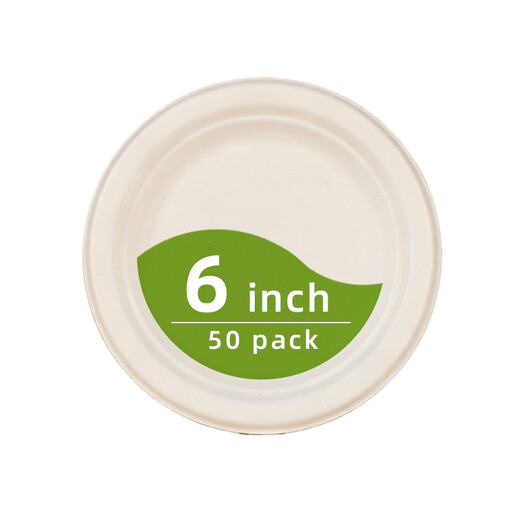
Why this product suits this profile: The 15 cm plates are suitable for desserts, snacks and smaller portions at private celebrations, coffee gatherings or picnics.
The clearly stated plate size and pack quantity make it easier to plan your requirements, rather than buying unnecessarily large plates for small portions.
50 pieces per pack; according to the product description, made from biodegradable sugar cane fibre and intended for desserts, parties, barbecues and picnics.
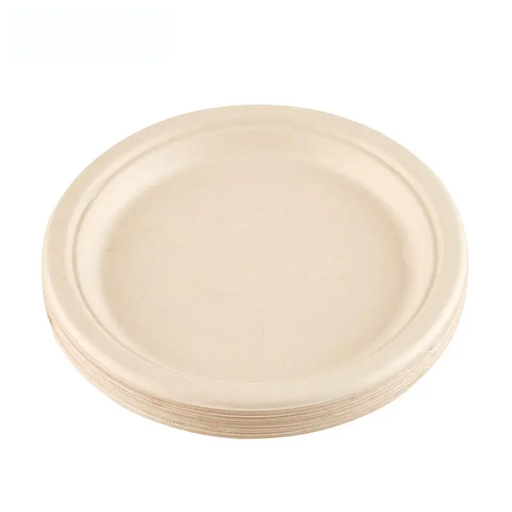
Why this product suits this profile: With a diameter of around 22.5 cm, these plates are designed for main courses, side dishes and desserts at events or for everyday use.
The description specifies the material, diameter and water and oil resistance. Microwave suitability is also stated explicitly.
Food-grade sugar cane fibres; according to the product information, biodegradable, water- and oil-resistant, and intended for brief reheating in the microwave.
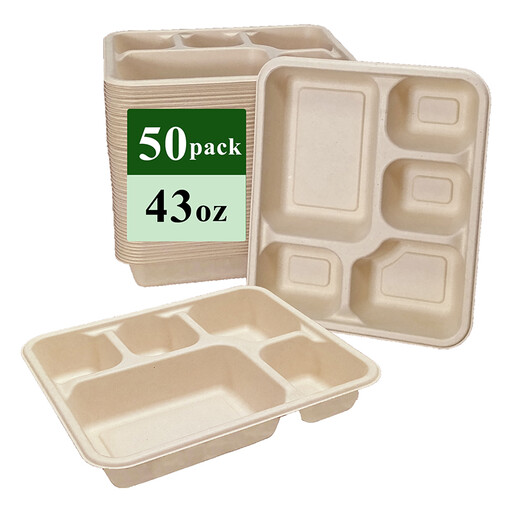
Why this product suits this profile: Five separate compartments and the stated capacity are designed for catering, takeaway, buffets, picnics and serving larger quantities of food.
The compartments help prevent the main dish, side dishes and sauces from mixing. The manufacturer’s information also states that the product is for single use and should not be used in a microwave or at high temperatures.
Pack of 50; five-compartment design; bamboo fibre as the stated material; suitable for catering, parties, picnics, takeaway and food service.
We have put together a complete, regularly updated list of products that fully meet these strict selection criteria and the safety regulations applicable in the EU.
Depending on how you plan to use them, the following options may also be suitable:
Store all variants in a dry place, protected from direct heat. When using them, always follow the product-specific instructions. In particular, a tray labelled as not microwave-safe must not be used for reheating.
That depends on the individual product. According to the product description, sugar cane and bamboo fibre tableware may be intended for hot food. However, different requirements apply to microwave use, extended periods holding liquids, ovens and open flames. Check the information for the specific item.
Its performance during use depends on the material thickness, moisture, fat content, temperature and load. Plates and bowls are often sufficient for short serving periods. For transport or longer periods of use, choose sturdy designs with raised edges or closed containers.
Not as a general rule. Disposal depends on local regulations and whether the product is approved for the relevant type of composting. Remove any food residue and follow the instructions on the packaging and product page, as well as the requirements of your local waste disposal provider.