
Lieferung heute & morgen

Qualitätsgarantie

Willkommens-Angebote freischalten: KOSTENLOSE Lieferung | Bis zu 80 % RABATT | Kostenlose 30-Tage-JoyPlus-Testphase
App herunterladen
Biodegradable disposable tableware is practical for parties, picnics, catering and everyday takeaway service. But terms such as “eco-friendly”, “compostable” or “made from plant fibres” don’t tell you on their own whether a product is right for your needs. The key factors are material, dimensions, durability, pack size and disposal guidance.
If you only look at the price per pack, you could end up buying plates that are too small, flimsy bowls or boxes without a suitable closure. The following criteria can help households, event organisers and catering businesses compare biodegradable disposable tableware objectively.
The terms biodegradable and compostable are used in different ways by retailers. A product may break down under certain industrial conditions without being suitable for home composting. Look for clear manufacturer information, certifications and local disposal guidance.
Dirty plates and bowls don’t automatically belong in the food waste bin, either. Rules vary between local authorities in the UK. Before disposing of them, check the manufacturer’s guidance and your local waste service’s advice.
Sugarcane tableware, bamboo fibre tableware and paper products differ in strength, moisture resistance and heat tolerance. A bowl for dry snacks has different requirements from a leak-resistant bowl for soup or sauce.
You should also consider claims such as “water- and oil-resistant” in relation to the food you plan to serve. They don’t replace information about the maximum usage time or suitability for very hot liquids.
A plate around 15 cm in diameter is better suited to desserts, cake or small side dishes. For main courses, around 22 to 23 cm is often more practical. For disposable bowls and boxes with lids, capacity and compartments are also important.
The fit matters for takeaway packaging, too: a container that’s too large can let food slide around, while one that’s too small can put pressure on the lid.
Sugarcane fibre, bamboo fibre and coated paper are often used for hot and cold food. Sugarcane, or bagasse, products come in various shapes, including compostable plates, soup bowls and divided paper plates.
In particular, check:
Always read “microwave-safe” alongside the manufacturer’s instructions. Microwave-safe doesn’t automatically mean suitable for ovens or extended heating.
For a practical choice, match the diameter and capacity to the food you’ll be serving:
Pack size also matters when choosing disposable tableware for catering and larger events. A pack of 20 may be enough for a small household, while packs of 50 can make restocking easier for a buffet or takeaway business.
For bowls and boxes, a firm rim, sturdy base and well-fitting lid are important practical features. A takeaway container’s lid should close evenly without pushing the food against the rim.
Don’t take “leakproof” as a blanket guarantee. Actual performance depends on how full the container is, the temperature, transport time and what it holds. For liquid food, test it with water or a similar portion before ordering larger quantities for an event.
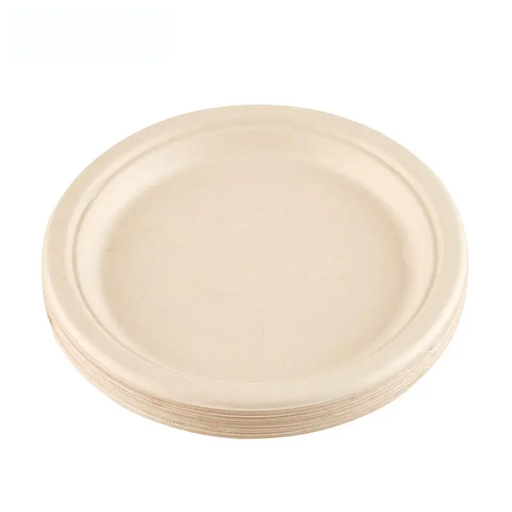
Why it suits this buyer: At around 22.5 cm in diameter, these plates are designed for parties, picnics and everyday main courses. The pack of 20 is a good fit for smaller gatherings.
The stated diameter reduces the risk of accidentally choosing dessert plates that are too small for main courses. The product description also states that they’re water- and oil-resistant.
Food-grade sugarcane fibres, stated microwave suitability and a size of around 9 inches.
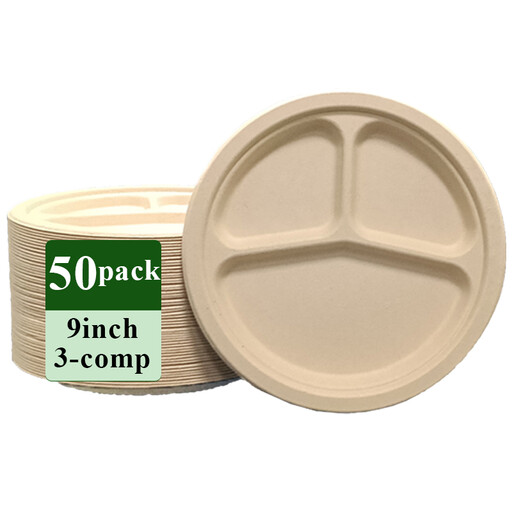
Why it suits this buyer: This divided plate, supplied in a pack of 50, is ideal if you want to serve a main course, side dish and sauce separately.
The compartments stop different foods from running into one another. This makes the plate a good fit for buffets, barbecues and catering with several components.
Bamboo fibre material, a 9-inch size and three separate compartments, in a pack of 50.
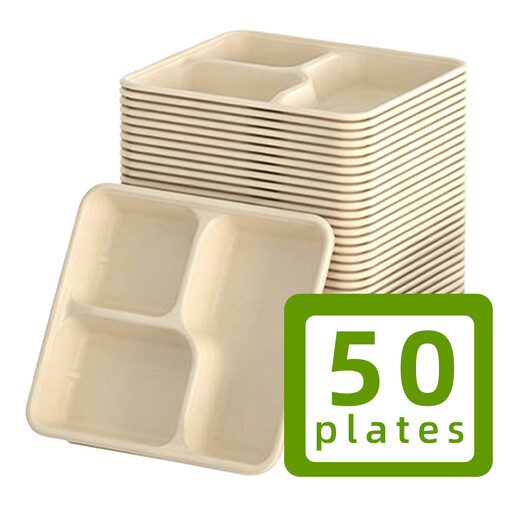
Why it suits this buyer: Supplied in a pack of 50, these divided plates measure 21.6 x 23.7 cm and are designed for catering, buffets and takeaway meals.
The clearly stated dimensions and compartments make portion planning easier. The product description also notes that the plates are oil-resistant.
Three compartments, a pack of 50 and stated suitability for catering, buffets and takeaway.
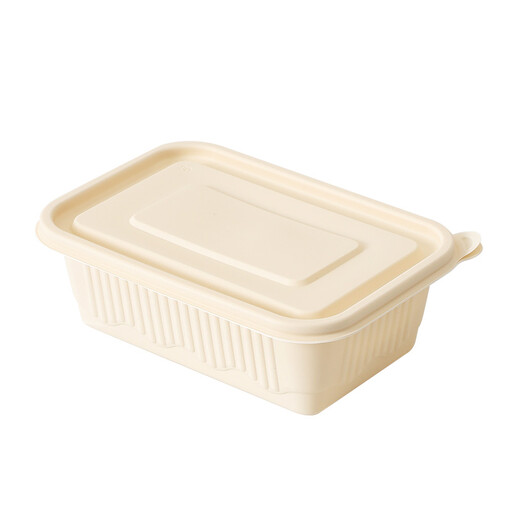
Why it suits this buyer: With a 750 ml capacity and a lid included, this box is designed for lunch portions, takeaway meals and transporting prepared food.
The stated capacity makes it easier to choose the right size. The lid helps with transport, but check that it fits securely and that the container is filled to a suitable level before regular use.
750 ml capacity, 20 per pack and integrated lids for takeaway packaging.
We’ve put together a complete, regularly updated list of products that meet these strict selection criteria and the safety regulations in force in the EU.
It depends on the specific material and the manufacturer’s guidance. Sugarcane and bamboo fibre products are often sold for hot food, but you should still check temperature limits, microwave suitability and advice on liquids.
They’re designed for single use. How long they can be used in practice depends on the temperature, moisture, fat content and how full they are. For soups and sauces, choose a bowl stated as suitable for liquids and keep transport and standing times as short as possible.
The price per item can be lower for disposable tableware, particularly in larger packs. For a fair comparison, though, consider disposal, storage, washing-up and how often you plan to use the tableware. The key question is whether the plates, bowls or boxes will be practical for the occasion.