
Lieferung heute & morgen

Qualitätsgarantie

Willkommens-Angebote freischalten: KOSTENLOSE Lieferung | Bis zu 80 % RABATT | Kostenlose 30-Tage-JoyPlus-Testphase
App herunterladen
Whether it’s a family celebration, barbecue, catering event or takeaway, biodegradable disposable tableware can make clearing up easier and offer an alternative to conventional plastic products. However, terms such as “compostable”, “eco-friendly” or “made from plant fibres” do not automatically mean that disposal in the UK is straightforward.
Specific details about material, capacity, load-bearing strength, temperature limits and pack size are crucial. If you only look at the product name, you may end up buying plates that warp when used with moist foods, bowls without sufficient leak protection or packaging that is unsuitable for your preferred disposal method.
Sugarcane tableware, bamboo fibre tableware and other products made from plant fibres are often described as biodegradable or compostable. However, the correct disposal method depends on local requirements and composting conditions. Industrial compostability is not the same as breaking down in a home compost heap.
Before buying, you should therefore check:
A 50-pack of disposable plates or a set containing 100 small plates may seem attractive at first glance. For a household, however, an oversized pack may need to be stored for a long time. Moisture can affect paper and plant fibre products.
For private celebrations, packs of 20 to 50 are often easier to plan for. Catering companies, food trucks and hospitality businesses, on the other hand, are more likely to benefit from larger quantities, provided the plate size and frequency of use are suitable.
A thick rim or firm surface does not, by itself, say much about whether a product is suitable for hot, oily or very moist foods. With compostable plates and disposable bowls, material thickness, shape, compartment layout and the manufacturer’s temperature-resistance guidance all matter.
A product suitable for dry snacks will not necessarily be suitable for soup, pasta with sauce or foods containing a lot of oil.
Sugarcane tableware, also known as bagasse, is made from the fibrous residue left over from sugarcane processing. Many plates and bowls on the market are designed for moist or oily foods. Nevertheless, you should check the specific product description, as features such as microwave suitability and leak protection are not identical for every version.
Bamboo fibre tableware is made from bamboo fibre and is available in various forms, including plates, bowls, trays and meal boxes. According to the product information, some versions must not be used in a microwave or exposed to high heat. This applies, for example, to the 43-oz bamboo fibre tray with five compartments.
Paper tableware is particularly suitable for light to medium-weight foods. Coatings can improve resistance to grease and moisture. However, restrictions often apply when it comes to boiling liquids.
The right size depends on the dish:
For soup, leak-proof soup bowls specifically described as leak-proof or leak-resistant are a sensible choice. For transport, however, you should opt for disposable boxes with lids or takeaway lunch boxes. A loosely placed lid does not necessarily prevent leaks.
Read the warnings before use. The following points are particularly important:
For example, the Famiware “4 Double-Ring Large Bowls - Yellow and White” set is made from stoneware and, according to the product description, is microwave- and dishwasher-safe. However, it is not disposable tableware, but a reusable alternative for households that prefer durable crockery.
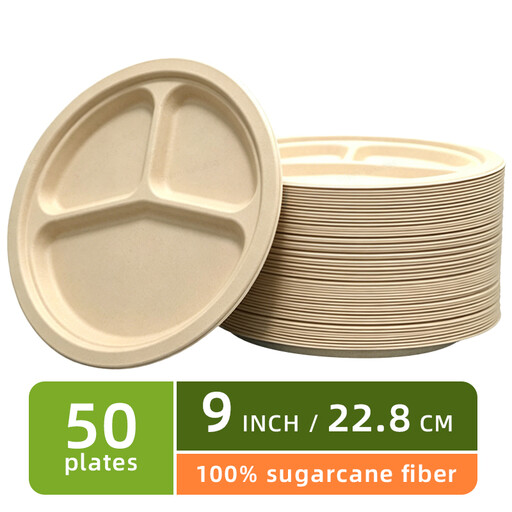
Why this product suits this profile: The pack contains 50 plates measuring 23 cm in diameter, each with three compartments. This makes them suitable for private celebrations, barbecues and smaller catering events.
The clear information about pack size, diameter and compartment layout makes it easier to plan quantities and portions.
Sugarcane fibre, 50 pieces and three separate sections for different foods.
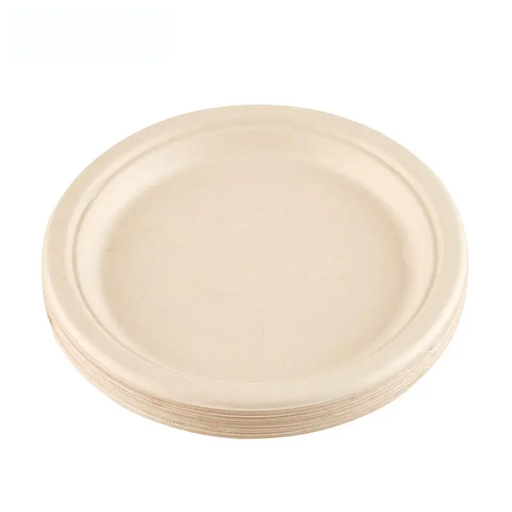
Why this product suits this profile: According to the product information, the plates are made from food-grade sugarcane fibre, measure approximately 22.5 cm in diameter and are described as water- and oil-resistant.
The information about water and oil resistance helps when choosing tableware for moist or greasy foods. Disposal should nevertheless be checked locally.
Standard round size, plant fibre material and, according to the description, microwave suitability.
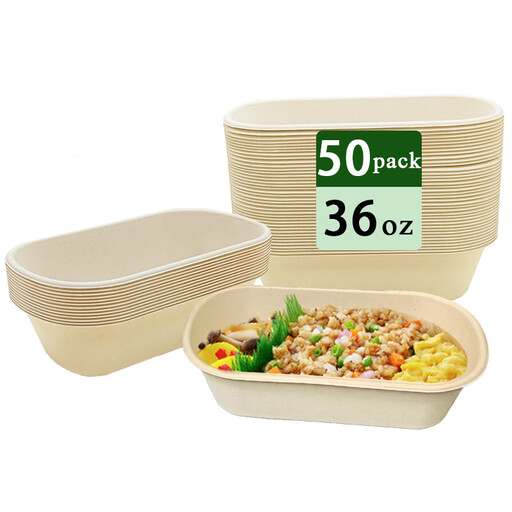
Why this product suits this profile: The bamboo fibre bento boxes have a capacity of 36 oz and are designed for takeaway, food trucks, catering and prepared meals.
The large capacity is clearly stated. According to the description, microwave use is limited to reheating; ovens and open flames are not suitable.
50 pieces per pack, a capacity of 36 oz and bamboo fibre material.
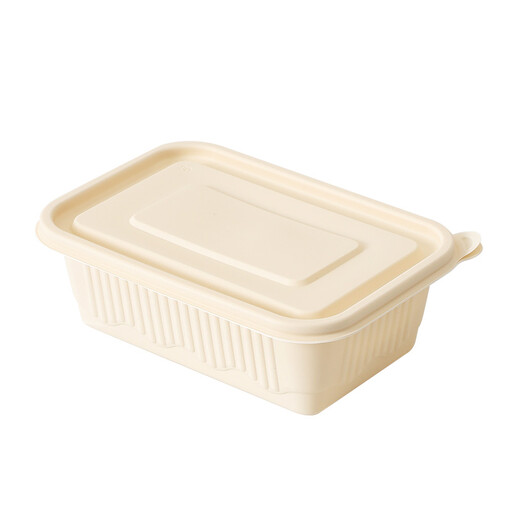
Why this product suits this profile: The 750 ml box with transparent lid is designed for office meals, picnics, parties and delivery applications.
A matching lid reduces the risk of spills during transport. Before buying, you should consider the closure and whether it is genuinely leak-proof for your particular dish.
750 ml capacity, 20 pieces per pack and a supplied lid.
For party tableware and barbecues, plates measuring around 22 to 23 cm in diameter are generally more versatile than small dessert plates. Compartments are useful when you want to keep several side dishes separate. For disposable catering tableware, pack size, stackability and consistent dimensions are particularly important.
With camping tableware, low weight and easy storage are also key considerations. For soup or stews, the bowl should be sufficiently deep and expressly designed for hot liquids. For delivery services, restaurants and food trucks, stackable disposable boxes with lids are often more practical than open plates.
Also bear in mind that not every product in the selection is biodegradable. A PS bowl such as the Estiva Salad Bowl is made from polystyrene and should therefore not be considered equivalent to sugarcane or bamboo fibre products. The material specification is always decisive.
We have put together a complete, regularly updated list of products that fully meet these strict selection criteria and the safety regulations applicable in the EU.
Not necessarily. Disposal depends on the material, labelling and the requirements of your local waste service. You should therefore check the packaging and local guidance before putting sugarcane or bamboo fibre tableware in the food waste bin.
Deep bowls with a stated capacity, such as 500 ml, and an indication of heat resistance or leak resistance are suitable. For boiling liquids, you should only use products whose manufacturer’s information specifically covers this type of use.
Store plates, bowls and boxes in a dry, clean place protected from direct sunlight. The specific shelf life depends on the material and packaging. Damaged, damp or misshapen products should no longer be used for food.