
Lieferung heute & morgen

Qualitätsgarantie

Willkommens-Angebote freischalten: KOSTENLOSE Lieferung | Bis zu 80 % RABATT | Kostenlose 30-Tage-JoyPlus-Testphase
App herunterladen
Biodegradable paper plates are a practical alternative to reusable tableware for birthday parties, picnics, barbecues, catering and everyday use. However, disposable plates vary considerably in their materials, coatings, pack sizes and intended uses. A well-written product description alone won’t tell you whether a plate can hold hot food, contain liquids or be used in the microwave.
Before you buy, watch out for these three common pitfalls:
Sugar cane paper plates are often made from bagasse, or sugar cane fibres. According to the relevant product descriptions, plates like these may be biodegradable or compostable. However, these terms shouldn’t be treated as interchangeable.
Before you buy, check:
The term “food-safe” describes the product’s intended use with food. However, it doesn’t replace checking the product information, for example on hot food, liquids or disposal in Germany.
A 23 cm paper plate offers plenty of room for main courses, side dishes and barbecue food. A 15 cm plate may be more practical for cake, snacks or desserts. If you’re buying for a larger event, also consider how much space the plates will take up when stacked and how much storage space you have available.
A plate with 3 compartments is useful if you want to keep the main course, side dish and sauce separate. This can make serving easier at buffets, for takeaway meals or at catered events. These models are often not circular, so their dimensions are usually given as length and width.
For soups, dressed salads, barbecue food or dishes with plenty of sauce, grease-resistant paper plates with stated water and oil resistance are a better choice than simple, uncoated paper plates. Look for specific details such as:
“Sturdy” and “Heavy Duty” aren’t standardised quality grades unless they’re backed up by a technical standard or stated load capacity. Compare the material, diameter, shape and intended use directly instead.
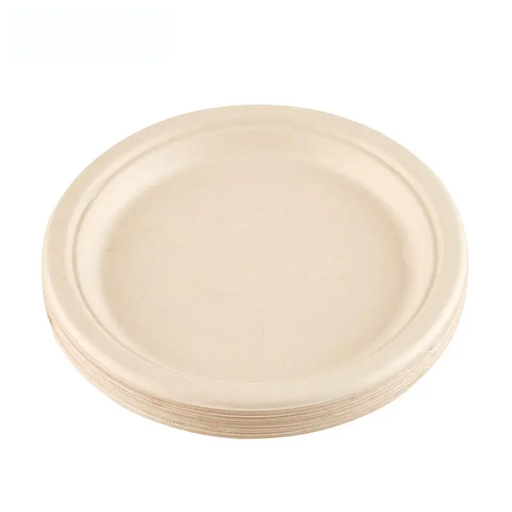
Why it suits this profile: At 22.5 cm in diameter, roughly equivalent to 9 inches, these plates are described as suitable for main courses, starters and desserts. The pack of 20 is a manageable option for smaller households or more intimate gatherings.
The product information specifies sugar cane fibre and resistance to water and oil. It also explicitly states that the plates are microwave-safe. Even so, check the supplier’s instructions before heating food.
22.5 cm diameter, 20 plates per pack, plus biodegradable material and microwave suitability according to the product description.
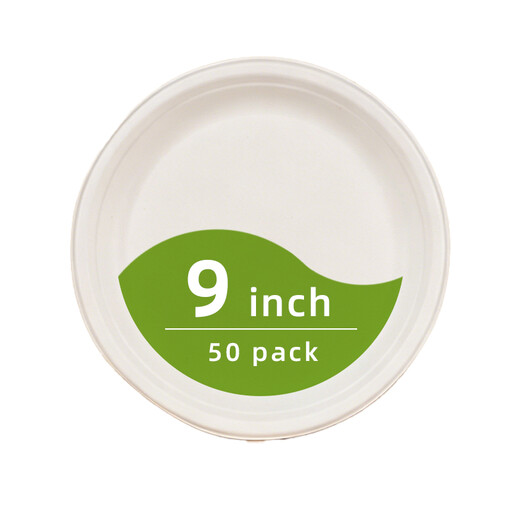
Why it suits this profile: The pack of 50 sugar cane paper plates is designed for larger households, birthdays, picnics and barbecues. At 23 cm, there’s plenty of room for a full meal.
The product name specifies sugar cane material, a 23 cm diameter and a pack of 50. These details make it easier to plan quantities and sizes than with disposable tableware that’s labelled vaguely.
23 cm diameter and a pack of 50; according to the product name, suitable for hot and cold food, picnics, birthdays and barbecues.
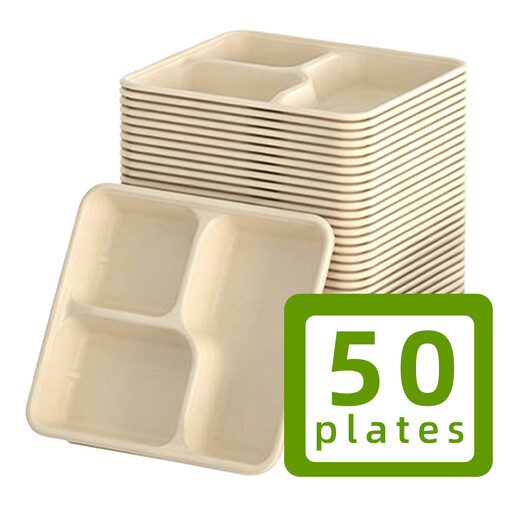
Why it suits this profile: The three separate compartments are ideal for catering, buffets, takeaway and meals with several components. The stated dimensions of 21.6 × 23.7 cm make good use of the available space.
The design keeps side dishes and sauces separate. The product name says the material is suitable for oily foods; check the specific temperature limits before use.
50 plates, three compartments and dimensions of 21.6 × 23.7 cm, plus oil resistance for catering and takeaway according to the product name.
How well they hold up during use depends on the material, coating, food and weight. Simple plates may be fine for dry foods. For sauces, greasy foods or liquids, models specifically described as water- and oil-resistant are a better choice. Store the plates somewhere dry, as moisture can affect their shape before use.
Only if the product description or packaging explicitly says so. Even with microwave-safe plates, you should take the recommended heating time, temperature and type of food into account. Don’t use models without the relevant marking for heating food.
According to the product information, sugar cane paper plates are made from sugar cane fibres, or bagasse. Standard paper plates may be made from card or paper with a coating. In either case, check the specific details on material, resistance to grease and water, compostability and disposal.