
Lieferung heute & morgen

Qualitätsgarantie

Willkommens-Angebote freischalten: KOSTENLOSE Lieferung | Bis zu 80 % RABATT | Kostenlose 30-Tage-JoyPlus-Testphase
App herunterladen
Biodegradable paper plates are a practical alternative to reusable tableware for family celebrations, barbecues, picnics and events. However, disposable plates vary considerably in terms of material, size, strength and disposal. If you focus only on terms such as “eco-friendly” or “extra strong”, you could end up buying a product that is unsuitable for your planned use.
The term may refer to the base material. Coatings, dyes and adhesives can affect disposal. Local waste-processing facilities do not always process compostable plates together with food waste either. You should therefore check the manufacturer’s information and local disposal guidance.
A plate made from sugar cane fibres, also known as a bagasse plate, is often described as biodegradable. However, this does not necessarily mean that it will fully break down in your own garden compost.
A diameter of around 15 cm is generally suitable for cake, fruit, snacks or small desserts. For barbecued food, side dishes and full meals, 23 cm paper plates or plates with a diameter of around 22.5 cm are more practical.
The actual usable surface may be reduced by a high rim or a deep plate shape. When choosing, you should therefore consider not only the stated number of centimetres, but also the amount and type of food you plan to serve.
Hot food, sauces and salads place greater demands on a disposable plate than dry baked goods. Without a suitable fibre structure or coating, a paper plate can become soggy, lose its shape or absorb grease.
Claims such as grease- and water-resistant plates should therefore be checked against specific material information and usage instructions. It is equally important to remember that “suitable for hot food” does not automatically mean that the plate is approved for boiling liquids or use in a microwave.
Sugar cane plates and bagasse plates are made from pressed sugar cane fibres. These fibres are a by-product of sugar production and are processed into plates that retain their shape. Products made from paper or cardboard may have additional inner coatings.
Look out for the following information:
For coated paper plates, disposal cannot be assessed based solely on the visible material.
For a birthday party with cake and pastries, paper cake plates with a diameter of 15 to 18 cm are often sufficient. For main courses, 23 cm paper plates or similar sizes are more suitable. A raised rim can be helpful when serving salads, side dishes and sauces.
If you plan to serve several dishes at the same time, you should also consider the plate shape and the available inner surface. A large diameter alone does not guarantee high strength.
A pack of 20 plates is sufficient for a small household or a modest gathering. For a barbecue, family celebration or event, a 50-piece paper plate set can make planning easier. When calculating the quantity, consider not only the number of guests, but also replacements for damaged plates and possible desserts.
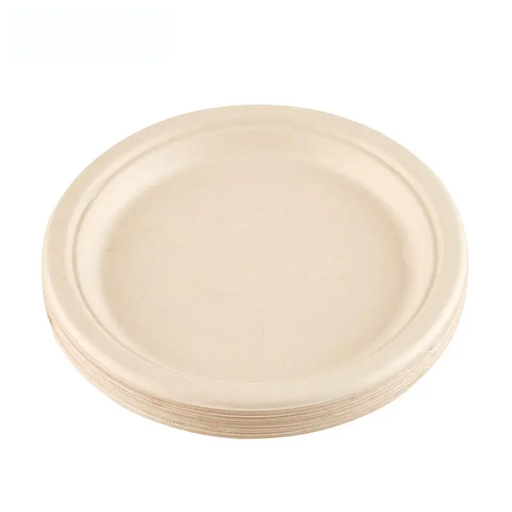
Why this product suits this profile: The 20 plates, each measuring approximately 22.5 cm in diameter, are suitable for smaller celebrations, picnics and occasional use with hot or cold food.
The product information specifies sugar cane fibre, water and oil resistance, as well as microwave suitability. This makes the relevant usage limits clearer than a simple size specification would.
Food-grade sugar cane fibre, approximately 22.5 cm in diameter, described as biodegradable and intended for microwave use according to the product description.
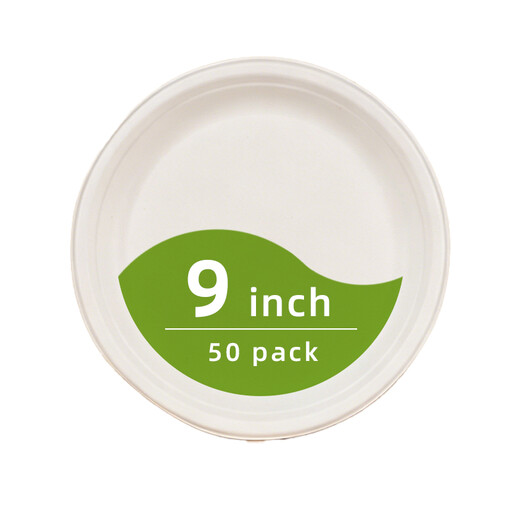
Why this product suits this profile: The combination of a 23 cm diameter and 50 plates is aimed at hosts who want to serve main courses at parties, barbecues or family celebrations.
The product name explicitly states the sugar cane material, 23 cm size and pack of 50. This makes it easier to check the size and required quantity before ordering.
23 cm diameter, 50 plates per pack and, according to the product name, intended for hot and cold food.
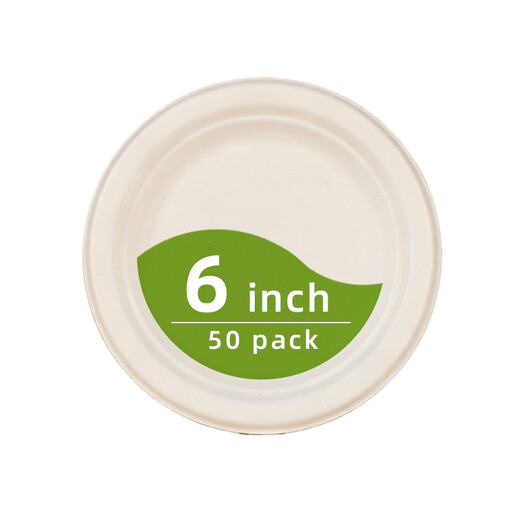
Why this product suits this profile: The compact size and pack of 50 are well suited to dessert buffets, children’s birthday parties, snack stations and larger events.
The 15 cm diameter clearly indicates the intended use. If you are only planning to serve cake or small portions, there is no need to stock larger plates.
15 cm diameter, 50 plates per pack and, according to the product name, sugar cane material for desserts and smaller dishes.
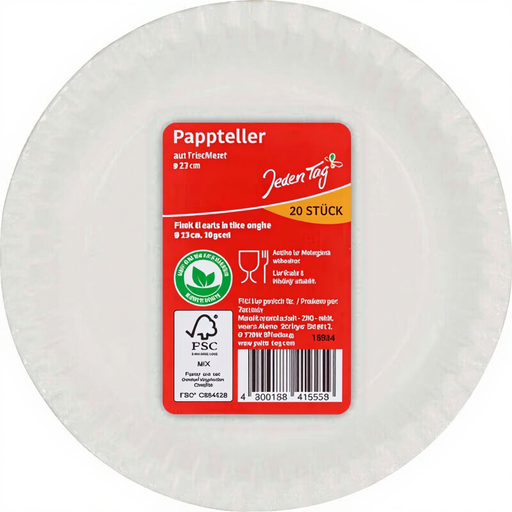
Why this product suits this profile: The white paper plates, with a diameter of 23 cm, are designed for parties, picnics, barbecues and occasional everyday use with hot or cold food.
The product description clearly sets out the limitations: it is not suitable for microwave use or boiling liquids. This information helps prevent unsuitable purchases caused by unclear usage instructions.
23 cm diameter, 20 plates per pack, food-safe inner coating and grease resistance according to the description.
We have put together a complete, regularly updated list of products that fully meet these strict selection criteria and the safety regulations applicable in the EU.
You can also find more sizes and styles among the paper cake plates.
That depends on the individual product. Sugar cane and bagasse plates are often offered for hot and cold food. However, coated paper plates may have restrictions regarding very hot food or boiling liquids. The specific manufacturer’s information is what matters.
Not necessarily. The labels “compostable” or “biodegradable” alone do not indicate how the plate should be disposed of locally. Many local waste-disposal services do not accept disposable tableware in the food waste bin. You should therefore check your waste provider’s requirements and the product information.
For main courses, barbecued food and side dishes, paper plates with a diameter of around 23 cm are generally more practical than 15 cm plates. The smaller option is better suited to cake, desserts and snacks. For larger groups, a pack of 50 can make it easier to plan the required quantity.